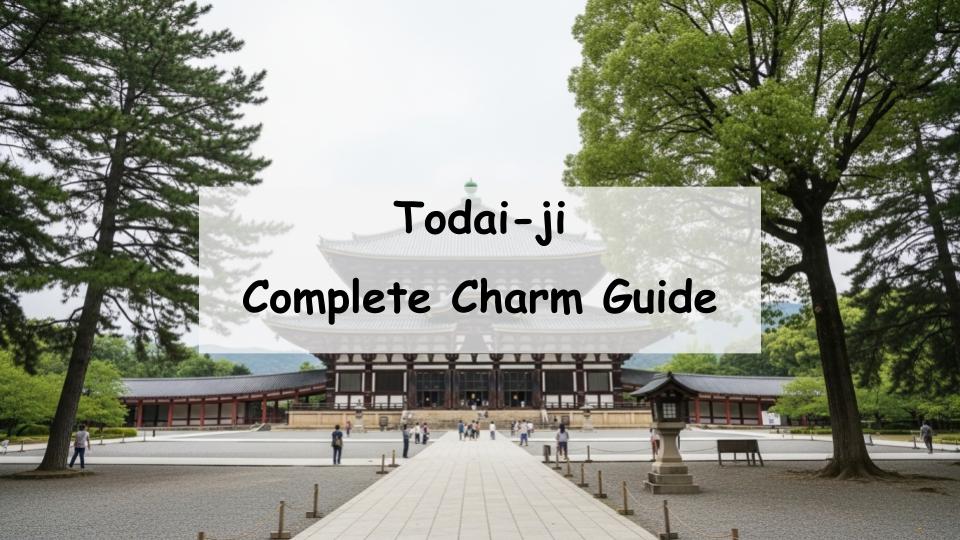
Todai-ji Temple, a World Heritage Site, is arguably the most synonymous landmark with tourism in Nara. While many people may have visited once on a school trip, those planning to visit again often find themselves asking questions like, “What is there to see besides the Great Buddha?”, “The grounds are so vast, how should I navigate them?”, or “What about access and time required?”
In reality, Todai-ji is overflowing with deep charm that goes far beyond the Great Buddha Hall, which is one of the world’s largest wooden structures, and the overwhelming presence of the “Great Buddha of Nara.” It features scenic spots offering panoramic views of the Nara Basin and houses numerous National Treasures.
In this article, we will introduce everything you need to know before visiting Todai-ji, from its history and characteristics to the must-see spots and easy access methods. Whether you are a first-time visitor or a returning traveler, this guide will help you efficiently enjoy the full appeal of Todai-ji. Please use it as a reference for your sightseeing.
- What Kind of Temple is Todai-ji? Explaining its History and Features
- Must-See Spots You Cannot Miss When Visiting Todai-ji
- The World’s Largest Class Wooden Structure! The Overwhelming Scale of the “Great Buddha Hall (Daibutsuden)”
- The Symbol of Nara! The “Vairocana Buddha (Great Buddha)” Standing Approx. 15m Tall
- National Treasure “Nandaimon Gate” and “Kongo Rikishi Statues” by Unkei and Kaikei
- “Nigatsu-do,” a Scenic Spot Overlooking the Nara Basin
- The Oldest Building Remaining at Todai-ji, “Hokke-do (Sangatsu-do)”
- Extensive Precincts Where You Can Enjoy Seasonal Flowers and Autumn Leaves
- Experiences & Trivia to Enjoy Todai-ji More
- Todai-ji Goshuin (Stamp), Amulets, and Souvenir Information
- Admission Fees, Business Hours, and Estimated Time Required
- Access Methods to Todai-ji and Parking Information
- Summary: A Highlight of Nara Tourism! Feel the History and Culture at Todai-ji
- A Message from the Guide
What Kind of Temple is Todai-ji? Explaining its History and Features
Todai-ji is a representative temple of the Nara period and attracts many tourists from both Japan and abroad. First, let us explain its origins and the historical background behind its establishment.
A World Heritage Site “Historic Monuments of Ancient Nara” Built on Emperor Shomu’s Prayer
Todai-ji was established by Emperor Shomu, who was deeply devoted to Buddhism, with the wish for national peace and the happiness of the people. At that time, society was suffering from continuous anxiety due to earthquakes, droughts, famine, and epidemics. Emperor Shomu believed that the power of Buddhism could remove these disasters and create a world where all living things could prosper together, so he ordered the construction of the colossal Vairocana Buddha (the Great Buddha). In 1998, it was registered as a UNESCO World Heritage Site as part of the “Historic Monuments of Ancient Nara,” and its historical value is recognized worldwide. Knowing that this is not just a tourist spot but a place built upon the earnest prayers of people from that era will likely change the weight of your visit.
What Sect is It? The Sect and Origins of Todai-ji
Todai-ji is the head temple of the “Kegon” sect. It flourished as one of the Six Schools of the Southern Capital (Nanto Rokushu) during the Nara period and played a role as a center for academic Buddhism. Todai-ji has a history of functioning not only as a research institution for a specific sect but as a dojo for “Hasshu Kengaku,” meaning the study of all eight sects. Its formal name is “Kinkomyo-shitenno-gokoku-no-tera,” and it held the position of the head temple for all the provincial temples (Kokubunji) established throughout Japan. The vast precincts are dotted with many National Treasures and Important Cultural Properties, creating a valuable space that conveys the history of Japanese Buddhism to the present day.
Must-See Spots You Cannot Miss When Visiting Todai-ji
The grounds of Todai-ji are extremely vast, possessing enough charm that you might not be able to see it all even if you spend a whole day. Among them, we will introduce the carefully selected major highlights that you must cover.
The World’s Largest Class Wooden Structure! The Overwhelming Scale of the “Great Buddha Hall (Daibutsuden)”
Passing through the Nandaimon Gate, the main gate of Todai-ji, the National Treasure “Great Buddha Hall (Golden Hall)” comes into view directly ahead. Known as one of the world’s largest wooden buildings, this structure has been rebuilt in the Edo period after being destroyed by fire several times. Although the width (frontage) has been reduced to about two-thirds compared to the time of its original construction, its height and depth remain on the same scale as the original. Its majestic appearance is breathtaking, and the golden Shibi (fishtail-like ornaments) shining on the roof are also a must-see. When you enter the building, you will be captivated by the structural beauty of the massive pillars and beams assembled in a complex manner.

The Symbol of Nara! The “Vairocana Buddha (Great Buddha)” Standing Approx. 15m Tall
Enshrined within the Great Buddha Hall is the principal image, “Vairocana Buddha,” affectionately known as the “Great Buddha of Nara.” The statue stands approximately 15 meters tall, and the face alone is about 5 meters long. Looking up from close by, you are sure to be moved by its overwhelming presence and the deeply compassionate expression that words cannot fully describe. The palm of the Great Buddha’s right hand shows the “Semui-in” mudra, meaning “do not fear,” while the left hand shows the “Yogan-in” mudra, meaning “granting wishes.” These hand shapes embody the Buddha’s deep desire to save people.
National Treasure “Nandaimon Gate” and “Kongo Rikishi Statues” by Unkei and Kaikei
As you proceed along the approach, you are first welcomed by the National Treasure “Nandaimon Gate,” the largest temple gate in Japan. Standing about 25 meters tall, this gate was also rebuilt, but it is a valuable structure that conveys the “Daibutsu-yo” (Great Buddha style) architectural style of the Kamakura period. On the left and right of the gate, the “Kongo Rikishi Statues (Nio Guardians)” glare down at visitors; these were reportedly created by the Kei school of Buddhist sculptors, including Unkei and Kaikei, in just 69 days. The dynamic muscular beauty and powerful expressions of the open-mouthed Agyo and the closed-mouthed Ungyo are a must-see.

“Nigatsu-do,” a Scenic Spot Overlooking the Nara Basin
If you climb the slope on the east side of the Great Buddha Hall, the stage-constructed building “Nigatsu-do” appears. It was named so because the “Omizutori” ceremony is held here in the second month of the lunar calendar. Since the corridor of Nigatsu-do is located on high ground, the view is excellent, allowing you to overlook the city of Nara, Mt. Ikoma, and even distant mountains if the weather is good. The scenery at dusk is particularly beautiful, and the contrast between the silent precincts and the sky dyed madder red is moving. Since it is a hall where worship is possible 24 hours a day, it is also a recommended spot for those who want to offer prayers quietly.
The Oldest Building Remaining at Todai-ji, “Hokke-do (Sangatsu-do)”
Located just south of Nigatsu-do, “Hokke-do (Sangatsu-do)” is the oldest building in Todai-ji, having escaped several fires and retaining its appearance from the time of its founding in the Nara period. Inside the hall, many National Treasure-class Buddhist statues representing the Tenpyo era are enshrined, starting with the principal image, the Fukukenjaku Kannon standing statue. These statues possess a beauty that is both realistic and mysterious, and they are highly evaluated as masterpieces of Buddhist art. It is a space where you can face the Buddhist statues thoroughly while feeling the weight of history.
Extensive Precincts Where You Can Enjoy Seasonal Flowers and Autumn Leaves
The appeal of Todai-ji is not limited to its buildings. The vast precincts are blessed with rich nature, and you can enjoy the scenery of the four seasons. In spring, cherry blossoms bloom in full glory, and the view with the Great Buddha Hall or Nandaimon Gate in the background is truly a symbol of spring in Japan. Also, in autumn, the ginkgo and maple trees turn vivid colors, further enhancing the atmosphere of the ancient capital. The areas around Kagami-ike Pond and Daibutsu-ike Pond are popular as walking courses, and just walking leisurely with a camera in hand allows you to spend time that feels like washing your soul.
Experiences & Trivia to Enjoy Todai-ji More
There are several experiences and pieces of trivia at Todai-ji that make the visit even more enjoyable if you know them. Please check them out during your sightseeing.
Challenge the “Pillar Squeeze” for Good Health
A pillar in the northeast part of the Great Buddha Hall has a hole said to be the same size as the Great Buddha’s nostril. It is said that if you can pass through this hole, you will be blessed with “sound health” and “fulfillment of prayers.” Children can certainly try, and even adults can challenge it if they are slender. It is a popular experience spot bustling with students on school trips and tourists, so there may be a line, but why not try it as a memory of your trip?
How to Get Along Well with the “Nara Deer” in the Precincts
Wild deer, which are designated as natural monuments of the country, inhabit the area of Nara Park, including the precincts of Todai-ji. The deer, cherished as messengers of the gods since ancient times, are friendly and popular with tourists. If you give them deer crackers (shika-senbei), they may show you cute gestures like bowing. However, please note that they are wild animals, so care is needed not to touch them carelessly or startle them. Also, manage your belongings and pamphlets securely so they are not eaten, and interact with them maintaining an appropriate distance.
Annual Events like the Famous “Shuni-e” (Omizutori)
Various events are held at Todai-ji throughout the year, but the most famous is the “Shuni-e” held at Nigatsu-do, commonly known as “Omizutori.” This memorial service, held from March 1st to 14th every year, is loved as an event that heralds spring in Nara. The sight of giant pine torches scorching the night sky and sparks raining down is a masterpiece, and many worshipers visit to pray for sound health. If you visit in time for this period, you will be able to feel the religious enthusiasm and the weight of tradition that Todai-ji holds.
Todai-ji Goshuin (Stamp), Amulets, and Souvenir Information
Receiving a Goshuin (red stamp) as proof of your visit and buying commemorative amulets are also part of the fun. Since Todai-ji offers different Goshuin at multiple locations, it is smooth if you organize the information in advance.
Types and Locations of Goshuin Available at the Great Buddha Hall and Each Hall
At Todai-ji, you can receive different Goshuin not only at the Great Buddha Hall but also at Nigatsu-do, Hokke-do, Shigatsu-do, and other halls. The most representative one is the “Kegon” Goshuin available at the Great Buddha Hall. In addition, calligraphy related to the principal image or origin of each hall is written, such as “Namu Kan” at Nigatsu-do and “Hokke” at Hokke-do. You can enjoy collecting them all like a pilgrimage, but since reception hours are fixed, we recommend going around with plenty of time. Original Goshuin books are also sold, and those designed with the Great Buddha or deer are popular.

Popular Amulets and Items to Buy as Souvenirs
Various amulets for health prayers, academic achievement, traffic safety, etc., are prepared at each conferment office. Particularly popular are amulets related to the pillar squeeze in the Great Buddha Hall and cute amulets with deer motifs. Also, recommended souvenirs include stationery such as Todai-ji original hand towels (tenugui) and letter pads, as well as incense. Purchasing them for yourself as a memory of the trip is great, but they will also be appreciated as gifts for family and friends.
Admission Fees, Business Hours, and Estimated Time Required
When visiting Todai-ji, expenses and time required for viewing are concerns. Let’s cover the basic information for planned sightseeing.
Visiting Hours That Change by Season (Opening and Closing Times)
Todai-ji’s visiting hours vary depending on the season. Basically, from April to October when the days are long, it is open from 7:30 AM to 5:30 PM, and from November to March when the days are short, it is open from 8:00 AM to 5:00 PM. However, these are the visiting hours for major halls like the Great Buddha Hall, and there are areas like Nigatsu-do where worship is possible 24 hours a day. It is safe to check the latest times on the official website before visiting. Visiting in the quiet early morning offers a solemn atmosphere different from the daytime and is highly recommended.
Admission Fees and Museum Set Ticket Information
Admission fees are required individually for the Great Buddha Hall, Hokke-do, and Kaidan-do (or Senju-do). Generally, it is 600 yen for adults (junior high school students and above) and 300 yen for elementary school students per hall. Also, if you want to visit the Todai-ji Museum within the precincts, a set ticket with the Great Buddha Hall is sold at a discount. Since you can see real National Treasures up close at the museum, we recommend purchasing the set ticket for those interested in art and history. There is also a discount system for those with disability certificates, so please check at the window.
How Much Time is Required for Sightseeing?
The time required for sightseeing at Todai-ji depends on how thoroughly you look. If it is a “Quick Course” just seeing the Great Buddha Hall and around Nandaimon Gate, you can go around in about 1 hour. On the other hand, if it is a “Thorough Course” extending to Nigatsu-do and Hokke-do and visiting the museum, you should expect 2 to 3 hours. The precincts are wide and there are slopes and stairs, so the key is to visit in comfortable walking shoes and estimate the travel time a little generously.
Access Methods to Todai-ji and Parking Information
Finally, we will explain smooth access methods to Todai-ji. Since the area around Nara Park tends to be congested, choosing the means of transportation is important.
How to Go by Train/Bus (Routes from Kintetsu Nara Station and JR Nara Station)
When using public transportation, the nearest station is “Kintetsu Nara Station” or “JR Nara Station.” From Kintetsu Nara Station, it is about a 20-minute walk, so you can head there while strolling. On the way, you pass through Kofuku-ji Temple and the park area with deer, so you can move while enjoying the scenery. If heading from JR Nara Station, it is a bit of a distance to walk, so using the city loop bus is convenient. If you get off at the “Todai-ji Daibutsuden / Kasuga Taisha-mae” bus stop, you will arrive right at the entrance of the approach.
Access by Car and Surrounding Parking Situation
When accessing by car, there is no parking lot exclusively for worshipers within the precincts of Todai-ji. Therefore, it is necessary to use prefectural parking lots or private coin parking nearby. However, please note that surrounding roads are very congested on holidays and during tourist seasons, and parking lots often become full. We recommend using public transportation as much as possible, but if you must visit by car, considering “Park and Ride,” where you park in a slightly distant place and move by bus or on foot, will allow for smoother sightseeing.
Summary: A Highlight of Nara Tourism! Feel the History and Culture at Todai-ji
Todai-ji is a wonderful place where not only the giant Great Buddha and magnificent architecture but also the history leading up to them, people’s prayers, and the nature of the four seasons are in harmony. Being overwhelmed by the power of the Great Buddha Hall, healed by the superb view from Nigatsu-do, and enjoying interactions with deer—Todai-ji is packed with such diverse charms that there are new discoveries no matter how many times you visit. Please find your own way to enjoy Todai-ji using the highlights and information introduced this time. Why not set out on a journey to think of eternal history while feeling the breeze of the ancient capital of Nara?
A Message from the Guide
It wasn’t crowded early in the morning, which was perfect for photography.



Comment