When you hear about Goma ceremonies held at Buddhist temples, you may wonder:
“I’ve heard the name, but what actually happens during a Goma ritual?”
“Does it really bring spiritual benefits?”
“Is it okay for a beginner to participate?”
Goma is a traditional Buddhist fire ritual, but many people find it difficult to understand what it truly means or how it works. As a result, its purpose and effects are often misunderstood.
In short, Goma is a prayer ritual that uses the power of fire to convey wishes to the Buddha and to purify both mind and body. With the right basic knowledge, even first-time participants can take part with confidence and experience its deeper significance.
In this article, we will explain Goma in a simple and accessible way—from its meaning and origins to the types of wishes it is suited for, the spiritual benefits it is believed to bring, how it differs from other Buddhist rituals, and practical tips for first-time participants. If you want a solid understanding of Goma, please read on to the end.
- What Is Goma? Its Basic Meaning and Characteristics
- How to Read “Goma” and Its Etymology
- The Purpose of a Goma Ritual
- The Difference Between Goma, Prayer, and Memorial Services
- The History and Origins of Goma, Explained Simply
- The Origins of Goma and Its Connection to Esoteric Buddhism in India
- The Transmission and Development of Goma in Japan
- Differences in Goma Between Shingon and Tendai Buddhism
- What Spiritual Benefits Can Be Expected from Goma?
- How the Benefits of Goma Are Understood
- Types of Wishes and Their Compatibility with Goma
- The Goma Ritual: Content and Flow
- The Basic Flow of a Goma Ceremony
- What Is a Goma Stick?
- How to Write Wishes on a Goma Stick
- The Symbolic Meaning of Fire in Goma
- Beginner Tips for Participating in Goma
- Clothing and What to Bring
- Basic Etiquette to Know Beforehand
- Where and When You Can Participate in Goma
- Frequently Asked Questions About Goma
- Can Anyone Participate in Goma?
- Cost and Duration of a Goma Ceremony
- When Will You Feel the Effects of Goma?
- A Message from the Guide
What Is Goma? Its Basic Meaning and Characteristics
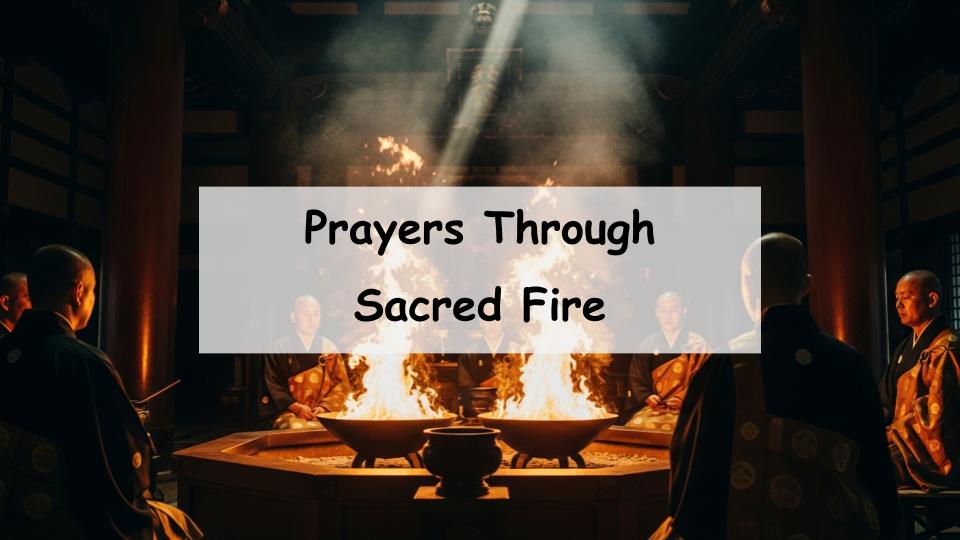
Goma is a ritual in which prayers are given form through fire and symbolically delivered to the Buddha. The rising flames represent purification and transformation, burning away mental impurities such as anxiety, confusion, and the causes of misfortune, while helping participants regain the strength to move forward.
Although Goma is conducted in a solemn atmosphere, it is often open to the general public. In many temples, no special knowledge is required to attend, making it a prayer ritual that is welcoming even to beginners.
How to Read “Goma” and Its Etymology
“Goma” is pronounced go-ma. Its origins trace back to ancient religious practices in broader Buddhist cultural regions, where offerings were made to fire. While the pronunciation is the same as the Japanese word for sesame (goma), the meaning is entirely different.
In Buddhism, Goma refers specifically to a ritual in which prayers are conveyed through fire.
The Purpose of a Goma Ritual
The purpose of Goma is not simply to “make wishes come true.” Another essential aspect is aligning and stabilizing one’s own mind, using prayer as an opportunity to reorient one’s life and actions in a positive direction.
Some people participate to pray for protection from misfortune, good luck, or household safety. Others take part when they want to cut through hesitation, gain clarity, or reaffirm their determination. The experience itself—watching the flames, listening to chanting and ritual instruments—often creates a calming and introspective moment, which is one reason Goma remains popular.

The Difference Between Goma, Prayer, and Memorial Services
Goma is a type of prayer ritual, but what sets it apart is the use of fire. While many prayers rely on chanting, talismans, or blessings, Goma centers on flames as the focal point of the ritual.
Memorial services, on the other hand, are primarily meant to honor the deceased, ancestors, or all living beings, expressing gratitude and praying for peace. Although Goma may sometimes include memorial elements, it is fundamentally a ritual focused on purification and personal prayer through fire.
The History and Origins of Goma, Explained Simply
Goma did not originate in Japan. Understanding its historical background helps clarify why fire plays such a central role and why Goma is closely associated with esoteric Buddhism.
The Origins of Goma and Its Connection to Esoteric Buddhism in India
The roots of Goma lie in ancient Indian fire rituals, where fire was seen as a symbol connecting heaven and humanity. Offerings placed into the fire were believed to carry prayers upward.
As Buddhism evolved, these concepts were incorporated into esoteric Buddhism, where Goma developed into a structured ritual. Because esoteric practices emphasize mantras, hand gestures (mudras), ritual tools, and mandalas, Goma became an especially effective way to express prayer in a comprehensive and symbolic form.
The Transmission and Development of Goma in Japan
Goma spread throughout Japan along with esoteric Buddhism and became established as a temple ritual. It has been performed for a wide range of intentions—from prayers for national peace and good harvests to personal wishes such as protection from misfortune or recovery from illness.
Today, Goma is often held during seasonal milestones such as New Year’s visits, Setsubun (the beginning of spring), or during unlucky years (yakudoshi). As a result, it has become a familiar ritual for many temple visitors.
Differences in Goma Between Shingon and Tendai Buddhism
Goma is widely practiced in esoteric Buddhist schools, but the style and atmosphere vary by sect and temple.
In Shingon Buddhism, Goma is considered a central ritual, with monks chanting mantras and forming mudras before the Goma altar. In Tendai Buddhism, Goma is also performed but may be more closely connected to mountain ascetic practices or regional traditions.
For participants, it is not necessary to memorize these differences. It is enough to understand that the core purpose—prayer and purification—remains the same.
What Spiritual Benefits Can Be Expected from Goma?
Many people participate in Goma hoping for spiritual benefits. However, these benefits are not simply about immediate results.
How the Benefits of Goma Are Understood
The benefits of Goma are often understood as a process: prayer brings mental clarity, which leads to changes in attitude and behavior, ultimately creating positive outcomes.
The fire symbolizes the burning away of delusion and attachment. By witnessing the ritual, participants often feel better able to let go of unnecessary worries and focus on what truly matters. This mental shift plays a major role in experiencing Goma’s benefits.
Types of Wishes and Their Compatibility with Goma
Goma is believed to suit a wide range of wishes, especially those related to removing obstacles, changing one’s life direction, or starting fresh at important turning points.
Rather than listing many wishes at once, focusing on one priority often makes the experience more meaningful.
Protection from Misfortune, Good Luck, and Household Safety
Protection from misfortune is one of the most common reasons for participating in Goma. People may attend during unlucky years, periods of transition, or times of prolonged difficulty. Prayers for good luck and household safety are also popular, as Goma is closely associated with purification and emotional renewal.
Health, Business Success, and Academic Achievement
Health prayers often focus on the well-being of oneself or loved ones. Business success prayers are commonly offered at major career or entrepreneurial milestones. Academic success prayers are popular before entrance exams or certification tests.
Rather than replacing effort, Goma is best understood as helping establish the mental foundation needed to continue one’s efforts with focus and determination.
The Goma Ritual: Content and Flow
Although Goma may appear intimidating, understanding the general flow can help participants feel at ease.
The Basic Flow of a Goma Ceremony
Participants usually check in before the ritual begins and wait in designated seating areas. The ceremony starts with chanting and the sound of ritual instruments, followed by the lighting of the sacred fire at the Goma altar.
As the flames rise, prayers are offered and Goma sticks are placed into the fire one by one. Toward the end, prayers are concluded, and some temples distribute talismans or amulets.
Since details vary by temple, simply following staff instructions is usually sufficient.
What Is a Goma Stick?
A Goma stick (gomagi) is a wooden tablet offered into the fire during the ritual. Participants write their name and wish on it, symbolically entrusting their prayer to the flames.
Not all temples require Goma sticks, but when available, they help participants clearly express and commit their intentions.
How to Write Wishes on a Goma Stick
Always follow the temple’s instructions. In general, concise wording is recommended. Instead of long sentences, using short phrases such as “good health” or “academic success” helps clarify your intention.
Even if multiple wishes are allowed, focusing on your most important priority often leads to a more meaningful experience.
The Symbolic Meaning of Fire in Goma
Fire represents purification and transformation. Just as materials change when burned, Goma symbolizes releasing attachment, fear, and hesitation, and transforming them into the energy needed for a new beginning.
The intensity of the flames also helps participants concentrate, making fire a powerful medium for prayer rather than something to fear.
Beginner Tips for Participating in Goma
Although Goma may seem formal, a few basic points can help beginners participate calmly and respectfully.
Clothing and What to Bring
Wear modest, clean clothing. Formal attire is usually unnecessary, but avoid revealing outfits or noisy accessories. Bringing small change for offerings is helpful. Since Goma may take place in cool or semi-outdoor areas, warm clothing can also be useful.
Basic Etiquette to Know Beforehand
Because Goma is a prayer ritual, keep conversations to a minimum and silence mobile phones. Photography rules vary by temple, so refrain unless permission is clearly given.
If you are unsure about when to bow or pray, simply follow those around you. A quiet, respectful attitude is the most important thing.
Where and When You Can Participate in Goma
Goma is commonly held at esoteric Buddhist temples, often on a regular schedule. It is especially accessible during seasonal events such as New Year visits or Setsubun.
Some temples require advance reservations, while others accept same-day participation, so checking the temple’s website or notices in advance is recommended.
Frequently Asked Questions About Goma
Finally, here are answers to common questions from first-time participants.
Can Anyone Participate in Goma?
In most temples, Goma is open to the general public regardless of religious background or sect. However, participation conditions may vary, such as limited dates, advance applications, or seating limits. Confirming details beforehand is helpful.
Cost and Duration of a Goma Ceremony
Costs vary by temple and prayer type, usually in the form of a donation that may include a Goma stick or talisman. The duration also ranges from brief ceremonies to longer, more elaborate rituals. Knowing the estimated time in advance helps with planning.
When Will You Feel the Effects of Goma?
The timing varies from person to person. Some feel a sense of relief during the ceremony itself, while others notice gradual changes in their mindset or emotions afterward.
Rather than a guaranteed result, Goma works best as support for inner alignment and positive action. Continuing small, intentional actions after the ritual helps integrate the experience into everyday life.
A Message from the Guide
Watching the burning flames helps you forget about everyday life and brings a sense of calm.

Comment