As the entrance exam season approaches, not only the students themselves but also the families supporting them may be spending restless days wondering what else they can do to help. You might be thinking that you want the student to perform at 100% of their ability on the day of the exam, or that you want to secure a passing grade even if it means borrowing the power of the gods and buddhas. Driven by such earnest thoughts, many people consider going for Gokaku Kigan (prayers for passing exams).
To give you the conclusion first, Japan is home to powerful spiritual spots, specifically Buddhist temples, that have been known for centuries to grant “academic achievement” and “wisdom.” Visiting a historic temple to join your hands in prayer and calm your mind can be the final push needed to transform anxiety into confidence.
In this article, we have carefully selected seven Buddhist temples famous for academic success that you should definitely visit for exam prayers. We will explain the specific features of each temple, the origins of their blessings, and information on popular charms for students, so please find the perfect place to entrust your wish for admission to your school of choice.
- Should You Go to a Temple or a Shrine for Exam Prayers?
- 7 Must-Visit Buddhist Temples Famous for Academic Success
- When is the Best Time to Visit for Exam Prayers?
- Correct Etiquette and Procedures at Temples
- How to Handle and Carry Exam Charms (Omamori)
- Returning for Thanksgiving (Orei-mairi) After Exams
- A Message from the Guide
Should You Go to a Temple or a Shrine for Exam Prayers?
When you decide to go for exam prayers, you might wonder whether you should visit a Buddhist temple or a Shinto shrine. Basically, it is fine to choose whichever one you or your family feels a connection to or wants to visit, but understanding the differences between them will allow for a more meaningful visit.
Differences Between Temples (Buddhas) and Shrines (Gods)
Shrines enshrine Shinto gods, and Tenmangu shrines dedicated to Sugawara no Michizane, known as the god of learning, are representative examples. The characteristic here is strong on delivering wishes to the gods and seeking their protection. On the other hand, temples enshrine Buddhist deities. Visiting a temple involves touching upon the teachings and virtues of the Buddha, organizing one’s own mind, and receiving the power of “wisdom” and “mercy” held by the Buddha. The serene atmosphere of a temple is suitable for the desire to remove anxiety before an exam and create a mental state where one can demonstrate their true ability.
Representative Deities of Learning and Wisdom (Manjusri and Akasagarbha)
When praying for exam success at a temple, it is important to know which deity is enshrined there. Particularly famous for the blessing of academic achievement are “Monju Bosatsu” (Manjusri Bodhisattva) and “Kokuzo Bosatsu” (Akasagarbha Bodhisattva). As the proverb “Three people gather and there is the wisdom of Monju” suggests, Monju Bosatsu is the Buddha who governs excellent wisdom for judging things correctly. Additionally, Kokuzo Bosatsu possesses infinite wisdom and mercy like the vast universe and is worshipped for having the specific blessing of improving memory. Temples where these Buddhas are enshrined will be powerful allies for students.

7 Must-Visit Buddhist Temples Famous for Academic Success
There are countless temples throughout Japan, but here we introduce seven carefully selected temples that are deeply revered by students and known as famous places for exam prayers.
1. Abe Monju-in [Nara Prefecture]
Praying to the National Treasure Monju Bosatsu by Kaikei at the Leading Temple of the Three Monju
Abe Monju-in, located in Sakurai City, Nara Prefecture, is a historic temple known as the first sacred site of the Three Monju of Japan. The principal image, the Monju Bosatsu riding a lion, is a National Treasure created by the master sculptor Kaikei of the Kamakura period, and its power and beauty overwhelm viewers. The figure riding a lion is a symbol of granting strong wisdom and courage to overcome the difficult exam war. The prayer service here to ward off evil and grant wisdom is very famous, attracting many students from all over the country.

2. Chion-ji (Kireto Monju) [Kyoto Prefecture]
Granting Wisdom at the Birthplace of “Three People Gather and There is the Wisdom of Monju”
Chion-ji in Amanohashidate, Kyoto Prefecture, is also called “Kireto no Monju” and is famous as the birthplace of the proverb “Three people gather and there is the wisdom of Monju.” It has long collected faith as a sacred place for bestowing wisdom, and the Tahoto Pagoda in the precincts is designated as a National Important Cultural Property. A characteristic item available at Chion-ji is the “Suehiro Fan” fortune slip. The sight of these fans tied to pine trees suggests that wishes for passing exams will spread out prosperously, making it feel very auspicious.
3. Daisho-ji (Kameoka Monju) [Yamagata Prefecture]
A Famous Temple Known as the Sacred Site for Academic Prayers in Tohoku
Daisho-ji in Takahata Town, Yamagata Prefecture, is affectionately known as “Kameoka Monju” and gathers much faith as a sacred site for academic prayers in the Tohoku region. The path leading from the approach to the main hall has a solemn atmosphere suitable for calming the mind and resolving to face exams. People wishing for success in entrance exams and national qualifications visit to share in the wisdom of Monju Bosatsu. It is particularly bustling with many worshipers from inside and outside the prefecture during the exam season.
4. Kokuzo Horin-ji [Kyoto Prefecture]
Famous for “Jusan Mairi” and Blessings for Memory Improvement and Wisdom
Horin-ji in Arashiyama, Kyoto, is a famous temple enshrining Kokuzo Bosatsu as its principal image. In Kyoto, it is famous as the temple for “Jusan Mairi,” where children who have turned 13 years old visit to receive wisdom. Since Kokuzo Bosatsu is said to govern memory, this is a very reassuring presence for students who need to memorize vast amounts of knowledge. There is a legend that on the way back from worship, one must not look back until crossing the Togetsukyo Bridge, which is said to be to avoid returning the bestowed wisdom.

5. Kanei-ji (Ueno Daibutsu) [Tokyo]
Popular Among Students as the “Falling No More” Daibutsu
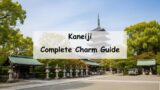
The Ueno Daibutsu located within Ueno Park was once a large Buddha statue, but it suffered disasters such as repeated earthquakes, fires, and requisition during the war, and currently, only the face is enshrined as a relief. Because it has experienced every disaster and “fallen” as much as possible, it is immensely popular among students as a “passing Daibutsu” that cannot fall any further, meaning “will absolutely not fail.” This spot is recommended for those who want to share in the spirit of resilience and strong luck.
6. Eko-in [Tokyo]
A Power Spot Where You Scrape the Grave of Nezumi Kozo to Take Home “Luck”
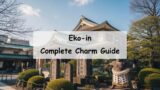
Eko-in in Sumida Ward, Tokyo, houses the grave of Nezumi Kozo Jirokichi, known as a chivalrous thief. Because Nezumi Kozo could sneak into any mansion and was never caught for a long time, a belief was born to share in that strong luck. It is also said that one can “slip in” to their desired school smoothly. It is believed that by scraping a little of the “Omaedachi” stone in front of the grave and keeping the powder as a charm, one’s luck for passing exams and winning will increase.
7. Katsuo-ji [Osaka Prefecture]
Daruma Prayers to Overcome Oneself at the “Temple of Winning Luck”
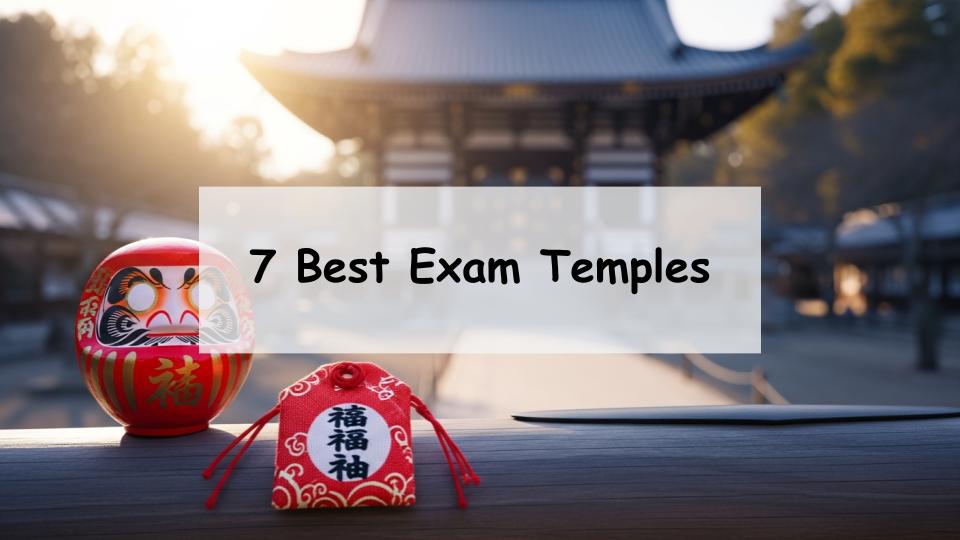
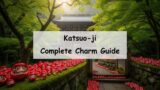
Katsuo-ji in Minoh City, Osaka Prefecture, boasts a history of 1300 years as the “Temple of Winning Luck” as its name suggests. “Winning” here does not mean defeating others, but overcoming one’s own weakness. The precincts are lined with countless “Winning Daruma” dolls that have been dedicated, creating a magnificent sight. To receive the spirit of the Daruma that rises no matter how many times it falls and the luck to win the battle against oneself called the entrance exam, many students paint an eye on a Daruma to pray for success.
When is the Best Time to Visit for Exam Prayers?
When you decide to go for exam prayers, you might worry about the best timing. Generally, many people go in conjunction with Hatsumode (the first shrine visit of the New Year), but that is not necessarily the only correct answer.
Recommended Timing to Avoid Interfering with Studies
There is no absolute rule for when to go for exam prayers, but January and February just before exams are also the season when infectious diseases like influenza are prevalent. If you prioritize avoiding crowds and managing physical condition, it is wise to finish your visit in the autumn (October to November) before the full-scale exam season begins, or by mid-December within the year. During this period, you can worship relatively calmly and pray with a peaceful mind. Please prioritize the student’s health and study schedule above all else.
Should You Worry About Auspicious Days (Taian/Tomobiki)?
Some people worry about the “Rokuyo” calendar days such as “Taian” (very lucky) or “Tomobiki” (lucky for friends), but there is no need to force your schedule to fit these days, sacrificing study time or visiting in bad weather. The most important thing in praying to gods and buddhas is not the luck of the day, but the “sincere feeling” of the person visiting. Choosing a day when you or your family can easily go or a day with good weather, and visiting with a refreshing feeling, will result in the best worship experience.
Correct Etiquette and Procedures at Temples
The etiquette for worshiping at a temple differs in some ways from that of a shrine. Let us cover the basic manners so that you do not inadvertently perform shrine etiquette.
Passing Through the Gate and Purifying Hands
The Sanmon gate, which is the entrance to the temple, is the boundary between the secular world and the sacred area. Before passing through, bow once and step over the threshold without stepping on it. Since the center of the approach is often considered the path for gods and buddhas, it is polite to walk on the side. The etiquette at the Chozuya (water purification pavilion) is the same as at a shrine. Rinse your left hand, right hand, then rinse your mouth with water in your left hand, and finally purify your left hand and wash the handle by standing the ladle up. Purify your mind and body before heading to the main hall.
Correct Procedures for Offering Money, Incense, and Praying (Do Not Clap)
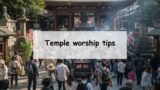
When you arrive at the main hall, first put your offering money in quietly. The manner is to slide it in gently rather than throwing it. If there is a sound instrument like a Waniguchi gong, ring it, and if there is incense, bathe in the smoke to purify yourself or offer incense. Then, quietly join your hands in front of your chest (Gassho) and pray. The biggest point here is not to clap your hands like at a shrine. Join your hands quietly, bow once, and leave the spot.
How to Handle and Carry Exam Charms (Omamori)
An Omamori (charm) is received as proof of worship and as emotional support. We will introduce how to handle it to feel its effects to the maximum.
Where is the Best Place to Attach It?
It is considered best to keep the charm in a place that is always close to you. For students, it is recommended to attach it to a pencil case used regularly or a school bag that is always carried during study and on the day of the exam. If school rules prevent attaching it to a bag, you may put it in an inner pocket of the bag or in a wallet. The important thing is to gain a sense of security that you are being “supported” and “protected” every time you see the charm.
Is it Okay to Hold Charms from Multiple Shrines and Temples?
Some people worry that if they receive charms from multiple places because “that temple is also famous,” the gods and buddhas might fight. However, gods and buddhas do not fight, so it is okay to have multiple charms. If you can treat all the charms you have received with gratitude and respect, they will become emotional support that allows you to receive more protection.
Returning for Thanksgiving (Orei-mairi) After Exams
Just as important as, or perhaps even more important than, the prayer for passing is the “Orei-mairi” (thanksgiving visit) after the exams are over.
Timing and Importance of Thanksgiving Visits
Once the exam results are out, regardless of whether you passed or failed, go for a thanksgiving visit to convey your gratitude for completing the exams safely. If you passed, express your joy and gratitude, and even if the result was unfortunate, convey your thanks for being watched over until now. This allows you to bring closure to your feelings. As for timing, it is desirable to go when your future path is decided and things have settled down, preferably within a year.
How to Return Charms and Amulets
When visiting for thanksgiving, bring the charms and amulets you received and return them to the “old charm reception area” established at the temple. Basically, it is polite to return them to the temple where you received them, but if it is too far and you absolutely cannot go, in many cases it is acceptable to return them to a nearby temple (since sects may differ, it is polite to confirm in advance). Also, some temples accept returns by mail. Let us return them with feelings of gratitude and make a fresh start toward a new life.
A Message from the Guide

Let us receive courage from the Buddha.



Comment