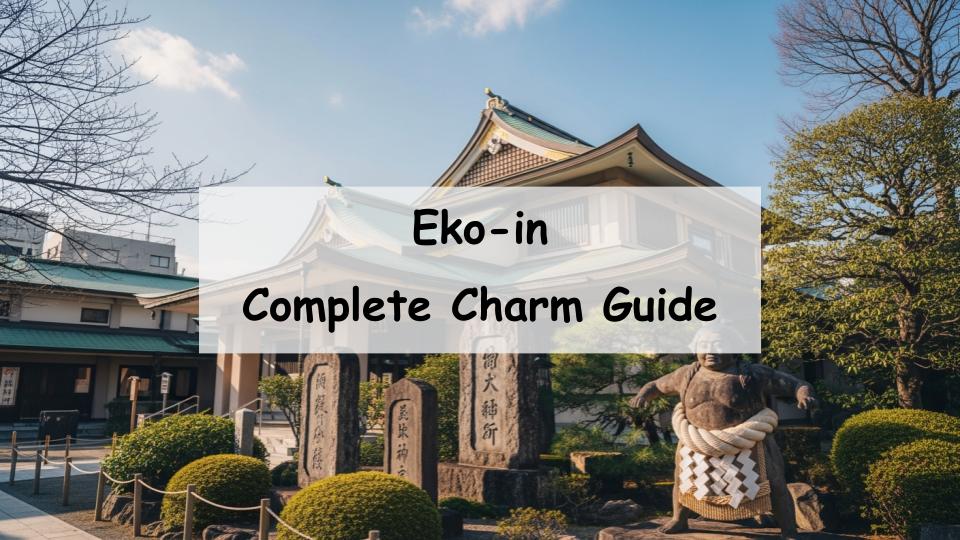
When people think of Ryogoku, Tokyo, they usually think of it as the “Holy Land of Sumo.” However, there is a place essential to telling the history of this area: Eko-in Temple.
If you are planning a sightseeing trip or a historical walk in Ryogoku, you might have questions like:
- “What kind of temple is Eko-in? What is it famous for?”
- “Is it true that it has a connection to Sumo and the legendary thief Nezumi Kozo?”
- “I want to know the spiritual benefits and highlights before I go so I can enjoy it fully.”
To give you the short answer: Eko-in is the “Birthplace of Sumo Tournaments” and is known as a “power spot” for victory and passing exams. It is a prestigious temple full of highlights.
Founded in the wake of a massive fire in the Edo period, this temple possesses a spirit of deep compassion and a unique history. It has accepted everything without discrimination, from “muen-botoke” (souls without living relatives) to animals, and even the chivalrous thief, Nezumi Kozo.
In this article, we will thoroughly explain the deep history of Eko-in, its hidden charms, must-see spots, and how to get there. Reading this will help you understand how to enjoy Eko-in and make your stroll through Ryogoku even more fulfilling.
What is Eko-in, the Prestigious Temple of Ryogoku?
Eko-in is a Jodo sect temple located in Ryogoku, Sumida Ward, Tokyo. Its formal name is “Shoshuzan Muenji Eko-in.” Although located just a few minutes’ walk from Ryogoku Station, the grounds offer a sense of silence and historical weight, holding a story of deep love and mercy that has continued since the Edo period.
History and Origin: The Great Fire of Meireki and Memorials for the Unclaimed
The history of Eko-in begins with the Great Fire of Meireki (also known as the Furisode Fire) that occurred in 1657. This unprecedented disaster devastated the town of Edo, claiming, it is said, over 100,000 precious lives.
The Shogun at the time, Tokugawa Ietsuna, built a huge grave called the “Banninzuka” (Mound for a Million Souls) on the east bank of the Sumida River to mourn the many victims who had no family to claim them. A hall was built to pray for all these spirits, marking the origin of Eko-in. Thus, Eko-in was born to mourn the many unclaimed souls who perished in the disaster, serving as a place to comfort people’s sorrow from its very inception.
A Philosophy of “Regardless of Connections”
Although Eko-in belongs to the Jodo sect, due to the circumstances of its founding, it values a unique philosophy: “Memorials for all living things, regardless of whether they have surviving connections or not, and regardless of whether they are human or animal.”
This is reflected in its mountain name “Shoshuzan” (Mountain of All Sects) and temple name “Muenji” (Temple for the Unconnected). It demonstrates a broad, open heart of mercy that transcends religious sects, social status, and even the barrier between humans and animals. Even today, many people visit regardless of their own religious sect because this spirit of non-discrimination has been passed down through the generations.
Eko-in’s Spiritual Benefits and Famous Features
Eko-in has several unique features and associated blessings born from its historical background. Here are three particularly famous characteristics.
1. “Birthplace of Sumo Tournaments” and Luck for Victory
The reason Ryogoku is known as the “Town of Sumo” today is actually due to Eko-in. In the Edo period, “Kanjin Sumo” (charity sumo tournaments held to raise funds for temple reconstruction and repairs) began to be held within the temple grounds. From 1833 onward, Eko-in became the regular venue for sumo, hosting heated battles for 76 years until the first Ryogoku Kokugikan was built in the Meiji period.
Because of this history, Eko-in is considered the birthplace of sumo tournaments, and a stone monument honoring past sumo wrestlers stands in the grounds. As a place where many famous bouts occurred, it is now popular as a power spot for victory luck and the fulfillment of heartfelt wishes.
2. The Grave of “Nezumi Kozo” and Luck for Money/Exams
Another major feature of Eko-in is the grave of the famous Edo period thief, Nezumi Kozo Jirokichi. Legend has it that he stole gold coins from feudal lords’ mansions and distributed them to the poor. Because he was not caught for a long time, he is seen as a symbol of “good luck” and “slipping through (overcoming obstacles).”
Therefore, he is now worshipped not only for financial luck but also by students and job seekers praying for success in exams, symbolizing the ability to “slip through narrow gates.”

3. “Animal Memorials” for All Creatures
Eko-in is also known as one of the oldest temples in Japan to perform animal memorial services. This originated during the Great Fire of Meireki, when the temple mourned not only the people but also the many animals that burned to death.
Since then, memorial towers have been erected to comfort the spirits of various animals, including horses, dogs, cats, and birds. Even today, there is a constant stream of people visiting to consult about pet memorials and graves, and the grounds are filled with love and gratitude toward animals.
Tour the Grounds! Highlights of Eko-in
Scattered throughout the grounds of Eko-in are stone monuments that evoke history and unique prayer spots. Here are the points you should definitely check out when you visit.
Scrape the Stone for Luck: “Nezumi Kozo’s Grave”
Many worshipers visit the grave of Nezumi Kozo. There is a rare custom here: “Scrape the gravestone and take the powder home as a charm.” This is done to share in his strong luck of evading capture.
Currently, to protect the real gravestone (which is a cultural property), a dedicated “Omaedachi” (substitute stone) is placed in front of the grave for scraping. Visitors use the provided stones to scrape this substitute, wrap the powder in paper, and put it in their wallets or pencil cases to receive blessings for financial luck or victory.
“Chikara-zuka” (Power Mound) Honoring Sumo Wrestlers
The large stone monument visible immediately to the right after entering the approach is the “Chikara-zuka.” Erected in 1936 by the Dainihon Sumo Association (now the Japan Sumo Association), it enshrines the spirits of past stablemasters and wrestlers. This monument, filled with pride as the birthplace of sumo and respect for the wrestlers, is worth seeing even if you are not a sumo fan.
“Shio Jizo” (Salt Jizo) for Granting Wishes
The “Shio Jizo” in a corner of the grounds is another popular spot. It is said that if you rub salt on the part of the Jizo statue corresponding to your own ailment and pray, you will be blessed with recovery from illness. There is also a custom that when your wish is granted, you return double the amount of salt you offered. The large amount of salt offered there testifies to the depth of people’s faith.
Various Animal Memorial Monuments (Cat Mound, Fur Seal Tower, etc.)
Unique to Eko-in, which values animal welfare, are the diverse animal cenotaphs. The “Cat Mound” is known for being the resting place of the beloved cat of the great literary figure Natsume Soseki (currently only a memorial tower remains). There is also a “Fur Seal Memorial Tower” for a fur seal captured in the Meiji period, as well as towers for birds, dogs, and cats. You can feel the history of treating non-human lives with great care.
The Modern and Beautiful “Main Hall”
In contrast to the historical stone monuments, the current Main Hall features a very modern and stylish architectural design. Rebuilt in 2016, this hall has an open, semi-outdoor space, creating an atmosphere where visitors can easily drop by. Additionally, beautiful murals depicting the Buddhist worldview are painted on the walls within the premises, and the area is lit up at night, conveying Buddhist teachings through a modern approach.
Eko-in Goshuin (Stamps) and Amulets
Here is some information about the popular Goshuin (stamps) and amulets available as proof of your visit.
Types of Goshuin and Reception Hours
At Eko-in, you can primarily receive the Goshuin of the principal image, “Amida Nyorai,” and “Bato Kanzeon” (Horse-headed Kannon) of the Associate Chichibu 34 Kannon Pilgrimage. The Goshuin, written with powerful brushstrokes, makes a great souvenir.
Reception is handled at the temple office.
- Hours: Usually from 9:00 to 16:30.
(Note: Times may change due to events, so it is recommended to check in advance or arrive with time to spare.)
Popular Amulets, Ema, and Goods
Among the items available, those related to Nezumi Kozo are particularly popular. There are amulets for victory and financial luck, as well as Ema (wooden prayer plaques) for passing exams.
Additionally, befitting a temple focused on animal memorials, there is a wide selection of amulets for pet health and longevity, which are very popular with dog and cat owners.
Access to Eko-in and Basic Information
Here is the essential information to make your visit to Eko-in smooth.
Address, Hours, and Admission
- Address: 2-8-10 Ryogoku, Sumida-ku, Tokyo
- Hours: While gate opening times vary slightly by season, generally you can enter the grounds from 9:00 to 17:00.
- Admission Fee: Entrance to the grounds is free. Anyone can visit freely.
Train Access (JR & Toei Oedo Line)
Eko-in is very close to the station and convenient to access.
- From JR Sobu Line “Ryogoku Station”: Exit the West Exit, turn left, and go out to the main street (Keiyo Road). Cross the intersection and you will arrive in about 3 minutes on foot.
- From Toei Oedo Line “Ryogoku Station”: It is a bit further, about 10 minutes on foot. Head south on Kiyosumi Street and turn right at the intersection with Keiyo Road.
Parking
There is basically no dedicated parking lot for general visitors at Eko-in. As the surrounding traffic is heavy, using public transportation is recommended. If you visit by car, please use nearby coin-operated parking lots.
Spots to Visit Around Ryogoku with Eko-in
After visiting Eko-in, we recommend touring other sightseeing spots in Ryogoku.
“Ryogoku Kokugikan,” the Holy Land of Sumo
Located on the opposite side of JR Ryogoku Station is the Ryogoku Kokugikan, where the Grand Sumo Tournaments are held. Even when tournaments are not in session, you can enjoy the Sumo Museum and souvenir shops. Visiting here after learning about sumo history at Eko-in will make the experience even more moving.
“Kyu-Yasuda Garden,” a Peaceful Daimyo Garden
Located right behind Ryogoku Kokugikan is the Kyu-Yasuda Garden. It was once the garden of a feudal lord’s residence, and you can enjoy beautiful scenery centered around a pond. It is the perfect spot when you want to take a break and forget the hustle and bustle of the city.
“Sumida Hokusai Museum,” Touching the World of Hokusai
Ryogoku is also the place where the world-famous Ukiyo-e artist Katsushika Hokusai was born and spent much of his life. At the Sumida Hokusai Museum, located within walking distance from Eko-in, you can learn deeply about Hokusai’s works and his life. The innovative architectural design is also a highlight.
Summary
Eko-in is a temple of compassion that began with the sad history of the Great Fire of Meireki but has gently accepted all existence—from unclaimed spirits and animals to the chivalrous thief Nezumi Kozo.
It is packed with charms found in no other temple, such as its historical background as the birthplace of sumo and the unique experience of scraping a stone to make a wish.
When you visit Ryogoku, please stop by Eko-in and feel its deep history and spiritual benefits for yourself.
A Message from the Guide
You might be surprised by how stylish the Main Hall is, but it is a wonderful temple rich in history.


Comment