“Is there a wish you desperately want to come true?”
“Why do bell crickets sing all year round?” “Is it true people line up for hours?” “What blessings does the statue wearing straw sandals offer?”
If you are planning to visit this unique temple, you likely have these questions.
In conclusion, Suzumushi-dera (officially known as Kegon-ji) is a one-of-a-kind temple where you can be healed by the beautiful sound of bell crickets throughout the four seasons and enjoy a humorous and heartwarming “Cricket Sermon” by the head priest. Furthermore, the “Happiness Jizo Bodhisattva” standing at the entrance is famous for wearing straw sandals to walk to your home and grant your wish, attracting visitors from all over Japan.
In this article, we will thoroughly explain the unique features of Suzumushi-dera, the charm of the sermon, tips to avoid crowds, and detailed access information. Read this before your visit to fully experience the charm of Suzumushi-dera and make your pilgrimage truly memorable.
- What is Suzumushi-dera (Kegon-ji)? A Famous Kyoto Temple Where Crickets Sing All Year
- The Highlight of Suzumushi-dera: The “Happiness Jizo” Wearing Straw Sandals
- The Touching “Cricket Sermon” and the Charm of the Grounds
- How to Pray Correctly for Your Wish to Come True and the “Happiness Amulet”
- Crowd Conditions and Tips to Avoid Long Waits
- Access and Visitation Information for Suzumushi-dera
- Recommended Sightseeing Spots Around Suzumushi-dera
- A Message from the Guide
What is Suzumushi-dera (Kegon-ji)? A Famous Kyoto Temple Where Crickets Sing All Year
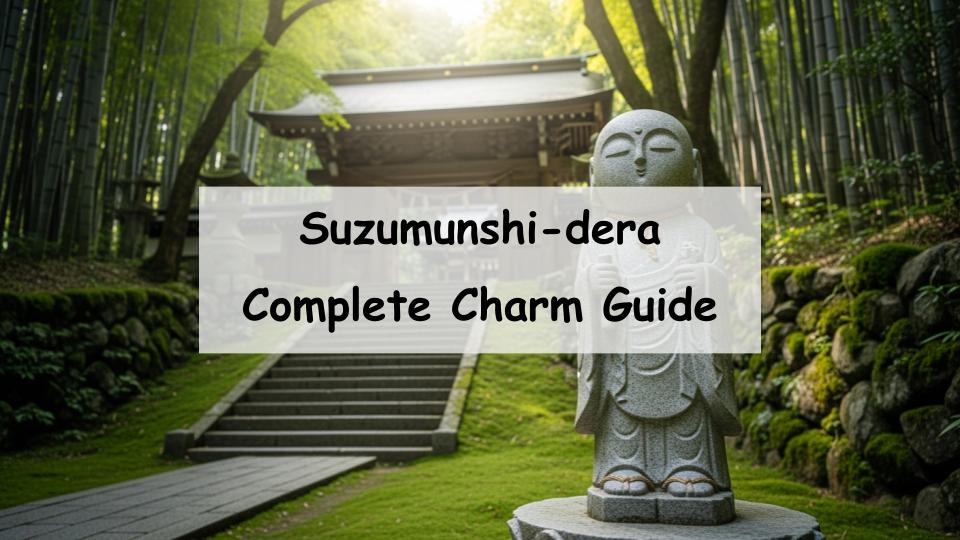
Located in Nishikyo Ward, Kyoto, not far from Arashiyama, lies Kegon-ji, affectionately known as “Suzumushi-dera” (Bell Cricket Temple). The cooling sound of the bell cricket (suzumushi), usually associated with autumn in Japan, resonates here throughout the year. Passing through the mountain gate at the top of the stone steps, visitors are welcomed by a beautiful garden and a serene atmosphere that soothes the soul.
History and Origin of Kegon-ji
Kegon-ji was founded in 1723 (mid-Edo period) by the monk Hotan Shonin. Although it is currently a Zen temple of the Rinzai sect, it was originally established with the aim of reviving the Kegon sect of Buddhism. Continuing the legacy of Hotan Shonin, who was known as a scholarly monk, the temple continues to weave its history as a place where people seek peace of mind.
Why Do Bell Crickets Sing All Year Round?
Many wonder why bell crickets, which naturally sing only in autumn, chirp all year round here. This is the result of long years of research by the previous head priest, who wished for worshipers to feel the changing seasons and the preciousness of life through the crickets’ sound. He successfully bred them artificially. In the climate-controlled study hall, thousands of crickets are kept at all times. Even in the height of summer or the depth of winter, their beautiful “mystic sound” never ceases.
The Highlight of Suzumushi-dera: The “Happiness Jizo” Wearing Straw Sandals
The main goal for many visitors is to pray to the Jizo statue standing beside the mountain gate. This statue is called the “Happiness Jizo Bodhisattva” (Kofuku Jizo-san) and possesses a very rare feature unlike ordinary Jizo statues. It attracts deep faith from across the country as a powerful “power spot” that grants wishes.
What are the Blessings of the “Happiness Jizo”?
It is said that the Happiness Jizo will grant “only one” wish, whatever it may be. Whether it is success in love, marriage, recovery from illness, passing exams, or business prosperity, the content of the wish does not matter. However, instead of being greedy and asking for many things, it is important to narrow it down to the one wish you most earnestly want to come true right now.
The Only One in Japan! Why He Wears Straw Sandals
Usually, Buddhist statues and Jizo stand barefoot on a lotus pedestal. However, if you look closely at the feet of the Happiness Jizo at Suzumushi-dera, you will see he is wearing waraji (traditional straw sandals). This signifies that the Jizo will personally walk to your house to grant your wish. The fact that he comes to us, rather than us just going to him, represents his deep mercy, symbolized by the sandals.
The Touching “Cricket Sermon” and the Charm of the Grounds
The main event of a visit to Suzumushi-dera is the “Cricket Sermon” held in the main hall. While one might expect a stiff Buddhist lecture, the content is surprisingly accessible, and the venue is constantly filled with laughter and a warm atmosphere.
Laughter and Tears! The Priest’s “Cricket Sermon”
Once seated in the hall, the head priest or vice-head priest begins the sermon. This talk, known as the “Suzumushi Seppo,” explains the mindset for daily living and how to find happiness, all mixed with humor. The storytelling is so light and witty—almost like Rakugo (comic storytelling)—that people often burst into laughter, only to find themselves moved to tears by profound words moments later. Listening to these stories with the background music of bell crickets is a refreshing experience for the soul (“washing of the mind”).

Tea and “Suzumushi” Sweets During the Sermon
During the sermon, tea and sweets are served. The sweet provided is a dry confection called “Suzumushi.” It contains black specks that look like crickets, but rest assured, they are actually bits of shiso (perilla leaf), which give it a savory flavor. The style of relaxing, drinking tea, and eating sweets while listening creates a comfortable atmosphere based on the Zen teaching of “Sarei” (tea etiquette).
A Garden with Seasonal Views and a Panorama of Kyoto
After the sermon, you can stroll through the Kaiyu-style (circuit style) garden. The garden is meticulously maintained and shows different expressions each season: cherry blossoms in spring, fresh green in summer, colored leaves in autumn, and snowscapes in winter. Located on a hill, the grounds also offer a panoramic view of Kyoto city, making it a popular spot to see Kyoto Tower in the distance.
How to Pray Correctly for Your Wish to Come True and the “Happiness Amulet”
To receive the maximum blessing from the Happiness Jizo, it is essential to follow the correct prayer etiquette. While the priest will explain this in detail during the sermon, here are the key points to review.
Correct Prayer Procedure for the Happiness Jizo
Prayer takes place in front of the Happiness Jizo beside the gate after the sermon and garden tour. First, stand in front of the Jizo, place your hands together in prayer (Gassho), and bow.
How to Hold the Amulet and the Character “Ko” (幸)
Essential for the prayer is the yellow “Happiness Amulet” (Kofuku Omamori) received after the sermon. Hold this amulet between your palms. The key point is to hold it so that the character “Ko” (幸 – happiness) on the amulet is visible peeking out from between your fingers. It is said that showing the “Happiness” character to the Jizo makes it easier to receive the blessing.
The Importance of Stating Your Name and Address
Before making your wish, you must silently state your full name and address. This is crucial information so the straw-sandal-wearing Jizo can find your house without getting lost. Be precise, including the prefecture, city, street, and even apartment number. After that, focus your mind on your specific “one wish.”
How to Get the Yellow “Happiness Amulet”
You can purchase the “Happiness Amulet” after the sermon in the main hall. It is available for 300 yen, and you can also buy them on behalf of family or friends. It is recommended to always carry this amulet in your wallet or pass case to feel the Jizo’s protection close to you.
Returning the Amulet After Your Wish Comes True
When your wish is brilliantly granted, you must go for an “Orei-mairi” (Thank-you visit). Return the old amulet to the temple and express your gratitude to the Jizo. If you have a new wish, you can receive a new amulet and pray again. This cycle of gratitude is the secret to inviting further happiness. If you live too far to visit, the temple also accepts returns via mail.
Crowd Conditions and Tips to Avoid Long Waits
As a popular temple, crowds are a concern. It is not uncommon to see long lines, especially on holidays. Here are some guidelines for a smooth visit.
Crowd Estimates for Weekdays vs. Weekends (Golden Week/Holidays)
Weekdays are relatively calm, though there may still be a wait of several dozen minutes in the morning or early afternoon. On the other hand, weekends, National Holidays, Golden Week, and Silver Week are extremely crowded. Wait times can reach 2 to 3 hours, with lines stretching all the way down the stone steps. Although the sermon hall holds many people, it operates on a rotation system, so timing is everything.
Best Times to Minimize Waiting
The most certain way to minimize waiting is to aim for first thing in the morning, before the gates open. If you line up about 30 minutes before opening, you have a high chance of getting into the first round of the sermon. Alternatively, late afternoon (near closing time) can be relatively empty, but be careful not to miss the final admission time for the sermon. Visiting in the evening can sometimes offer a quiet atmosphere distinct from the daytime bustle, making it a hidden gem of a time slot.
Access and Visitation Information for Suzumushi-dera
Here is the specific access information. Although it is slightly away from the center of Kyoto, you can arrive smoothly by choosing the right transport.
Basic Information (Hours, Fees, Address)
- Hours: 9:00 AM – 4:30 PM (Final admission)
- Fee: Adults 500 yen, Junior High students and under 300 yen (Includes sermon, tea, and sweets).
- Address: 31 Matsumuro-Jike-cho, Nishikyo-ku, Kyoto City.
Access from Kyoto Station and Arashiyama (Bus/Train)
From Kyoto Station, take Kyoto Bus #73 bound for Arashiyama/Kokedera. Get off at the final stop, “Kokedera/Suzumushidera.” It is a 3-minute walk from there. The bus ride takes about 60 minutes.
If using the train, the nearest station is Matsuo-taisha Station on the Hankyu Arashiyama Line. It is about a 15-20 minute walk from the station to the temple. If combining your visit with Arashiyama sightseeing, using the Hankyu train or bus is convenient.
Parking Information Notes
The temple has a parking lot for worshipers that holds about 60 cars (500 yen per car). However, on weekends and holidays, the parking lot is often full, and surrounding roads become congested. It is highly recommended to use public transportation or research nearby coin parking in advance if visiting on a busy day.
Recommended Sightseeing Spots Around Suzumushi-dera
Since you have traveled to Suzumushi-dera, why not explore the surrounding area? The Nishikyo Ward area is dotted with attractive sights.
Saiho-ji (Koke-dera / Moss Temple)
Located just a few minutes’ walk from Suzumushi-dera is Saiho-ji, a World Heritage Site. It is affectionately known as “Koke-dera” (Moss Temple) because over 120 varieties of moss cover the grounds beautifully. Please note that this temple requires advance reservation (via return postcard or online) and involves a strict participation format that includes sutra copying (shakyo). It is the perfect place for those wanting to organize their thoughts in silence.
Matsuo-taisha Shrine
Named after the nearest station, Matsuo-taisha is famous as the shrine of the god of sake brewing. The shrine grounds feature rows of sake barrels dedicated by breweries from all over Japan—a magnificent sight. The modern Karesansui (dry landscape) garden created by the famous Showa-era gardener Shigemori Mirei is also a highlight. In spring, it is known for its beautiful yellow Kerria flowers (Yamabuki).
Lunch and Sightseeing in the Arashiyama Area
Arashiyama, one of Kyoto’s premier tourist destinations, is just a short bus or train ride from Suzumushi-dera. It is full of famous spots like the Togetsukyo Bridge and the Bamboo Grove, as well as stylish cafes and Kyoto cuisine restaurants. A recommended course is to finish your worship at Suzumushi-dera, then move to Arashiyama to enjoy lunch and souvenir shopping, making for a perfect Kyoto day trip.
A Message from the Guide
If you visit the Arashiyama area of Kyoto, be sure to stop by.



Comment