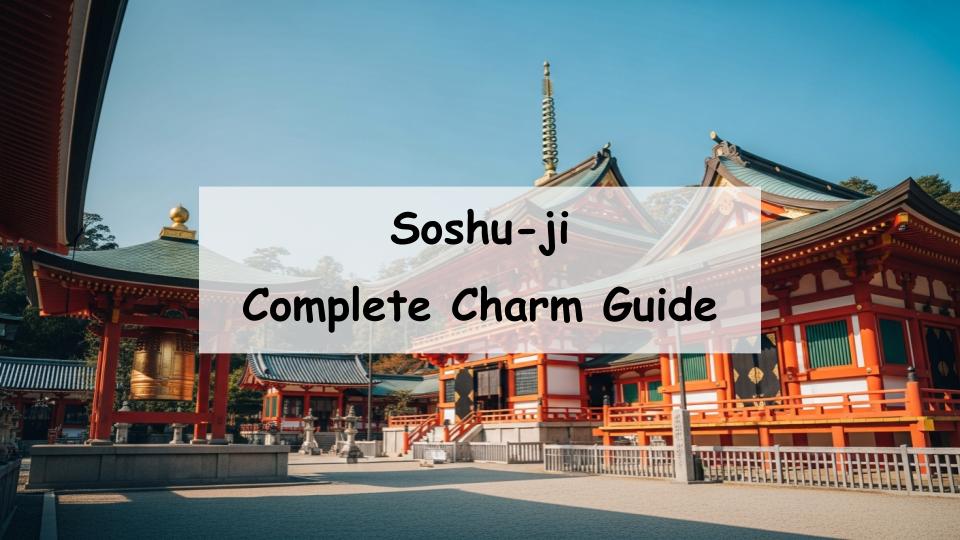
Soshuji Temple (惣宗寺) is located in Sano City, Tochigi Prefecture. Widely known by its popular name, “Sano Yakuyoke Daishi” (The Great Master of Sano for Warding Off Evil), it is a famous temple often seen in TV commercials during the New Year season in Japan.
“I want to go for a purification ritual because it’s my ‘Yakudoshi’ (unlucky year), but what kind of temple is Soshuji?”
“Are there any sights to see besides the purification rituals? Can I enjoy it as a tourist spot?”
“What is the access and parking situation like?”
If you are planning a trip to Soshuji, you might have these questions.
To give you the answer upfront: Soshuji is a prestigious temple counted as one of the Three Great Daishi Temples of the Kanto region. It is famous for its powerful benefits in warding off evil and protection against bad directions. Furthermore, with its Toshogu Shrine dedicated to Tokugawa Ieyasu and the grave of the historical figure Tanaka Shozo, it is a fascinating spot for history buffs and tourists alike.
In this article, we will introduce the history, features, must-see highlights within the temple grounds, and access methods for Soshuji in detail. We will also cover surrounding information, such as where to get famous “Sano Ramen” after your visit, so please read until the end to help plan a fulfilling trip to Sano.
- What Kind of Temple is Soshuji (Sano Yakuyoke Daishi)?
- 5 Must-See Highlights in the Temple Precincts!
- Things to Know Before You Go: Prayer Reception and Crowds
- Access to Soshuji
- Parking Information
- Sightseeing and Gourmet Around Sano City!
- Summary: Enjoy Warding Off Evil and Sightseeing at Historic Soshuji
- A Message from the Guide
What Kind of Temple is Soshuji (Sano Yakuyoke Daishi)?
Located in the center of Sano City, Soshuji is a representative Buddhist temple in Tochigi Prefecture, bustling with visitors throughout the year. First, let’s look at its origins and benefits.
One of the “Three Great Daishi” of the Kanto Region
Soshuji is a temple of the Tendai sect of Buddhism and is a branch temple of Enryakuji on Mount Hiei. While it is widely known as “Sano Yakuyoke Daishi,” its formal name is Kasuga-Okayama Tenborin-in Soshukanji.
It has long been counted as one of the “Three Great Daishi of Kanto.” During the New Year holidays, it is so popular that the grounds are filled with people coming for Hatsumode (the first temple visit of the year). It gathers deep faith from not only within the prefecture but from all over the Kanto region as a center for warding off evil.
History and Origins of Soshuji
The history of Soshuji is ancient, dating back to the Heian period in the year 944 (Tengyo 7). It is said to have originated when Fujiwara no Hidesato, known for suppressing the rebellion of Taira no Masakado, enshrined Kasuga Myojin at Kasuga-oka (the site of the current Sano Castle ruins) and built a temple.
Later, in the Edo period, it was moved to its current location. The head priest at the time, Yukai Shonin, worked hard to restore the temple, gaining the trust of the Shogunate and leading to its great development. With a history spanning over a thousand years, Soshuji continues to be a spiritual pillar for the people of Sano.
Benefits: Warding Off Evil and Directional Protection
The most famous benefit of Soshuji is undoubtedly “Yakuyoke” (Warding off Evil). Yakudoshi refers to ages when one is believed to be prone to disasters or misfortunes. This temple, which enshrines Ganzan Daishi, performs prayers to drive away these misfortunes and ensure a peaceful life.
Along with warding off evil, it is also known for “Hoi-yoke” (Directional Protection). This is believed to prevent disasters caused by moving in a bad direction, such as during moving house or traveling. In addition, the temple accepts various prayers related to daily life, such as family safety, traffic safety, and physical health, attracting endless visitors at turning points in their lives.

5 Must-See Highlights in the Temple Precincts!
Beyond the prayers for warding off evil, the temple grounds are dotted with historical buildings and cultural properties. Here are five selected highlights you should definitely visit.
The Brilliant Main Hall and Kasuga-Okayama Tenborin-in
Upon entering the precincts, the first thing that catches your eye is the Main Hall with its vivid vermilion color. This building was rebuilt in 1978, and the principal image, the Nyoirin Kannon and Ganzan Daishi, are enshrined inside.
The brilliance of the Main Hall creates a solemn atmosphere, and just joining your hands in prayer there can make you feel spiritually cleansed. When visiting, please first pay your respects here and convey your gratitude and wishes.
“Toshogu” Shrine Dedicated to Tokugawa Ieyasu
Within the grounds of Soshuji stands a Toshogu Shrine dedicated to Tokugawa Ieyasu. This was built because of a connection formed when Tokugawa Ieyasu’s remains were transported to Nikko during the Edo period; the procession stayed overnight at Soshuji.
The worship hall and main hall feature the architectural beauty of the Karamon style with exquisite carvings. The structure is reminiscent of the famous Nikko Toshogu Shrine, and the richly colored building is a must-see. It is a spot of high historical value where you can feel the deep connection with the Tokugawa family.
The “Great Bronze Bell” Created by a Living National Treasure
As you walk through the grounds, you will notice a large bell shining in gold. This is called the “Kondo Daibonsho” (Great Bronze Bell) and was cast by Masahiko Katori, a Living National Treasure.
With a diameter of over 1 meter and a weight of about 2 tons, this temple bell is known not only for its size but also for the beauty of the delicate patterns on its surface. As it is highly valued as a work of art, please take a closer look to appreciate its power and beauty.
Grave of the Historical Figure “Tanaka Shozo”
Soshuji is also the resting place of Tanaka Shozo, a Meiji-era politician who dedicated his life to solving the Ashio Copper Mine pollution incident. Before he passed away, he left a will asking for a portion of his ashes to be interred at Soshuji.
The grave located behind the Main Hall is wrapped in silence, and many people visit to pay their respects. It is a good opportunity to think about history and why this local hero chose this place.
The Cleansing “Reisui Kannon” and “Suikinkutsu”
A statue called “Reisui Kannon” (Water Beauty Kannon) is enshrined in the precincts. This Kannon, with a figure as beautiful as flowing water, is said to wash away the impurities of people’s hearts.
Nearby, there is a “Suikinkutsu” (Water Harp Cave). This is a traditional Japanese garden decoration where water drips into an underground jar, creating a clear, harp-like echoing sound. If you listen carefully to the elegant tone, you can forget the hustle and bustle of daily life and spend a relaxing moment.
Things to Know Before You Go: Prayer Reception and Crowds
If you wish to receive a formal prayer ritual (kigan), preparation and checking information are important. Here, we explain the reception hours, fees, and how to avoid crowds.
Reception Hours and Process
Soshuji accepts prayers for warding off evil and directional protection every day. Usually, reception starts around 8:30 AM and continues until around 4:30 PM. However, times may change depending on events or seasons, so checking the official website before visiting is recommended.
The process involves filling out an application form at the reception desk and paying the prayer fee. You will then be guided to the Main Hall at a designated time for the Goma fire ritual and sutra chanting by the monks.
Estimated Prayer Fees (O-fuse)
The prayer fee (O-fuse) varies depending on the type of wish and the size of the wooden talisman (Ofuda) you receive. Generally, amounts are set at 3,000 yen, 5,000 yen, and 10,000 yen, so you can choose according to your budget and preference.
There is no need to put the money in a special envelope; paying in cash at the reception is the standard format. Having small change or 1,000-yen bills ready beforehand will make the process smoother.
New Year Crowd Situation and Tips
As it is famous as “Sano Yakuyoke Daishi,” the New Year Hatsumode season (January) is extremely crowded. especially during the first three days of the year (San-ga-nichi), lines overflow from the temple grounds, and surrounding roads become heavily congested. Waiting times for prayers can often reach several hours.
If you want to avoid crowds, it is wise to visit after mid-January on a weekday, or aim for early morning or late afternoon slots. Since prayers for warding off evil are conducted year-round, visiting at a different time of year for a calmer experience is also a good option.
Access to Soshuji
Access to Soshuji is relatively convenient by both train and car.
By Train (Route from Nearest Station)
If using the train, the nearest stations are “Sano-shi Station” on the Tobu Sano Line or “Sano Station” on the JR Ryomo Line/Tobu Sano Line.
- From Sano-shi Station: It is about a 10 to 15-minute walk.
- From Sano Station: It is about a 15 to 20-minute walk.
The path from either station is flat, so you can enjoy walking while looking at the townscape.
By Car (Nearest IC)
If visiting by car, the nearest interchange is the “Sano-Fujioka Interchange” on the Tohoku Expressway. After exiting the IC, proceed on Route 50 towards Sano city center, and you will arrive in about 10 to 15 minutes.
It is also accessible from the “Sano-Tanuma Interchange” on the Kita-Kanto Expressway, which also takes about 10 to 15 minutes.
Parking Information
Here is the parking information for those visiting by car.
Free Parking Within the Precincts
Soshuji has a free parking lot dedicated to worshippers. It is located right next to the temple grounds and is very convenient on weekdays when it is not busy. However, the number of spaces is limited, so it often fills up quickly on weekends, holidays, and event days.
Surrounding Paid and Temporary Parking
If the free parking is full or during the New Year season, you will need to use paid parking lots or temporary parking nearby. There are private coin parking lots around the temple, and riverbeds are sometimes opened as temporary parking.
During busy periods, traffic guides are often present, so please follow their instructions. Finding parking can take time during peak congestion, so plan your schedule with plenty of buffer time.
Sightseeing and Gourmet Around Sano City!
After visiting Soshuji, be sure to enjoy Sano City’s local specialties and tourist spots. Here are some recommended spots easily accessible from the temple.
Enjoy the Authentic Taste at Famous “Sano Ramen” Shops
When visiting Sano, you cannot miss “Sano Ramen.” It features flat, curly noodles made with a unique method called bamboo beating (Aotake-uchi) and a clear soy sauce-based soup.
There are many long-established and popular ramen shops within walking distance of Soshuji. The light flavor is perfect for a meal after visiting the temple, so please try the authentic taste.
Shopping at “Sano Premium Outlets”
For those who want to enjoy shopping, “Sano Premium Outlets” is recommended. It is about a 10 to 15-minute drive from Soshuji and is a large outlet mall lined with famous domestic and international brand stores.
Modeled after the East Coast of the United States, you can enjoy shopping for clothes and goods, as well as dining, in an open atmosphere. Combining this with your temple visit makes for a full day of fun.
Best for Souvenirs: “Sano City Tourist Information Center”
Across the street from Soshuji is the “Sano City Tourist Information Center” (Sano-shi Kanko Bussan Kaikan). Here, local specialties and souvenirs of Sano City are gathered in one place.
You can find souvenir sets of famous “Sano Ramen,” the local comfort food “Imo Fry” (potato fry), and traditional crafts. It is the perfect place to look for memories of your trip or gifts. Why not stop by on your way home?
Summary: Enjoy Warding Off Evil and Sightseeing at Historic Soshuji
Soshuji (Sano Yakuyoke Daishi) in Tochigi Prefecture is a temple full of highlights. It offers not only powerful benefits for warding off evil as one of the Kanto Three Great Daishi but also historical sites like the Toshogu Shrine and Tanaka Shozo’s grave.
Time spent calming your mind in the brilliant Main Hall and being healed by the beautiful sound of the bell and the water harp cave will surely make you forget the busyness of daily life. After visiting, you can enjoy Sano Ramen and shopping at the outlets, ensuring a fulfilling holiday.
For your next day off, why not visit Soshuji, a place brimming with history and charm, to refresh both your mind and body?
A Message from the Guide
While it is best known for warding off evil, this temple is actually full of other highlights.


Comment