“Negoro-ji Temple” is a magnificent temple complex located in Iwade City in the northern part of Wakayama Prefecture.
When planning a trip or outing, you might have questions such as, “What are the highlights of Negoro-ji Temple?”, “Are the rumors about the beautiful cherry blossoms and autumn leaves true?”, or “Is it easy to access?”
To give you the conclusion first, Negoro-ji Temple is one of Wakayama’s premier tourist spots where you can enjoy the National Treasure “Daito” (Great Pagoda), the largest of its kind in Japan, along with the historical romance of the Sengoku (Warring States) period and the beautiful nature of the four seasons.
Therefore, in this article, we will thoroughly introduce the history, features, absolute must-see highlights, and detailed access information you should know before visiting Negoro-ji Temple. If you read this article, your preparation for enjoying Negoro-ji Temple to the fullest will be perfect. Please read through to the end.
- What is Negoro-ji Temple? Explaining its History and Features
- 5 Absolute Must-See Highlights of Negoro-ji Temple
- National Treasure “Daito” (Great Pagoda): Japan’s Largest Wooden Tahoto Pagoda
- Important Cultural Property “Daidenpo-do” (Main Hall): Overwhelmed by Huge Statues
- National Place of Scenic Beauty “Negoro-ji Garden”: Beauty Incorporating Natural Scenery
- Scenery of Komyo Shingon-den and Shoten Pond
- Cherry Blossoms of “Top 100 Cherry Blossom Spots” and Autumn Leaves
- Goshuin, Admission Fee, and Required Time for Negoro-ji Temple
- Access Methods and Parking for Negoro-ji Temple
- Nearby Sightseeing Spots to Visit with Negoro-ji Temple
- Summary: Let’s Go to Negoro-ji Temple Where History and Nature Weave Together
- A Message from the Guide
What is Negoro-ji Temple? Explaining its History and Features
Negoro-ji Temple is the Head Temple of the Shingi Shingon sect of Buddhism, located at the foot of the Katsuragi mountain range in Iwade City, Wakayama Prefecture. The vast temple grounds are lined with precious buildings designated as National Treasures and Important Cultural Properties, preserving the atmosphere of the medieval period to this day. First, we will explain its historical background and features.
Its History as the Head Temple of the Shingi Shingon Sect
The history of Negoro-ji Temple began in the late Heian period when Kakuban Shonin, a scholar-monk of Koyasan, established Daidenpo-in on Koyasan. Later, disciples who inherited Kakuban Shonin’s teachings moved their base to the land of Negoro and developed it as a place for learning and faith. This became the foundation of the current Shingi Shingon sect, and Negoro-ji Temple has become a sacred place visited by many worshipers as its headquarters.
The Strongest Gunner Group of the Sengoku Period, “Negoro-shu,” and the Battle with Toyotomi Hideyoshi
Essential to the story of Negoro-ji Temple is the existence of the “Negoro-shu,” a group of warrior monks who boasted immense power during the Sengoku period. They were among the first to adopt firearms after they were introduced to Japan and were feared as an armed group. At its peak, the temple controlled a territory of 720,000 koku (a measure of rice production) and became a major force, but in 1585, it was attacked by Toyotomi Hideyoshi during his conquest of Kishu. In this battle, the entire mountain was burned down, leaving only a few buildings such as the Great Pagoda and the Daishi-do Hall, but this turbulent history is one of the charms of Negoro-ji Temple.
5 Absolute Must-See Highlights of Negoro-ji Temple
Negoro-ji Temple, with its vast grounds, is dotted with numerous highlights. Here, we will narrow it down to five points that first-time visitors should definitely see.
National Treasure “Daito” (Great Pagoda): Japan’s Largest Wooden Tahoto Pagoda
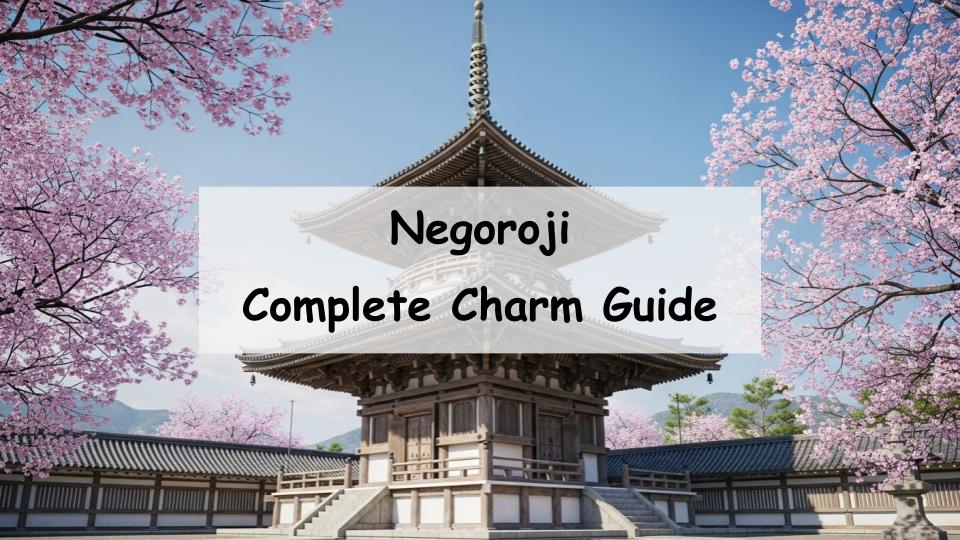
The symbol of Negoro-ji Temple is the National Treasure “Daito,” which stands about 40 meters high and 15 meters wide. This is the largest wooden Tahoto (multi-jeweled pagoda) in Japan, and its majestic appearance is simply overwhelming. A notable feature is that although it is a National Treasure, visitors can enter the pagoda to worship. Inside, Buddhist statues representing the world of the Mandala are enshrined in three dimensions, allowing you to touch upon the solemn atmosphere in silence.


The Weight of History Told by Bullet Holes
When you visit the Great Pagoda, please pay attention to the outer walls and pillars. There, the bullet holes from the matchlock guns fired during the battle with Toyotomi Hideyoshi remain vividly to this day. The blackened holes are proof that a fierce battle once took place here, allowing you to feel a reality that cannot be experienced through history textbooks alone.
Important Cultural Property “Daidenpo-do” (Main Hall): Overwhelmed by Huge Statues
Standing next to the Great Pagoda is the Important Cultural Property “Daidenpo-do,” which serves as the main hall of Negoro-ji Temple. It is a dignified building with a wide structure, and three huge Buddhist statues are enshrined inside: the principal image Dainichi Nyorai, Kongosatta, and Sonsho Buccho. These were made in the late Edo period, and anyone would be overwhelmed by their towering size.
National Place of Scenic Beauty “Negoro-ji Garden”: Beauty Incorporating Natural Scenery
Behind the main priest’s quarters (Honbo), the “Negoro-ji Garden,” a Place of Scenic Beauty designated by the national government, spreads out. This garden is a pond-spring strolling garden that conveys the style of the Azuchi-Momoyama period, characterized by a composition that skillfully incorporates the mountains behind it and natural waterfalls. You can spend a peaceful time gazing at the garden, which changes its expression with the seasons.
Scenery of Komyo Shingon-den and Shoten Pond
A particularly popular spot for photos within the precincts is the scenery of the Komyo Shingon-den Hall and the Shoten Pond that spreads out in front of it. The reflection of the vermilion hall and surrounding greenery on the water’s surface is extremely beautiful, allowing you to enjoy a view like a painting. It is also recommended to sit on a bench and leisurely gaze at the scenery.
Cherry Blossoms of “Top 100 Cherry Blossom Spots” and Autumn Leaves
Negoro-ji Temple is known as one of the leading cherry blossom spots in the Kansai region and has been selected as one of the “Japan’s Top 100 Cherry Blossom Spots.” In spring, about 7,000 cherry trees fill the precincts, and it is bustling with many flower viewing visitors during the full bloom period. Also, in autumn, maples and ginkgo trees change color, making it popular as a spot for autumn leaves. The contrast between the Great Pagoda or Daidenpo-do and the autumn leaves is particularly beautiful, and many photographers visit to capture the scene.
Goshuin, Admission Fee, and Required Time for Negoro-ji Temple
We have summarized practical information that you might be concerned about when visiting.
Admission Fee and Opening/Closing Times
The admission fee (entrance fee) for Negoro-ji Temple is 500 yen for adults (junior high school students and older), and free for children. Visiting hours vary by season: from April to October, it is open from 9:10 to 16:30, and from November to March, it is open from 9:10 to 16:00. Since the closing time is a bit early, we recommend visiting with plenty of time to spare.
Types and Locations of Goshuin
At Negoro-ji Temple, you can receive different types of Goshuin (stamps) at multiple locations. They are mainly awarded at the admission reception, the Honbo, and the Fudo-do Hall. There are several types available, such as the principal image “Dainichi Nyorai,” “Kogyo Daishi,” and “Migawari Fudo.” Specialized Goshuin books are also sold, so why not collect them as a memento of your visit?

How Much Time is Required for Sightseeing?
Since the precincts are large, you should plan for about 1 hour to 1.5 hours just to quickly look around the main buildings such as the Great Pagoda, Daidenpo-do, and the garden. If you plan to extend your visit to the Okunoin (inner sanctuary) or stroll slowly while taking photos during the cherry blossom or autumn foliage seasons, it is safe to secure 2 hours or more.
Access Methods and Parking for Negoro-ji Temple
We will explain how to get to Negoro-ji Temple by car and by public transportation.
Directions by Car and Parking Information
When accessing by car, the nearest interchange is “Iwade-Negoro IC” on the Keinawa Expressway, which is in a prime location about 3 minutes away. If using the Hanwa Expressway, it takes about 20 minutes from “Sennan IC.” Free parking is available around the precincts, and there is ample space for large buses, making visiting by car very convenient.
Directions by Train and Bus
If using the train, JR Wakayama Line’s “Iwade Station” or JR Hanwa Line’s “Izumi-Sunagawa Station” will be your base. From Iwade Station, it takes about 15 minutes by bus, and from Izumi-Sunagawa Station, it takes about 30 minutes by bus to arrive at the “Negoro-ji” bus stop. Since the number of buses is not very frequent, it is important to check the timetable in advance.
Direct Bus “Negoro Liner” from Kyobashi and Namba is Convenient
When accessing from the Osaka area, using the highway bus “Negoro Liner” departing from Kyobashi Station or Namba Station is also an option. It is very convenient as you can go directly to the vicinity of Negoro-ji Temple without transferring, but operations may be limited to weekends and holidays, so please be sure to check the latest operation schedule on the bus company’s official website when using it.
Nearby Sightseeing Spots to Visit with Negoro-ji Temple
There are attractive spots around Negoro-ji Temple that you should stop by together.
Roadside Station Negoro Sakura no Sato
“Roadside Station Negoro Sakura no Sato,” located just a short drive from Negoro-ji Temple, is a popular spot where local fresh vegetables, fruits, and souvenirs are available. It is perfect for stopping by to enjoy shopping or take a break on your way back from sightseeing.
Old Wakayama Prefectural Assembly Building (Ichijokaku)
Near the parking lot of Negoro-ji Temple, the “Old Wakayama Prefectural Assembly Building (Ichijokaku),” built in the Meiji era, has been relocated and preserved. It is an Important Cultural Property characterized by the heavy construction of Japanese-style architecture, and you can tour the inside. It is recommended for those who want to enjoy retro architectural beauty.
Negoro-yama Genki no Mori
For those who want to move their bodies in nature, “Negoro-yama Genki no Mori” is a good choice. Walking paths are maintained, allowing you to enjoy forest bathing and hiking. It is a perfect place for family outings.
Summary: Let’s Go to Negoro-ji Temple Where History and Nature Weave Together
Negoro-ji Temple is a wonderful tourist destination that fuses precious cultural properties such as the National Treasure Great Pagoda, the historical romance of the Sengoku period, and the natural beauty of the four seasons. It is a place worth visiting not only for history buffs but also for those who want to be healed by beautiful scenery and those who are collecting Goshuin. Please visit Negoro-ji Temple, which has good access from Osaka and the Kansai area, at least once.
A Message from the Guide

It’s amazing that we can actually enter the Tahoto pagoda.


Comment