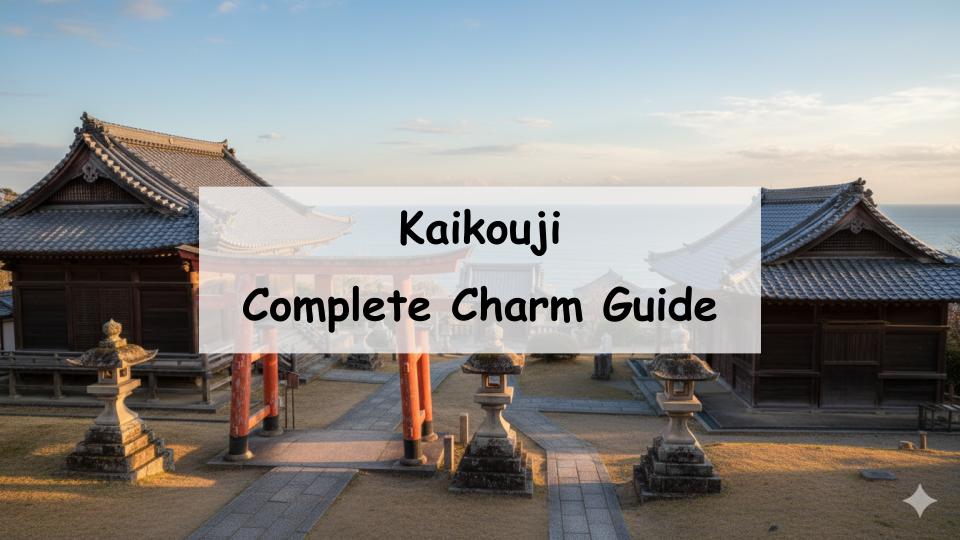
Kaikouji Temple (海向寺) is located in Sakata City, Yamagata Prefecture.
Many people become interested in this temple after learning about “Sokushinbutsu” (self-mummified monks) on TV or in magazines.
“I heard you can see Sokushinbutsu there, but what kind of temple is it really?”
“Is it true that there are two of them enshrined there? Isn’t it scary?”
“I want to know about the admission fees, parking, and access beforehand.”
You might be holding some of these questions or anxieties.
To give you the conclusion first: Kaikouji is the “only place in Japan” where you can view two Sokushinbutsu at the same time. It is an extremely rare and spiritual “power spot” in Japan.
The figures of these monks, who became Buddhas after severe ascetic training, are filled with deep compassion for the peace of the people, rather than being scary.
In this article, we will explain the following points in detail for those considering a visit to Kaikouji:
- The history and characteristics of the two Sokushinbutsu enshrined at Kaikouji
- Must-see spots within the temple grounds
- Basic information such as admission fees and visiting hours
- Access methods and parking information to get there without getting lost
We will introduce the charms of Kaikouji thoroughly, so please use this guide to plan your trip.
- What is Kaikouji? The Only Temple in Japan Enshrining “Two Sokushinbutsu”
- The Sokushinbutsu of Kaikouji: “Chukai Shonin” and “Enmyokai Shonin”
- Not Just Sokushinbutsu! Highlights of the Kaikouji Grounds
- Goshuin (Temple Stamps) and Amulets at Kaikouji
- Admission Fees, Hours, and Duration
- Access and Parking Information
- A Message from the Guide
What is Kaikouji? The Only Temple in Japan Enshrining “Two Sokushinbutsu”
Located on a hill in Sakata City, Yamagata Prefecture, Kaikouji is a historic temple of the Chisan School of Shingon Buddhism with a history of over 1,200 years. While there are over a dozen Sokushinbutsu existing across Japan, Kaikouji is the only temple in the entire country where two are enshrined in a single location.
Why Are Two Sokushinbutsu Enshrined Here? A Unique Sight in Japan
Usually, a monk who becomes a Sokushinbutsu is a unique, singular presence for that region or temple. However, Kaikouji enshrines two: “Chukai Shonin” and “Enmyokai Shonin.”
This is because these two men, who had a master-disciple relationship as successive head priests of the same temple (sharing a spiritual lineage across different times), both held a strong desire to save the masses. They both chose to become Buddhas after enduring grueling training. The sight of two Buddhas side-by-side in the same hall is breathtaking, and the space is filled with a solemn and pure atmosphere.
What Exactly is “Sokushinbutsu”? Differences from Mummies
When people hear “Sokushinbutsu,” many think of “mummies.” However, their origins and spirituality are vastly different. Mummies, like those in ancient Egypt, were created by artificially preserving the bodies of rulers after death, hoping for resurrection in the afterlife.
On the other hand, Sokushinbutsu involves a process that begins while the monk is still alive. They undergo “Mokujikigyo” (wood-eating training), restricting their diet to the extreme to remove fat and moisture from the body. They consume items like lacquer to make their bodies resistant to decay. Finally, they enter a stone chamber underground while still alive, continuing to chant sutras and ring a bell until they enter eternal meditation.
In other words, the fundamental concept is the spirit of “altruism”—sacrificing one’s own life to save people suffering from famine or disease.
The Sokushinbutsu of Kaikouji: “Chukai Shonin” and “Enmyokai Shonin”
The two saints you can view at Kaikouji came from different backgrounds but became Sokushinbutsu with the same wish.
The Life and Wish of “Chukai Shonin” (Originally a Samurai)
Chukai Shonin was originally a samurai of the Shonai Domain. His secular name was Togashi Chudayu. During his lifetime, people were suffering from famine and plagues. Witnessing this misery, Chukai Shonin abandoned his samurai status to enter the Buddhist priesthood and became the restorer of Kaikouji.
After enduring severe hardships, including a 1,000-day retreat in the mountains, he entered Nyujo (the act of being buried alive to become a Sokushinbutsu) in 1755 (Horeki 5) at the age of 58. His life, dedicated to removing people’s suffering through his own penance, was full of samurai-like decisiveness and deep mercy.
The Life and Wish of “Enmyokai Shonin” (Originally a Farmer)
Enmyokai Shonin came decades after Chukai Shonin and was originally from a local farming family. He joined Kaikouji out of admiration for Chukai Shonin’s great deeds and virtue, resolving to walk the same path.
He also endured severe training, such as the wood-eating diet, and entered Nyujo in 1822 (Bunsei 5) at the age of 55. The wooden coffin he entered when becoming a Sokushinbutsu still exists, conveying the strength of his resolve to this day. Although their social statuses at birth were different, their ambition to save people was shared, and the two saints continue to watch over visitors side-by-side today.
Changing of the Robes Every 12 Years and Special Amulets
The robes worn by the Sokushinbutsu are changed once every 12 years during the Year of the Ox. The old robes are cut into small pieces and placed inside amulets.
These amulets are believed to house spiritual power as they have been with the saints for many years. They are very popular for their benefits in health, longevity, and warding off evil. It is worth checking if these special amulets containing pieces of the robes are available when you visit.
Not Just Sokushinbutsu! Highlights of the Kaikouji Grounds
The appeal of Kaikouji is not limited to the Sokushinbutsu. There are many other spiritual spots and highlights within the grounds.
“Awashima Kannon Hall”: Guardian of Women for Matchmaking and Safe Childbirth
The Awashima Kannon Hall located within the grounds has long been worshipped as a guardian deity for women. This Buddha is believed to listen to women’s specific concerns, such as recovery from gynecological illnesses, finding a good match, safe childbirth, and fertility.
Many female visitors, not just locals but also from far away, can be seen quietly praying here. In front of the hall, items dedicated for wishes are displayed, allowing you to feel the deep faith people have in this place.

The Main Image “Taizokai Dainichi Nyorai” and the “Rubbing Buddha”
The main image of Kaikouji is the Taizokai (Womb Realm) Dainichi Nyorai. It is enshrined in the main hall (separate from the Sokushinbutsu Hall), and its expression full of affection is a must-see.
Additionally, there is a statue of Binzuru Sonja, known as the “Nade-botoke” or “Sasuri-botoke” (Rubbing Buddha), on the grounds. It is said that if you rub the part of the statue corresponding to the part of your own body that is ailing, that area will be healed. Parts of the statue, such as the shoulders, lower back, and legs, have become smooth from visitors rubbing them with their wishes.
Filming Location for “Departures” (Okuribito)! Adjacent to Hiyoriyama Park
Kaikouji is adjacent to “Hiyoriyama Park,” a representative tourist spot in Sakata City. This area is famous as a filming location for the Academy Award-winning movie Departures (Okuribito).
From just outside the temple, you can get a panoramic view of Sakata Port and the Sea of Japan; the sunset is particularly spectacular. After calming your mind at Kaikouji, taking a walk in Hiyoriyama Park to enjoy the world of the movie and the magnificent scenery is highly recommended.
Goshuin (Temple Stamps) and Amulets at Kaikouji
Receiving a Goshuin or amulet as proof of your visit is one of the joys of travel.
Powerful “Sokushinbutsu” Goshuin
At Kaikouji, in addition to the Goshuin for the main deity Dainichi Nyorai, you can also receive a Goshuin related to the Sokushinbutsu. The calligraphy, written with powerful strokes, has an intensity that lets you feel the energy of the two saints. Bring your Goshuin book (Goshuin-cho) to have it inscribed as a memory of your trip.
Rare Amulets Containing Sokushinbutsu Robes
As mentioned earlier, amulets enclosing a piece of the robes actually worn by the Sokushinbutsu are unique to Kaikouji. Although quantities may be limited, they are chosen as protection for oneself or as gifts for loved ones, believed to bring health and longevity.
Admission Fees, Hours, and Duration
Here is the basic information you should check before visiting.
Visiting Hours and Closed Days
- Hours: Generally from 9:00 AM to around 4:00 PM (or 5:00 PM).
- Note: Hours may vary depending on the season. Please be aware that the temple may close earlier, especially in winter.
- Closed: Basically every Tuesday.
- Note: Visiting may not be possible during the New Year period (Jan 1–3) or on days with temple events. If you are coming from afar, we recommend confirming by phone in advance.
Admission Fees
There is a fee to enter the Sokushinbutsu Hall where the saints are enshrined.
- Adults: Approximately 500 to 700 yen.
- There are also rates for students and children.
This fee is used for the maintenance and management to preserve these precious Sokushinbutsu and cultural properties for future generations.
Estimated Visit Duration
If you listen to the explanation from the temple staff while viewing the Sokushinbutsu Hall, you should plan for about 30 to 40 minutes. If you wish to stroll around the temple grounds slowly and extend your walk to Hiyoriyama Park, setting aside 1 to 1.5 hours will allow you to enjoy your visit without rushing.
Access and Parking Information
Although Kaikouji is located on a hill, access is relatively good.
Access by Car and Parking
If visiting by car, it takes about 15 to 20 minutes from the “Sakata IC” on the Yamagata Expressway.
There are No. 1 and No. 2 parking lots available right near the temple. They are free to use, but please be careful when driving as there are some narrow roads leading up the hill.
- Navigation Tip: Entering the temple’s phone number or address (2-7-12 Hiyoshi-cho, Sakata City, Yamagata) into your car navigation system will ensure a smooth arrival.
Access by Bus or Taxi from Sakata Station
If using public transport, the nearest station is “Sakata Station” on the JR Uetsu Main Line.
- By Bus: Take the Shonai Kotsu Bus or the city run “Runrun Bus” from in front of Sakata Station. Get off at bus stops such as “Kotobuki-cho” or “Hiyoriyama Koen,” and walk for a few minutes.
- By Taxi: It takes about 5 to 10 minutes from Sakata Station. This is convenient if you are worried about walking up the slope or want to save time.
Kaikouji is the only place in Japan where you can meet two Sokushinbutsu. Please do visit to touch upon their sublime figures and history.
A Message from the Guide
The sight of two Sokushinbutsu enshrined side-by-side in the hall is truly awe-inspiring.

Comment