“What kind of temple is Seichoji?” “I heard it has a connection to Saint Nichiren, but what exactly is there to see?” “It sounds like it’s deep in the mountains of Chiba — how do I get there?” If you’ve found yourself asking any of these questions, you’ve come to the right place.
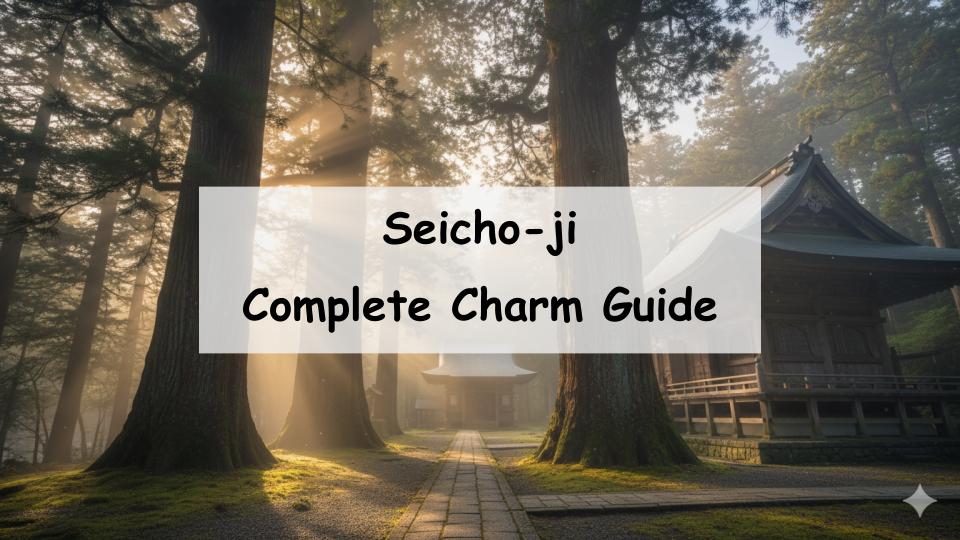
Located in Kamogawa City, Chiba Prefecture, Seichoji Temple is a historically rich temple said to have been founded during the Nara period. It is revered as a sacred site where Nichiren — the founder of the Nichiren Buddhist sect — proclaimed his teachings, drawing devoted pilgrims, Buddhist enthusiasts, and history lovers from across Japan. With ancient cedar trees over a thousand years old and a majestic main hall, the temple grounds are filled with awe-inspiring sights, making Seichoji one of Chiba’s finest destinations where nature and history come together.
In this article, we cover everything you need to know before your visit: the temple’s history and religious background, highlights and must-see spots within the grounds, experience programs and goshuin (temple seal) information, access by train or car, and nearby attractions. Whether you’re visiting Seichoji for the first time or returning after a long absence, read on to plan the perfect visit.
- What Kind of Temple Is Seichoji? Basic Information and History
- Highlights and Must-See Spots at Seichoji Temple
- Experiences and Ways to Enjoy Your Visit
- Blessings and Prayer Ceremonies at Seichoji
- Nearby Attractions and Dining
- Access: How to Get to Seichoji Temple
- Visitor Information: What to Know Before You Go
- Frequently Asked Questions (FAQ)
- A Message from the Guide
What Kind of Temple Is Seichoji? Basic Information and History
Overview and Religious Affiliation
Seichoji Temple (清澄寺, pronounced Seichoji) is a grand head temple of the Nichiren Buddhist sect, located in the Kiyosumi area of Kamogawa City, Chiba Prefecture. Known by the mountain name “Senkōzan,” it sits near the summit of Mt. Kiyosumi at an elevation of approximately 377 meters, with a vast temple complex spanning around 34,300 tsubo (roughly 113,000 square meters). The grounds are lined with towering cedar trees, and structures such as the main hall (Daido), the Soshi-do (Founder’s Hall), the Kannon-do, and the bell tower lend the site a serene and solemn atmosphere.
In terms of religious standing, Seichoji is classified as both a grand head temple and a sacred historic site within the Nichiren sect. Along with Kuonji Temple on Mt. Minobu in Yamanashi Prefecture (the head temple of Nichiren Buddhism), Ikegami Honmonji, and Tanjoji Temple, Seichoji is counted among the “Four Sacred Sites of the Nichiren Sect,” making it one of the most important temples in the denomination nationwide.
History and Origins of Seichoji Temple
Founding Roots Stretching Back to the Nara Period
The founding of Seichoji is said to date back to the year 771 (Hoki 2). According to tradition, a traveling monk known as “Fushigi Hoshi” visited Mt. Kiyosumi and established a temple enshrining Akashagarbha Bodhisattva (Kokūzō Bosatsu). An ancient cypress tree near the summit was said to emit a mysterious radiance, which inspired the mountain name “Senkōzan” (Mountain of a Thousand Lights). The temple name “Kiyosumi” (meaning “clear and pure”) was derived from a sacred spring that reportedly welled up from a nearby pond through the monk’s prayers.

Over time, Seichoji grew into a major temple complex of the Tendai sect, comprising 12 sub-temples and 25 halls. In the early Edo period it converted to the Shingon sect, and in 1949 (Showa 24), it converted once more to the Nichiren sect, where it remains today. As an ancient temple with over 1,200 years of accumulated history, it continues to welcome countless visitors and pilgrims.
The Deep Connection to Saint Nichiren
Seichoji is perhaps best known for its profound ties to Saint Nichiren (1222–1282). At the age of 12, Nichiren entered Seichoji under the recommendation of Tojo Kageshin, a powerful clan leader of Awa Province (present-day Chiba Prefecture), and began his religious training under the monk Dozen-bo. He went on to study Buddhism at Mt. Hiei, in Kamakura, and in Kyoto, before returning to Mt. Kiyosumi. It was here, at the age of 32, that he made a declaration that would change the course of Japanese Buddhism.
On April 28, 1253, facing the Pacific Ocean sunrise from a place called “Asahi-ga-mori” on Mt. Kiyosumi, Nichiren chanted “Namu Myoho Renge Kyo” for the very first time and proclaimed his mission to spread the teachings of the Lotus Sutra. This moment is recognized as the founding declaration of Nichiren Buddhism, and Seichoji is venerated as its sacred birthplace to this day.
Why Seichoji Is Called a “Sacred Site of Nichiren Buddhism”
The primary reason Seichoji is regarded as a sacred site of Nichiren Buddhism lies in the historical fact that it was here that Nichiren took his vows as a monk and proclaimed the founding of his religious movement. For followers of the Nichiren sect, Seichoji is the “birthplace of the founder’s teachings” — a pilgrimage destination many aspire to visit at least once in their lifetime.
As one of the Four Sacred Sites of the Nichiren sect, the temple holds special significance for Nichiren Buddhist temples and devotees throughout Japan. This place — where history, faith, and nature harmonize — carries great value not only as a site of religious pilgrimage, but also as a cultural and historical destination.
Highlights and Must-See Spots at Seichoji Temple
The Daido (Soshi-do / Founder’s Hall)
Standing majestically at the heart of the temple grounds, the Daido (also known as the Soshi-do or Founder’s Hall) is the defining structure of Seichoji. Dedicated to Nichiren, the founder of Nichiren Buddhism, it serves as the spiritual center where visitors come to offer their prayers. The hall’s imposing exterior, framed by towering cedar trees, creates an atmosphere of deep quiet and reverence. At dawn or dusk, the setting becomes particularly otherworldly, drawing many visitors with cameras in hand.
Also within the grounds stands the Chumon (Middle Gate), built in 1647 (Shōho 4). Designated as a Chiba Prefecture Tangible Cultural Property, this gate has preserved its understated Edo-period elegance to the present day.
The Ancient Cedar Trees (Sennen-sugi / Sacred Trees)
One sight not to be missed at Seichoji is the “Kiyosumi no Ohsugi” — the Great Cedar of Kiyosumi, also known as the Thousand-Year Cedar (Sennen-sugi). With a trunk circumference of approximately 14.2 meters and a height of about 48 meters, this extraordinary tree has been designated a National Natural Monument. Long revered by locals as a sacred tree (goshinboku), its actual age is unknown, but estimates suggest it may be over 800 years old.
Standing beside the Great Cedar, visitors are left breathless by its sheer scale and vitality. It is also known as a power spot associated with longevity and good relationships, drawing worshippers of all ages. Multiple large cedar trees are scattered throughout the grounds, so take your time exploring them all.
Asahi-ga-mori (Where Saint Nichiren Proclaimed His Teachings)
Asahi-ga-mori is one of the most sacred sites in all of Nichiren Buddhism, located a short walk deeper into the temple grounds. It is here that, on April 28, 1253, Nichiren first chanted Namu Myoho Renge Kyo while facing the sunrise over the Pacific Ocean.
On clear days, Asahi-ga-mori offers a sweeping panoramic view of the Pacific. The sunrise seen from this vantage point has been selected as one of “Japan’s Top 100 Sunrises,” and on New Year’s Day, it is renowned as one of the earliest spots on the Japanese mainland (excluding remote islands) to see the first sunrise of the year. Many visitors gather before dawn on January 1st to welcome the New Year in this solemn and awe-inspiring atmosphere.
The Founding Monument and Its Historical Significance
At Asahi-ga-mori stands a stone monument commemorating Nichiren’s founding declaration. Standing before it, visitors can reflect on the moment — over 770 years ago — when Nichiren made his historic vow. It is a deeply moving spot not only for Nichiren Buddhist followers, but for anyone with an interest in history and culture. Asahi-ga-mori can be reached on foot from the main temple grounds, and the walk through the crisp mountain air is one of the highlights of any visit to Seichoji.
Cultural Treasures in the Treasure Hall
Seichoji’s Treasure Hall (advance reservation required; admission 300 yen per person) houses a remarkable collection of cultural artifacts and temple treasures preserved over centuries. Among the highlights are a temple bell (bonshō) bearing a dated inscription from 1392 (Meitoku 3), the “Asahi-mori Sutra Mound Artifacts” (considered a valuable reference work from the early Muromachi period), a stone stupa (hōkyōintō), and a stone lantern (sekidō) — all designated as Chiba Prefecture Tangible Cultural Properties. The collection also includes city-designated cultural assets such as a bronze standing Kannon Bodhisattva statue from the Kamakura period and a wooden standing Buddha statue displaying characteristics of medieval Japanese Buddhist sculpture.
As advance reservation is required to view the Treasure Hall, it is best to contact Seichoji ahead of your visit. It is a particularly rewarding stop for those interested in history and Buddhist art.
The Changing Seasons Within the Temple Grounds
Surrounded by the lush nature of Mt. Kiyosumi, the grounds of Seichoji offer a different face in each season. Fresh green leaves shimmer from spring through early summer; in midsummer, deep verdant canopy fills the grounds with cool shade. Autumn brings a blaze of fall foliage, while winter wraps the temple in a crisp, sacred silence.
Seichoji is also known as a habitat for the Japanese tree frog (Moriaokaeru), designated as a Chiba Prefecture Natural Monument. The rich ecosystem that thrives among the cedar forest makes the temple grounds a delight for nature lovers as well as pilgrims.
Best Times for Spring Greenery and Autumn Foliage
The best time for spring fresh greenery is late April to early May, when bright young leaves glow between the ancient trees and the grounds are filled with refreshing air. Autumn foliage typically peaks between mid and late November, when maple and zelkova trees turn brilliant shades of red and yellow. Both seasons tend to draw larger crowds, so visiting on a weekday morning is the best way to enjoy the grounds in peace.
Experiences and Ways to Enjoy Your Visit
Sutra Copying, Morning Prayers, and Other Programs
Seichoji offers a range of spiritual experience programs, including sutra copying (shakyo), morning prayer services (goma-gyo and sutra chanting), and ritual fire ceremonies. Guests who stay at the temple’s training lodgings (shukubo) can participate in the early morning prayer service, experiencing a serene start to the day that is a world apart from ordinary life.
Sutra copying involves tracing the characters of Buddhist scripture with a brush — a meditative practice that helps calm the mind. It offers a rare opportunity to step away from the busyness of daily life and spend quiet, reflective time in the peaceful temple grounds. For details on available programs and how to apply, contact Seichoji directly (Phone: 04-7094-0525) before your visit.

How to Receive a Goshuin (Temple Seal)
Visitors to Seichoji can receive a goshuin, a handwritten temple seal that serves as a cherished memento of the visit. Goshuin are available at the temple office, and as each one is written by hand, there may be a waiting time during busy periods. Plan your schedule with some flexibility to allow for this.
Present your goshuin-cho (stamp book) at the temple office during visiting hours (closing time is around 4:30 PM). The goshuin of this Nichiren sacred historic site is treasured as a mark of faith and a keepsake of the pilgrimage.
Omamori and Votive Offerings
A variety of omamori (protective amulets) and votive offerings are available for purchase at Seichoji. True to its identity as a sacred site of Nichiren Buddhism, the selection includes amulets for warding off misfortune, inviting good fortune, and praying for health and longevity. These can be found at the Treasure Hall reception desk and the temple office. They also make meaningful souvenirs to share with family and friends.
Blessings and Prayer Ceremonies at Seichoji
The Principal Deity and Blessings
Enshrined in the main hall of Seichoji is Akashagarbha Bodhisattva (Kokūzō Bosatsu), the bodhisattva of wisdom and virtue. Akashagarbha is said to possess infinite wisdom and compassion as vast as the cosmos, and is traditionally associated with blessings such as the enhancement of wisdom and memory, success in exams, and mastery of arts and crafts. As a sacred site of Nichiren Buddhism, the temple is also widely believed to offer blessings for dispelling misfortune, inviting good luck, and fostering meaningful relationships.
Many visitors report feeling a sense of spiritual purification simply by stepping onto the temple grounds, and the site is increasingly popular as a power spot.
Prayer Ceremonies: How to Apply
Seichoji accepts applications for prayer ceremonies (gokitō). These cover a range of wishes including warding off misfortune (yakuyoke), household safety, recovery from illness, and traffic safety. If you wish to participate in a ceremony, it is best to contact Seichoji (Phone: 04-7094-0525) in advance to confirm dates and details.
Ceremonies are performed by monks in the main hall. Some rituals include a goma (ritual fire) ceremony, during which prayers are offered amid flames and chanting — an experience that leaves a lasting impression on all who witness it.

Nearby Attractions and Dining
Sightseeing Spots to Visit Alongside Seichoji
The area around Kamogawa City, where Seichoji is located, is home to several other sites connected to Saint Nichiren. The most notable is Tanjoji Temple in Kominato, about 20 minutes by car from Seichoji. Built on the site of Nichiren’s birthplace, Tanjoji features what is said to be the largest Niomon gate in Chiba Prefecture and is well worth a visit.
Other attractions in the surrounding area include Kamogawa Sea World and the hot spring resort of Yoro Valley (Yoro Keikoku Onsen), offering opportunities to enjoy both nature and wildlife. Hiking trails through the natural landscape of Mt. Kiyosumi are also popular, allowing visitors to breathe in the crisp mountain air while exploring the area on foot.
Suggested Itinerary: Combining Tanjoji and Seichoji
To efficiently visit the key sites associated with Saint Nichiren, a combined itinerary featuring both Tanjoji and Seichoji is highly recommended. A classic route begins with a morning visit to Tanjoji — Nichiren’s birthplace — where you can explore the treasure hall and learn about his early life. After lunch, head to Seichoji, just 20 minutes away by car. This pilgrimage tracing the origins of Nichiren Buddhism is a deeply meaningful journey for followers of the sect and history enthusiasts alike.
Recommended Restaurants and Cafés Nearby
A few souvenir shops line the approach to the temple gate at Seichoji, offering light refreshments and local products — a pleasant stop after your visit. Note that if you use a souvenir shop’s parking lot, it is considered good manners to make a purchase.
In downtown Kamogawa, there are many restaurants specializing in seafood, with set meals and lunch courses featuring fresh fish from the Boso Peninsula being especially popular. Dining options are concentrated in central Kamogawa and the Awa-Kominato area, both about 30 minutes by car from Seichoji. Take the opportunity to savor the flavors of coastal Chiba and the Boso Peninsula.
Nearby Accommodation and Day-Trip Hot Springs
Seichoji has its own temple lodgings (“Kenshū Kaikan” / training hall) where guests can stay with two meals included (rates subject to confirmation). Staying within the temple complex gives you the unique opportunity to join the early morning prayer service and breathe in the clear mountain air — a truly special experience.
For other accommodation options nearby, Yoro Keikoku Onsen and hotels and ryokan (traditional inns) in Kamogawa City are good choices. Yoro Valley in particular offers well-equipped day-use hot spring facilities, making it an ideal stop for soaking away travel fatigue after a day at Seichoji.
Access: How to Get to Seichoji Temple
Getting There by Train and Bus
The nearest train station to Seichoji is Awa-Amatsu Station on the JR Sotobō Line. From Tokyo, taking the JR Limited Express “Wakashio” will bring you to Awa-Amatsu Station in approximately 2 hours.
However, there is an important note: the mountain bus service (operated by Nitto Kotsu) that ran from Awa-Amatsu Station to the Seichoji gate was suspended as of the end of March 2024. Visitors arriving by train should therefore take a taxi from the nearest station. If you are planning to use public transportation, it is advisable to contact Seichoji (Phone: 04-7094-0525) or a local taxi company in advance to confirm the latest access options.
Bus Schedules and Fares from the Nearest Station
As noted above, the mountain bus from Awa-Amatsu Station is currently suspended, so a taxi is the primary public transport option. Transportation information is subject to change, so please check the temple’s official website or contact Seichoji directly before your visit for the most up-to-date details.
Getting There by Car and Parking Information
By car, the most common route is to exit at Kiyomitomi IC or Kimitsu IC on the Tateyama Expressway, then follow Route 81 (Kiyosumi Yoro Line). Once you enter the mountain road, the road narrows with continuous curves, so drive with caution. There are sections where passing oncoming vehicles can be difficult, so keep your speed low and stay alert.
As for parking, there are spaces near the temple grounds, but capacity is limited. The parking lots of souvenir shops near the temple gate may also be used, though in that case, making a purchase at the shop is considered good manners. During busy periods, arriving early is strongly recommended.
Estimated Travel Times from Tokyo and Chiba City
From central Tokyo, the drive to Seichoji via the expressway takes approximately 2 to 2.5 hours. From Chiba City, expect about 1.5 hours by car. Using the Tateyama Expressway makes for a relatively smooth journey. By train, the trip from Tokyo Station to Awa-Amatsu Station on the JR Limited Express “Wakashio” takes around 2 hours, followed by approximately 15 minutes by taxi to the temple.
Visitor Information: What to Know Before You Go
Visiting Hours and Admission Fees
The temple grounds are open for visits at all times, but the individual halls generally close around 4:30 PM. Viewing the Treasure Hall requires advance reservation and an admission fee of 300 yen per person (subject to change; please confirm before your visit). General access to the temple grounds is free of charge, and anyone is welcome to visit and worship. During the New Year holiday period and major public holidays, the temple can become quite crowded, so plan accordingly.
Etiquette and Things to Keep in Mind
Seichoji is first and foremost a place of religious practice. Please refrain from speaking loudly or running, and be mindful of other visitors. When it comes to photography inside the halls, always check whether it is permitted before taking any photos.
As the temple is located in the mountains, weather can change quickly, and temperatures — especially in autumn and winter — can drop significantly. Dress in warm layers and wear comfortable walking shoes. The grounds are extensive, and if you plan to walk to Asahi-ga-mori, pay close attention to your footing.
Peak Seasons and the Best Time to Visit
Seichoji is particularly busy during the New Year holidays, the vernal equinox, Golden Week, the autumn foliage season, and around April 28th (the anniversary of Nichiren’s founding declaration). If you prefer a quieter visit, weekday mornings are your best option.
New Year’s Day draws large crowds of early risers hoping to see the first sunrise of the year. For those who want to experience Seichoji at its most peaceful, consider visiting on a weekday in May during the fresh greenery season or in early summer, when visitor numbers tend to be lower.
Frequently Asked Questions (FAQ)
Is Seichoji the Same as Kiyosumi-Shirakawa in Tokyo?
These two are often confused, but Seichoji Temple (清澄寺) in Kamogawa City, Chiba, and Kiyosumi-Shirakawa (清澄白河) in Koto Ward, Tokyo, are entirely separate places. Kiyosumi-Shirakawa is a popular neighborhood known for its specialty coffee culture and old-town charm, and shares only a similarity in name with Seichoji Temple. There is also a separate temple called Kiyoshikojin Seichoji (清荒神清澄寺) in Takarazuka City, Hyogo Prefecture. When heading to Seichoji in Chiba, be sure to confirm the correct address: 322-1 Kiyosumi, Kamogawa City, Chiba Prefecture.
Is the Parking Lot Free?
There is limited parking near the temple grounds for visiting worshippers. If you use the parking lot of a souvenir shop near the gate, it is expected that you make a purchase at the shop. The mountain road leading to the temple has narrow stretches where passing oncoming vehicles is difficult, so drive carefully and with patience. Expect delays finding a parking spot during busy periods.
Can I Get a Goshuin by Mail or Through a Representative?
Whether Seichoji can accommodate mail or proxy requests for goshuin may vary. For the most current information, please contact the temple directly (Phone: 04-7094-0525). Since goshuin are traditionally received in person during a visit, we recommend bringing your goshuin book along when you visit whenever possible.
Seichoji Temple carries over 1,200 years of history and the profound spiritual weight of being the birthplace of Nichiren Buddhism, all while offering rich natural beauty including the nationally designated Thousand-Year Cedar. A hidden gem of Chiba that can easily be visited as a day trip from central Tokyo, Seichoji is well worth adding to your travel plans.
A Message from the Guide
The vast temple grounds, enveloped in nature, offer a truly calming and peaceful escape.
Comment