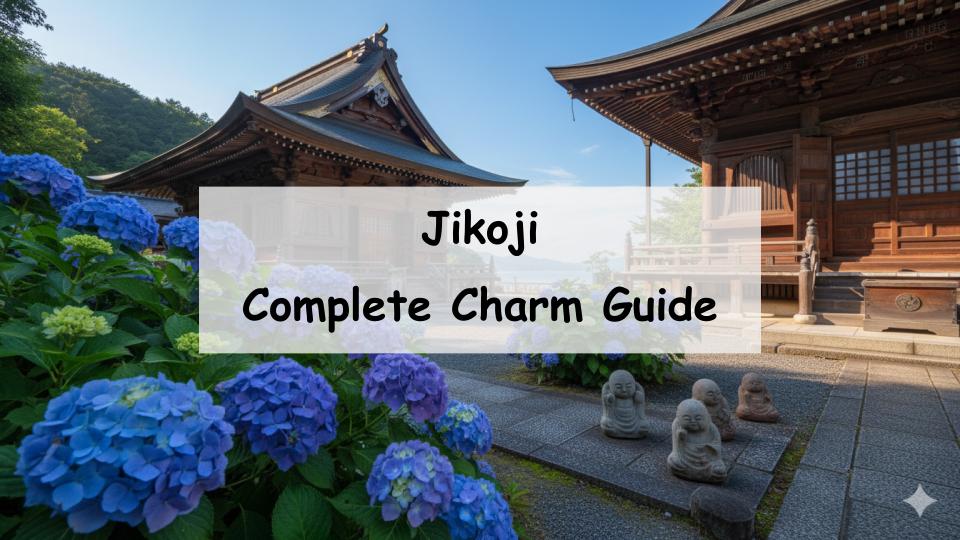
Are you wondering, “I want to visit Jikoji Temple in Onomichi, Hiroshima, but what exactly makes it so charming?” or “What can I do with the famous Nigiri-butsu?” or “I want to know the highlights and detailed directions!”
Jikoji Temple is a special temple packed with must-see attractions for your Onomichi sightseeing trip. It offers the unique “Nigiri-butsu” experience where you can create your own one-of-a-kind Buddha statue, and it features beautiful hydrangeas blooming in early summer.
In this article, we will thoroughly explain the unique features and unmissable highlights of Jikoji Temple. We will also cover how to experience making a Nigiri-butsu, information about temple seals (Goshuin), and detailed directions so you can arrive without getting lost.
By reading this article, you will be 120% prepared to enjoy Jikoji Temple to the fullest. Please read to the end and use it as a helpful guide for your wonderful trip to Onomichi!
- What is Jikoji Temple in Onomichi, Hiroshima? What are its features?
- A Must-Try! The Charm of Jikoji Temple’s Famous “Nigiri-butsu”
- Strolling the Grounds of Jikoji Temple! 3 Unmissable Highlights
- Types of Goshuin (Temple Seals) Available at Jikoji Temple
- Access and How to Get to Jikoji Temple
- Basic Information About Jikoji Temple (Visiting Hours, Fees, etc.)
- Conclusion: Visit the Charming Jikoji Temple When Sightseeing in Onomichi, Hiroshima!
- A Message from the Guide
What is Jikoji Temple in Onomichi, Hiroshima? What are its features?
History and Origins of Jikoji Temple
Jikoji Temple is a historic Jodo sect temple located in Onomichi City, Hiroshima Prefecture. It is said to have been founded as a Tendai sect temple during the Heian period and later converted to the Jodo sect. Throughout its long history, it has gathered the faith of many people. Even today, it radiates a quiet and solemn atmosphere that blends perfectly with the townscape of Onomichi. Surrounded by the sea and mountains, the beautiful scenery unique to Onomichi attracts tourists from all over the country as a base for exploring ancient temples.
Popular as One of the “Onomichi Seven Temples Tour”
Jikoji Temple is also widely known as one of the temples on the “Onomichi Seven Temples Tour,” a route connecting seven historic temples scattered across Onomichi City. This tour is popular among sightseers who collect Goshuin and power stones while receiving different blessings at each temple. Jikoji Temple is believed to bring blessings for a long and healthy life, drawing a constant stream of worshippers praying for longevity. It is conveniently located, making it an easy starting or ending point for the tour.
A Must-Try! The Charm of Jikoji Temple’s Famous “Nigiri-butsu”
What is Nigiri-butsu? A One-of-a-Kind Original Buddha Statue
A must-do experience when visiting Jikoji Temple is making its famous “Nigiri-butsu.” This is your very own Buddha statue created by firmly squeezing a palm-sized piece of soft clay while making a wish. Because the shape of your hand and your fingerprints remain directly on the clay, the completed Buddha statue is truly one-of-a-kind in the world. Its warm and rustic expression will soothe your heart every time you look at it.
The Process and Time Required for the Nigiri-butsu Experience
The process is very simple, allowing anyone from children to adults to easily participate. First, you receive the clay from the temple staff, and then you squeeze it powerfully in one motion while silently reciting your wish. After that, you freely carve the face and hair of the Buddha using a wooden stick. No difficult techniques are required, and the whole process takes only about 15 to 30 minutes, making it highly appealing as a quick activity between sightseeing spots.
Experience Fee, Reservations, and Receiving the Finished Statue
The Nigiri-butsu experience fee is reasonably priced, and by paying an additional shipping fee, you can have it delivered directly to your home. Basically, you can enjoy the experience on the day of your visit without prior reservations. However, if you are visiting with a large group, it is safer to inquire in advance. The molded Nigiri-butsu is carefully baked in the temple’s kiln and mailed to your designated address about one to two months later. The excitement of receiving a travel memory at home at a later date is another reason for its popularity.
Strolling the Grounds of Jikoji Temple! 3 Unmissable Highlights
Does it Extend Your Life? The Magnificent Stone “Enmei Gate”
Standing tall at the entrance of Jikoji Temple is the “Enmei Gate,” a massive gate made of granite. This gate has a very rare stone construction and exudes a heavy, majestic presence. Legend has it that passing through this gate will extend your lifespan, and many worshippers walk through it slowly while praying for health and longevity. It is also popular as a photo spot, offering an elegant view of Onomichi through the gaps in the stone.
Early Summer Hydrangeas and Seasonal Flowers Blooming on the Grounds
Jikoji Temple is famous for its beautiful seasonal flowers and is even called the “Hydrangea Temple.” In early summer, hydrangeas bloom vibrantly all over the grounds, adding a brilliant touch to Onomichi sightseeing during the rainy season. Besides hydrangeas, you can enjoy nature in all four seasons, such as cherry blossoms in spring and autumn leaves in fall. Simply strolling through the quiet grounds provides a soothing space for the soul.
The National Treasure: “Color on Silk, Fugen Enmei Image”
The temple houses a national treasure, the “Color on Silk, Fugen Enmei Image,” which is believed to have been painted in the late Heian period. This work delicately depicts the Fugen Enmei Bodhisattva riding a white elephant and holds immense value in Japanese Buddhist art. Although the original is often deposited at a national museum, visitors sometimes have the opportunity to view a precise replica at the temple, allowing them to feel the deep history and cultural importance of Jikoji Temple.
Types of Goshuin (Temple Seals) Available at Jikoji Temple
Jikoji Temple’s Standard Goshuin
At the Goshuin reception of Jikoji Temple, you can receive powerful ink calligraphy and vibrant red seals dedicated to the principal image, Amida Nyorai, or the Fugen Enmei Bodhisattva. The carefully handwritten Goshuin is highly popular as a proof of worship. Special stamps are sometimes added according to the season or events, making it a great pleasure for worshippers who bring their Goshuin books.
Exclusive Goshuin and Bracelets for the Onomichi Seven Temples Tour
Those participating in the “Onomichi Seven Temples Tour” can receive Jikoji Temple’s seal on a special Goshuin book. Additionally, the Seven Temples Tour allows you to collect a power stone bead at each temple to complete an original prayer bead bracelet. At Jikoji Temple, you can receive a stone imbued with prayers for a long life, which you can wear as a travel souvenir or protective charm.
Access and How to Get to Jikoji Temple
By Train (How to Get There from JR Onomichi Station)
Walking Route
If you are traveling to Jikoji Temple by train, the nearest station is JR Onomichi Station on the Sanyo Main Line. It is located in a very accessible area, just about a 5 to 10-minute walk from the station. Exit the station, walk east along the railway tracks, cross the railroad crossing, and climb a small slope to see the magnificent Enmei Gate. This is a highly recommended route where you can enjoy the tasteful scenery while walking through the hills and narrow alleys unique to Onomichi.
By Taxi or Bus
If you have difficulty walking or carry heavy luggage, taking a taxi from JR Onomichi Station will get you there in just a few minutes. While taking a bus is also an option, the distance from the station to Jikoji Temple is relatively short. Considering waiting times, moving by foot or taxi is much smoother.
By Car and Parking Information
If you are accessing Jikoji Temple by car, head toward the city center from either the Onomichi Interchange or Fukuyamanishi Interchange on the Sanyo Expressway. Jikoji Temple provides a few parking spaces for worshippers. However, the roads are narrow, and parking is limited, so caution is required. If the lot is full, it is recommended to use municipal coin parking lots near Onomichi Station or along the coastal road and walk from there.
Basic Information About Jikoji Temple (Visiting Hours, Fees, etc.)
The address of Jikoji Temple is Nishitsudo-cho, Onomichi City, Hiroshima Prefecture. Visiting hours are generally from morning to evening, making it ideal to visit during the bright daytime. Admission to the grounds and worshipping are free of charge, but specific fees are required for the Nigiri-butsu experience and receiving a Goshuin. While there are typically no regular closing days, access to the grounds may be restricted during memorial services and other events. It is reassuring to check the opening status before your visit.
Conclusion: Visit the Charming Jikoji Temple When Sightseeing in Onomichi, Hiroshima!
Jikoji Temple is a wonderful temple where you can enjoy various experiences, such as passing through the Enmei Gate to pray for health, being healed by beautiful hydrangeas, and making a one-of-a-kind “Nigiri-butsu.” Combined with its excellent accessibility within walking distance from Onomichi Station, it is a spot that easily fits into any Onomichi sightseeing schedule. When traveling to Hiroshima and Onomichi, be sure to visit the charming Jikoji Temple and spend a special, relaxing time there.
A Message from the Guide
The stone temple gate left a strong impression on me. Isn’t it quite rare?


Comment