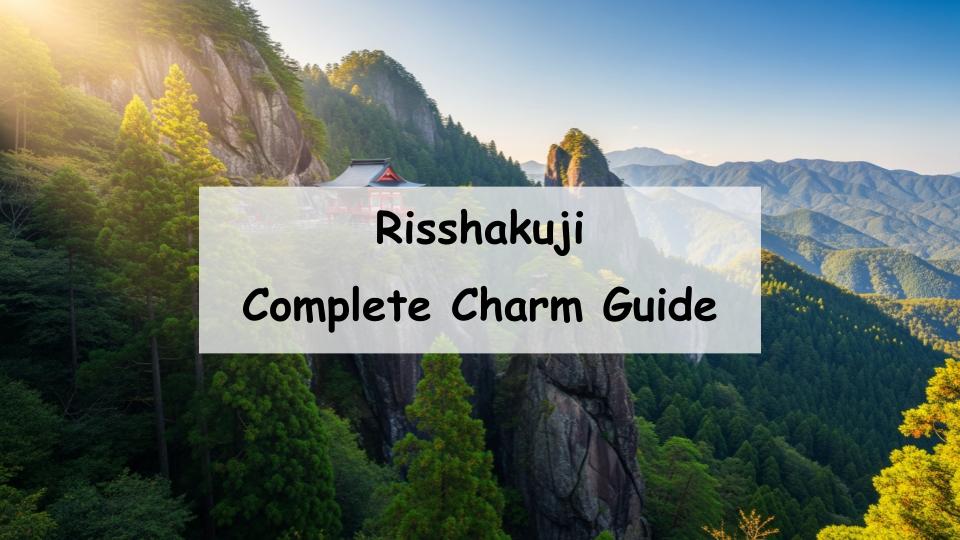
If you are traveling to Yamagata Prefecture, Risshakuji (立石寺)—commonly known as “Yamadera” (Mountain Temple)—is a destination you absolutely must visit at least once.
You might be wondering, “Can I climb the more than 1,000 steps if I’m not confident in my stamina?” or “What kind of scenery awaits after such a hard climb?”
To give you the conclusion first: Risshakuji is well worth every single step. Once you conquer the 1,015 stone steps, you are rewarded with breathtaking views and a serene, solemn atmosphere that was beloved even by the famous haiku poet Matsuo Basho.
In this article, we will introduce the history and characteristics of Risshakuji, the must-see highlights you cannot miss, and detailed access information. If you are planning a trip to Yamadera, please use this guide to help plan your journey.
- What is the Famous Yamagata Temple “Risshakuji” (Yamadera)? History and Features
- Must-See Spots at Risshakuji!
- Is the 1015-Step Staircase Tough? Duration and Tips for Visiting
- Proof of Your Visit! Risshakuji’s Goshuin and Omamori
- Gourmet Spots Around Yamadera to Visit After Sightseeing
- Access to Risshakuji and Parking Information
- A Message from the Guide
What is the Famous Yamagata Temple “Risshakuji” (Yamadera)? History and Features
Risshakuji, representing one of Yamagata Prefecture’s most famous sightseeing spots, captivates many people with its beautiful scenery and historical background. First, let’s touch upon what kind of place this ancient temple is, along with its history and features.
A Tendai Sect Sacred Site Known Affectionately as “Yamadera”
Officially named “Hojusan Risshakuji,” this temple was founded in 860 AD (the 2nd year of the Jogan era) by Jikaku Daishi Ennin. As a sacred mountain of the Tendai sect, it became a center of Buddhist faith in the Tohoku region and has carved out a long history as a branch temple of Hieizan Enryakuji. Because of the unique landscape featuring temple halls dotted along steep rocky mountains, it is affectionately called “Yamadera” (Mountain Temple) by locals and tourists alike. Its appearance, harmonizing with nature throughout the four seasons, shows a different expression every time you visit.
The Site of Matsuo Basho’s Haiku: “The silence, sinking into the rocks…”
Risshakuji is also famous as a place where the Edo-period haiku master Matsuo Basho stopped during his journey The Narrow Road to the Deep North (Oku no Hosomichi). Visiting in 1689, Basho was moved by the silence surrounding the rocky mountain and the voices of cicadas echoing there, composing the famous haiku: “Shizukasa ya iwa ni shimi-iru semi no koe” (“The silence, sinking into the rocks, the cry of the cicada”). Even today, you can find monuments and statues of Basho within the precincts, allowing you to relive the mysterious worldview he felt.
A Power Spot for Cutting Bad Ties and Binding Good Ones
Since ancient times, Risshakuji has been known as a power spot for severing bad relationships (bad karma) and tying good ones. Climbing the rugged stone steps one by one is considered a form of ascetic training, and it is believed that by climbing to the top, you can wipe away past bad connections and misfortunes. Many visitors come hoping for a fresh start or a change of heart, drawn by the expectation of these spiritual benefits.

Must-See Spots at Risshakuji!
The vast precincts are filled with numerous halls and towers. To make the most of your limited time, check out these spots you absolutely cannot miss.
Konpon-chudo: Japan’s Oldest Beech Wood Building (Important Cultural Property)
Located right after entering the trailhead is “Konpon-chudo,” which serves as the main hall of Risshakuji. Rebuilt in 1356, it is said to be the oldest building in Japan made of beech wood. Inside the hall, the “Eternal Flame of the Law,” divided from Hieizan Enryakuji, continues to burn to this day. There is a legend that when the flame at Enryakuji was extinguished during Oda Nobunaga’s raid, the flame was preserved because it had been shared here at Risshakuji, and was later returned.
The Best View! The Scenery from “Godaido” Observation Deck
“Godaido,” located after climbing the stone steps, is arguably the highlight of Yamadera sightseeing. Built to jut out over the cliff, this hall is a training dojo dedicated to the Five Great Wisdom Kings and serves as the best observation deck in Yamadera. From here, you can overlook the temple town below and the distant mountain ranges, enjoying spectacular views in every season. The beauty during the autumn foliage and the fresh green season is particularly exceptional, offering an emotion that blows away the fatigue of the climb.
The Iconic Halls on the Rock: “Nokyodo” and “Kaizando”
On the way to Godaido, the small hall standing on a rock to your left is “Nokyodo.” It is the oldest building on the mountain, and directly beneath it lies the cave where Jikaku Daishi rests. The sight of the red hall shining against the rocky mountain is an iconic landscape of Risshakuji, frequently featured on posters and pamphlets. Standing right next to it is “Kaizando,” a hall dedicated to Jikaku Daishi, the founder of Risshakuji, making it an important spot to visit.
Welcomed by a Giant Rock Gate: “Uba-do”
One of the first halls you see after starting to climb the approach is “Uba-do.” This spot is considered the boundary line: below is hell, and above is the Pure Land (paradise). A stone statue of Datsueba is enshrined inside, and it is said that in ancient times, pilgrims would change their clothes here to purify themselves before heading to the Pure Land up the mountain.
“Niomon” Gate Where Nio Statues See Through Evil Hearts
Appearing past the midpoint of the approach is the elegant Zelkova-made “Niomon” gate. The Nio statues enshrined on the left and right are said to examine the hearts of visitors for evil thoughts. By passing through this gate, evil intentions are expelled, allowing you to head toward the Okunoin (inner sanctuary) with a pure heart. Also, on the back side of the gate, there is a Buddha statue called “Mikaeri Amida” (Looking-Back Amida), so it is recommended to turn around and pray instead of just passing through.
Is the 1015-Step Staircase Tough? Duration and Tips for Visiting
Hearing “1,000 steps” might make you brace yourself, but knowing what to expect in advance will allow you to enjoy the climb with peace of mind.
Estimated Round-Trip Time
Generally, the time required to climb from the mountain gate to the Okunoin and back down is about 1 hour and 30 minutes to 2 hours. This is the time when you visit leisurely while enjoying the scenery, not just walking continuously without breaks. Those with strong legs might finish in about an hour round trip, but since you are visiting, it is recommended to take your time touring the sights.
Choosing Clothes and Shoes for the Climb
Although the approach is well-maintained, it is still a mountain path with continuous stone steps. Avoid heels or sandals and choose comfortable sneakers or walking shoes. As for clothing, attire that is easy to move in is basic. You will sweat in the summer, but the wind near the summit can sometimes feel cool, so try to wear clothes that allow for easy temperature regulation. In winter, snow and ice are present, so equipment like non-slip boots is essential.
Enjoying the “Path of Training”: One Step, One Worldly Desire Gone
There is a saying regarding the stone steps of Risshakuji: “For every step you climb, one worldly desire disappears.” Instead of viewing it simply as a tough stair climb, try to proceed regarding it as a path of training to settle your mind. Along the way, there are many landscapes that soothe the soul, such as haiku monuments, stone Buddhas, and beautiful trees. If you run out of breath, stop and look at the scenery behind you; you will find enjoyment in the act of climbing itself.
Proof of Your Visit! Risshakuji’s Goshuin and Omamori
Receiving Goshuin (temple stamps) and Omamori (amulets) as a commemoration of your visit is another pleasure. Risshakuji has unique features regarding these, so let’s check them beforehand.
Types of Goshuin and Where to Get Them at Risshakuji
At Risshakuji, you can receive Goshuin not just at one place, but at multiple halls. This is one of the real thrills of the “Yamadera Pilgrimage.”
Available at Multiple Locations Like Konpon-chudo and Okunoin
Different Goshuin are granted at multiple locations, starting with “Konpon-chudo” at the entrance, “Okunoin” and “Daibutsuden” at the top of the mountain, and even “Hie Shrine” within the precincts. Collecting all of them serves as proof that you have toured the entire mountain. Don’t forget to bring your Goshuin book (Goshuin-cho) and receive them at each milestone of your climb for a deeper memory.
Popular Amulets and Their Benefits
Risshakuji offers various amulets for health, longevity, and family safety, but amulets related to “cutting bad ties” and “binding good ties” are particularly popular. Additionally, amulets praying for recovery from illness are sought after by many visitors. They are great for yourself, but also make appreciated souvenirs for loved ones.
Gourmet Spots Around Yamadera to Visit After Sightseeing
After walking hard and working up an appetite, soothe your fatigue with delicious gourmet food unique to Yamagata. The temple town is lined with attractive shops.
A Must-Try Specialty! Flavor-Soaked “Chikara Konnyaku”
A must-eat when you come to Yamadera is the famous “Chikara Konnyaku” (Power Konjac). These are round balls of konjac on a skewer, simmered in a soy sauce-based broth until the flavor has thoroughly soaked inside. The name implies “gaining power to climb the stairs,” making it perfect for an energy charge before climbing or a snack after descending.
A Taste of Yamagata: “Cherry Soft Serve Ice Cream”
Yamagata Prefecture is Japan’s top producer of cherries. At shops in the area, you can taste soft-serve ice cream made with these cherries. The sweet and sour cherry flavor provides a refreshing sensation that permeates a body heated from exercise. Depending on the season, you might also encounter limited-edition sweets using seasonal fruits.
Authentic “Handmade Soba” in the Temple Town
Yamagata Prefecture is also famous as a “Soba (buckwheat noodle) region.” There are many shops in the Yamadera temple town that serve authentic handmade soba using local buckwheat flour. The highly fragrant and firm “Ita Soba” is a perfect dish to satisfy your hunger after climbing. There are also shops where you can enjoy Yamagata’s unique noodle culture, such as Tori Chuka (Chicken Ramen with Japanese broth) and Chilled Ramen.
Access to Risshakuji and Parking Information
Finally, here is how to access Risshakuji. It is located in a place that is easy to access by both train and car.
By Train (JR Senzan Line from Yamagata or Sendai Station)
If you use public transportation, the JR Senzan Line is convenient. It takes about 20 minutes from “Yamagata Station” and about 1 hour via rapid train from “Sendai Station” to reach the nearest station, “Yamadera Station.” It is a short 5 to 10-minute walk from the station to the trailhead, and since the path is lined with souvenir shops and restaurants, you can reach it without getting lost.
By Car
If visiting by car, it takes about 15 minutes from the “Yamagata Kita IC” on the Yamagata Expressway. If accessing from the Sendai area, the route via National Route 48 is also common. Road signs are well-maintained, so even first-time visitors can access it relatively smoothly.
Recommended Parking and Price Range
There are many private paid parking lots scattered around Risshakuji. The general market price is about 300 to 500 yen per use. Some parking lots attached to shops offer free parking if you buy souvenirs or have a meal there. Congestion is expected during long holidays and the autumn foliage season, so it is a good idea to arrive early or use a parking lot slightly further away.
A Message from the Guide
I would love to see the snowy scenery from this temple someday.


Comment