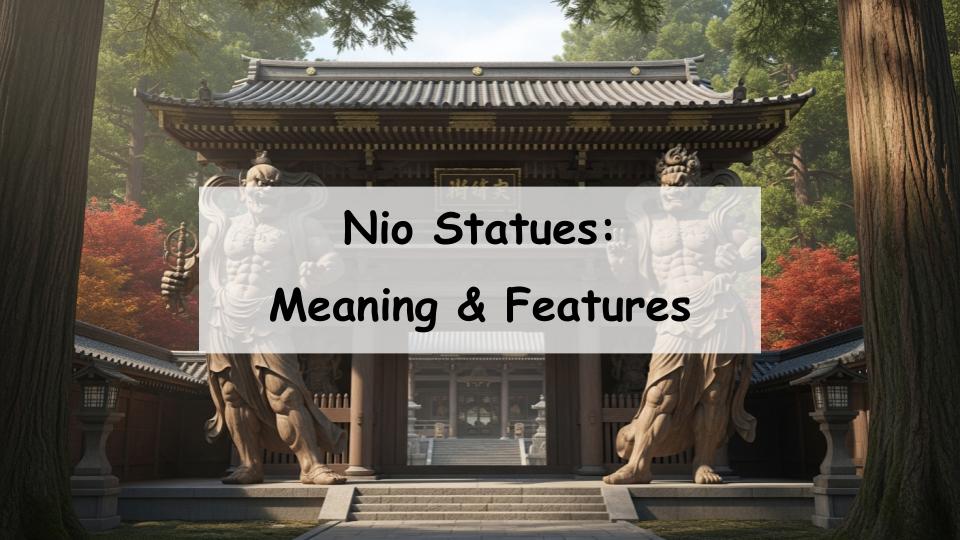
Have you ever been overwhelmed by the muscular, powerful figures of the “Nio statues” (Guardian Kings) when passing through a temple gate?
Many people wonder, “Why do they have such scary faces?” or “Why are their mouth shapes different on the left and right?”
In fact, Nio statues are not merely doormen; they are guardian deities of Buddhism that protect the temple from evil spirits and worldly desires. Their expressions and poses hold deep meanings.
This article explains the original role of Nio statues, their position in temples, and four interesting features to help make your next temple visit more meaningful and enjoyable.
- What are Nio Statues (Kongo Rikishi)? Their Important Role and Meaning
- Different Left and Right? The Placement and the Meaning of “A-un”
- Interesting to Know! 4 Features Seen in Nio Statues
- Standing Position in Temples and Historical Background
- Must-See! Famous Nio Statue Spots in Japan
- Summary: Know the Meaning of Nio Statues and Enjoy Worship Deeper
- A Message from the Guide
What are Nio Statues (Kongo Rikishi)? Their Important Role and Meaning
The Nio statues enshrined near the entrance of a temple are among the first Buddhist symbols visitors see. Their imposing appearance carries a significant meaning: protecting the sacred space of the temple. First, let’s look at their basic role and the origin of their other name, “Kongo Rikishi.”
Role as “Guardian Deities” Standing at the Entrance
The primary role of Nio statues is to block enemies of Buddhism, evil spirits that wish to harm the temple, and the worldly desires that visitors might bring with them. Standing on the left and right sides of the “Niomon” (Nio Gate), they glare outward to prevent impurities from entering the sacred grounds. In short, Nio statues are the ultimate security guards of the temple, placed there to protect Buddhist teachings and believers. Their terrifying appearance is an intimidation tactic against evil and a display of their strong will to defend the Dharma (Buddhist law).
Origin of the Name “Kongo Rikishi” and Status in Buddhism
While they are commonly known as “Nio” (Benevolent Kings), their formal name is “Kongo Rikishi.”
“Kongo” refers to a substance as hard as a diamond or metal that cannot be broken, symbolizing an unbreakable will. “Rikishi” means a person of great strength.
Originally, they were derived from gods in Indian mythology and incorporated into Buddhism. They trace their roots to the Shukongoshin (Vajrapani), who protected Shakyamuni Buddha on his travels. In Buddhism, they belong to the Tenbu (Deva) group of deities and are worshipped as beings who repel Buddhist enemies with overwhelming power.
Different Left and Right? The Placement and the Meaning of “A-un”
If you observe Nio statues closely, you will notice that the mouth shapes and poses differ between the left and right statues. Generally, the statue with an open mouth is on the right, and the statue with a closed mouth is on the left. This contrast is deeply related to the Buddhist view of the universe and philosophy.
The Right Side “Agyo”: Open Mouth, Symbol of “Beginning”
The statue placed on the right side facing the temple gate is “Agyo.”
The Agyo statue has its mouth wide open, pronouncing the sound “Ah.” In Sanskrit, “Ah” is the first letter and signifies the “beginning” of all things. Thus, the Agyo statue symbolizes the creation of the universe, the birth of life, and the initial resolve to seek truth. It is also said to show an aggressive stance, actively driving away evil with its exposed anger.
The Left Side “Ungyo”: Closed Mouth, Symbol of “End”
On the left side stands the “Ungyo.”
The Ungyo statue has its mouth tightly closed, representing the sound “Un” (or “Om/Hum”). “Un” is the last letter in Sanskrit, signifying the “end” or conclusion of things. This symbolizes the completion of the universe and the state of enlightenment where delusions are cut off. Compared to Agyo, Ungyo is often seen as expressing latent fighting spirit or quiet anger, tasked with calmly identifying evil.
The Grand Cosmic View Behind “A-un no Kokyu”
The “Ah” and “Un” expressed by the two Nio statues represent the concept encompassing everything from the beginning to the end—in other words, the “entire universe” (similar to Alpha and Omega). The pairing of these two expresses the logic of the world and the form of all creation.
The Japanese idiom “A-un no kokyu” (breathing in sync), used when two people act in perfect harmony, comes from this. Originally, it was a Buddhist term referring to a state where two forces, like the Nio statues, become one to create perfect harmony.
Interesting to Know! 4 Features Seen in Nio Statues
The design of Nio statues is not just about showing off strength; it is filled with detailed features based on Buddhist teachings. Here are four points to focus on during your visit.
Feature 1: Why the Scary Face? The Reason for the Angry Expression (Funnu-so)
The terrifying faces of Nio statues are not meant to scare ordinary people. This expression is called “Funnu-so” (Anger Phase). It represents a form of compassion intended to guide those who do not believe in Buddhism or who hinder the teachings back to the righteous path through anger.
For those who cannot be saved by a gentle face alone, the Nio dare to show a frightening appearance to force a change of heart. Their sharp gaze seems to see through the evil thoughts in the hearts of those entering the temple grounds.
Feature 2: The Power of the Weapon “Vajra” (Kongosho)
Many Nio statues hold a stick-like weapon in their hands. This is called a “Kongosho” (Vajra), which originated as the weapon of a lightning god in ancient India.
The Vajra is a symbol of wisdom that crushes worldly desires and has the power to pulverize any obstacle. The Agyo statue often raises it high, representing it as a powerful tool to strike down not only physical enemies but also invisible confusion and hesitation in the mind.
Feature 3: Expression of “Strength” Through Muscles and Clothing
Another major feature of Nio statues is the extremely bulging muscles and protruding veins. This is a visual representation of superhuman power that is far beyond that of ordinary humans.
They are generally depicted with a naked upper body, wearing only a loincloth (skirt). This style indicates that they do not rely on armor or decorations; their own bodies are their weapons and defense. The folds of their clothes and the movement of their muscles convey a sense of vitality, as if they are about to move at any moment.
Feature 4: Feet are Important! The Existence of “Jaki” Being Trampled
When looking at Nio statues, be sure to check their feet. Depending on the statue, you may see a small demon-like figure being trampled underfoot.
This is called a “Jaki” (Evil Spirit), symbolizing human worldly desires and the evil hearts that hinder Buddhism. The Nio statue stepping on it represents the complete suppression of evil and temptation, signifying the victory of Buddhist justice. The humorous yet agonized expressions of the trampled Jaki are also a highlight.
Standing Position in Temples and Historical Background
Let’s unravel the meaning of why Nio statues are placed where they are and their history in Japan.
Meaning as a Barrier (Kekkai) Placed at the Sanmon (Nio Gate)
The Sanmon (Mountain Gate), which serves as the main entrance to a temple, is the boundary line separating the secular world from the sacred realm where the Buddha resides.
By placing Nio statues here, the gate itself functions as a powerful “Kekkai” (spiritual barrier). Passing through the Nio Gate implies undergoing the scrutiny of the Nio statues and performing a ritual to cleanse one’s mind before entering the sacred area. Therefore, Nio statues function not just as sculptures but as an important religious apparatus separating the sacred from the profane.
History and Transformation of Nio Statues in Japan
It is believed that Nio statues were introduced to Japan around the Asuka period, almost at the same time as the arrival of Buddhism. The oldest existing statues are clay figures at Horyuji Temple.
However, as time progressed, the materials and expressions changed. In the Heian and Kamakura periods, with the rise of the samurai class, powerful and realistic expressions became preferred. Sculptors like Unkei and Kaikei created dynamic, muscular Nio statues. The aesthetics and forms of faith of each era are reflected in the appearance of these statues.

Must-See! Famous Nio Statue Spots in Japan
Now that you have the knowledge, try experiencing the power of real Nio statues. While there are many wonderful statues across Japan, here are three particularly famous spots.
Todaiji Nandaimon (Nara): Masterpiece by Unkei and Kaikei
The most famous Nio statues in Japan are undoubtedly the Kongo Rikishi statues at the Nandaimon (Great South Gate) of Todaiji Temple in Nara. Created by the representative sculptors of the Kamakura period, Unkei and Kaikei, these statues are over 8 meters tall and boast overwhelming size and impact. Unlike the usual arrangement, they stand facing each other. Their realistic muscle expression and dynamic motion are hailed as masterpieces of Japanese Buddhist sculpture.
Sensoji Hozomon (Tokyo): Giant Guardians Behind Kaminarimon
Sensoji Temple, a major tourist spot in Tokyo, also houses magnificent Nio statues. They stand to the left and right of the “Hozomon” gate, which is located past the famous “Kaminarimon” and the Nakamise shopping street. These statues are popular among common people, and the gate is known for the “O-waraji” (huge straw sandals) dedicated to them, wishing for strong legs and health. Although once destroyed in the air raids of Tokyo, they were rebuilt after the war and continue to watch over the streets of Asuka and its visitors.

Zenkoji (Nagano): Historic Statues Designated as Important Cultural Properties
The Nio Gate at Zenkoji Temple in Nagano Prefecture houses Nio statues designated as Important Cultural Properties of Japan. These statues are said to have ideal physical beauty and are characterized by their well-balanced proportions. The Zenkoji Nio statues are placed to protect the “Three Jewels” (Buddha, Dharma, and Sangha) and have been objects of worship for many people for a long time. Their appearance, carrying the weight of history, leaves a deep impression on visitors.

Summary: Know the Meaning of Nio Statues and Enjoy Worship Deeper
Nio statues are familiar figures that welcome us at the entrance of temples, but their expressions, poses, and placement contain deep Buddhist teachings and wishes. They represent the beginning and end of the world through “A-un” breathing, repel evil with angry expressions, and protect us powerfully with their muscular bodies.
Next time you pass in front of a Nio statue, please pay attention to their mouths, the weapons they hold, and even the Jaki under their feet. You will surely discover something new, making your visit to the temple even more meaningful.
A Message from the Guide
Seeing the magnificent Nio statues at the entrance makes me excited to visit the temple.



Comment