“What kind of temple is Jodo-ji in Hyogo Prefecture?”
“I hear there are National Treasures, but what exactly should I see, and how do I get there?”
Are you thinking about this for your next weekend outing or travel plan?
Jodo-ji Temple, located in Ono City, Hyogo Prefecture, is a historic temple established by the monk Chogen Shonin during the Kamakura period. Its main hall, the “Jododo” (Pure Land Hall), is a designated National Treasure and is considered one of the most significant temples in the Kansai region. It is particularly famous for the breathtaking beauty of the Amida Triad statues when they are illuminated by the setting sun—a sight that leaves many visitors speechless.
In this article, we will thoroughly introduce everything you need to know before visiting Jodo-ji, including its historical background, architectural features, unmissable highlights, and access information.
By reading this article, you will gain a deeper understanding of Jodo-ji’s appeal, making your actual visit a much more moving experience. Please read through to the end.
- What is Jodo-ji in Ono City? History and Characteristics
- Overwhelming Beauty! National Treasures and Highlights of Jodo-ji
- Visitor Information and Goshuin (Temple Stamps)
- Access to Jodo-ji and Parking Information
- Summary
- A Message from the Guide
What is Jodo-ji in Ono City? History and Characteristics
Jodo-ji in Ono City, Hyogo, is not just an old temple. It holds an extremely important position in the history of Japanese architecture and Buddhist art. First, let’s look at its historical background and the unique characteristics of its architectural style.
A Historic Temple Founded by Chogen Shonin in the Kamakura Period
The history of Jodo-ji dates back to the early Kamakura period, specifically the Kenkyu era (1190s). It was opened by the famous monk Chogen Shonin, who is known for his dedication to rebuilding the Great Buddha Hall at Todai-ji Temple in Nara. At that time, Chogen established bases called “Bessho” across the country to support Todai-ji, and Jodo-ji was built as the Harima Bessho in this region.
This location was chosen because there was a manor nearby designated to support the reconstruction of Todai-ji, and it was a key point for transportation. Since then, it has gathered deep faith and, despite passing through centuries of history, retains much of its original appearance to this day.
The Unique “Daibutsuyo” (Great Buddha Style) Architecture
To talk about Jodo-ji, one must understand the unique architectural style known as “Daibutsuyo” (formerly known as Tenjikuyo). This style incorporates techniques that Chogen Shonin brought back from Song Dynasty China, and it is characterized by the bold, powerful construction seen in structures like the Great South Gate (Nandaimon) of Todai-ji.
Unlike the delicate decorations often seen in general Japanese temple architecture, the structural beauty of thick pillars and beams assembled in layers stands out. The “cosmetic roof underside,” where the roof structure is left exposed without a ceiling, and the strong construction method where penetrating tie-beams pass through holes in the pillars, give a powerful impression to the viewer. It is said that the Jododo at Jodo-ji is the only remaining example in Japan where this precious Daibutsuyo architecture survives in a nearly complete form, making it a miraculous existence in architectural history.
Overwhelming Beauty! National Treasures and Highlights of Jodo-ji
The main purpose of visiting Jodo-ji is undoubtedly to appreciate the buildings and Buddha statues designated as National Treasures. Here, we will introduce specific points you absolutely cannot miss during your visit.
National Treasure “Jododo”: Bold yet Intricate Wooden Architecture
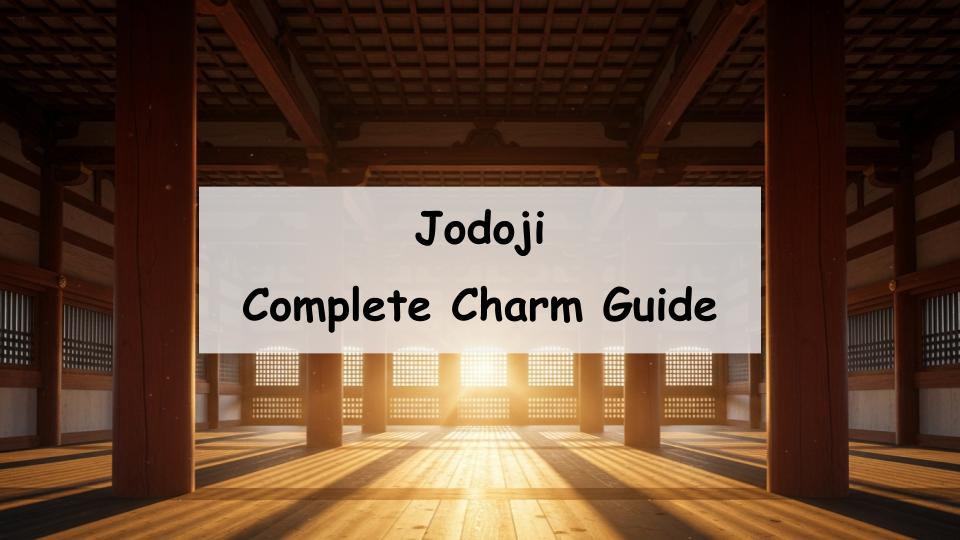
When you enter the temple grounds, the National Treasure “Jododo” (Amida Hall) immediately catches your eye. The exterior may look simple at first glance, but upon approaching, you will be overwhelmed by its massive scale and unique structure. The square hall, measuring about 18 meters on each side, has few internal pillars, creating a vast, open space inside.
Stepping inside, you will be surprised by the contrast between the vermilion-painted pillars and white walls, as well as the dynamic spatial composition where the roof’s framework is exposed without ceiling boards. This calculated space serves as a “vessel” designed specifically to house the Amida Triad statues described below.
National Treasure “Amida Triad Statues”: Masterpieces by Kaikei
Enshrined in the center of the Jododo is the “Wooden Amida Nyorai and Two Attendants Standing Statues” (Amida Triad), which is also a National Treasure. These are works by Kaikei, a representative sculptor of the Kamakura period, and are praised as one of his early masterpieces.
The central Amida Nyorai statue stands about 5.3 meters tall, and its sheer size and precise carving techniques are breathtaking. Together with the attendant Bodhisattvas, Kannon and Seishi, standing on either side, the statues depict the scene of descending from the Pure Land on clouds to welcome souls. They are calculated to look most beautiful when viewed from below. The sharp gaze and the flowing expression of the robes convey the power of Kamakura-era sculpture to the present day.

Recommended on Sunny Evenings! The Moving “Play of Light”
The most notable feature of visiting Jodo-ji is the carefully calculated “lighting effect.” Sunlight from the west shines through the lattice shutters (Shitomido) located at the back (west side) of the Jododo on sunny evenings.
This light reflects off the floor inside the hall, illuminates the vermilion color of the roof underside, and then showers down onto the Amida Triad statues. This causes the statues to glow gold and appear to float. This scene is said to recreate the moment of “Raigo” (the welcoming descent of Amida Nyorai from the Western Pure Land), allowing visitors to experience the world of the Pure Land while still in this life. Although the way the light enters varies by season, the evenings from summer to early autumn are the times when you are most likely to experience this mystical beauty.

Important Cultural Property “Yakushido” and Guardian “Hachiman Shrine”
There are highlights within the precincts other than the Jododo. The “Yakushido”, an Important Cultural Property rebuilt in 1517, shows a blend of Japanese style and Zen style (Kara-yo), presenting a calm appearance different from the Jododo.
Additionally, the “Hachiman Shrine”, which is the guardian shrine of Jodo-ji, is located adjacent to the temple. Its main hall and worship hall are designated as Important Cultural Properties. The layout reflects the remnants of the era of syncretism between Shinto and Buddhism, and by visiting both the temple and the shrine, you can feel the depth of faith in this region.
Seasonal Scenery and Back Mountain Walk (New Shikoku 88)
Jodo-ji is surrounded by rich nature, and the scenery of the four seasons is also one of its charms. Cherry blossoms in spring, hydrangeas in early summer, and autumn leaves in fall color the grounds, enhancing the atmosphere of the ancient temple.
Furthermore, a “New Shikoku 88 Pilgrimage” course is maintained on the mountain behind the temple. This course, where you visit stone Buddha statues while walking along mountain paths, can be enjoyed as a light hike. From near the summit, you can overlook the rural landscape of Ono City, and many visitors enjoy nature walks in combination with their historical exploration.
Visitor Information and Goshuin (Temple Stamps)
Here is a summary of basic information regarding visiting hours and Goshuin stamps that you should check before actually visiting.
Hours, Fees, and Closed Days
The visiting hours for Jodo-ji may vary slightly depending on the season, but generally, they are from 9:00 AM to 12:00 PM and 1:00 PM to 4:00 PM (until 3:30 PM from October to March). Please note that you may not be able to enter the hall during the lunch break (12:00-13:00).
An admission fee is required to view the National Treasure Jododo (including the Amida Triad). Generally, it is around 500 yen for adults, but we recommend checking the latest information before visiting. The temple is often closed during the New Year period (December 31, January 1), so if you plan to visit during this time, it is safer to inquire in advance.
Goshuin Available at Jodo-ji
For those collecting Goshuin (red seals), a stamp from Jodo-ji is a must-have. At Jodo-ji, you can receive a powerful Goshuin with the calligraphy of the principal image, “Amida Nyorai.”
Goshuin are accepted at the temple office (Nokyosho). It is best to stop by after viewing the National Treasure Amida Triad statues to receive it as proof of your worship. Original Goshuin books may also be available, so please check on-site.
Access to Jodo-ji and Parking Information
Jodo-ji is located in a relatively quiet area, but it is accessible by both public transport and car.
By Train and Bus (Ranran Bus)
If using the train, the nearest station is “Onomachi Station” on the JR Kakogawa Line. However, since there is a considerable distance from the station to Jodo-ji, walking takes a long time.
From Onomachi Station, it is convenient to use Ono City’s community bus, the “Ranran Bus.” If you board the bus and get off at the “Jodo-ji” stop, the temple approach is right in front of you. However, since the number of buses is limited, it is important to check the timetable carefully and plan ahead. Alternatively, you can take a taxi from “Ono Station” on the Kobe Electric Railway.
By Car and Parking
When accessing by car, head north on Route 175 from the “Miki-Ono Interchange” on the Sanyo Expressway. You will arrive in about 10 to 15 minutes from the interchange, making access by car relatively smooth.
Regarding parking, free parking for worshipers is available. There is space for several dozen standard cars, so you will rarely have trouble parking on a normal weekend.
Nearby Sightseeing and Lunch
There are spots around Jodo-ji that you might want to visit together. “Himawari no Oka Park” (Sunflower Hill Park) is a popular place where sunflowers bloom in summer and cosmos in autumn, and it also features a direct sales stand for local agricultural products.
For lunch, Ono City offers local gourmet foods called “Ono Koi” and handmade soba noodle shops scattered throughout the area. If you drive a little, there are many restaurants along the national highway, so you will not have trouble finding a place to eat. Why not enjoy Ono City’s gourmet food and nature along with the spiritual refreshment at Jodo-ji?
Summary
Jodo-ji Temple in Ono City, Hyogo, is a miraculous space created by Chogen Shonin and Kaikei, where architecture and sculpture fuse together. In particular, the experience of facing the Amida Triad statues illuminated by the setting sun inside the National Treasure “Jododo” offers an emotion that cannot be tasted anywhere else.
The power of the historic Daibutsuyo architecture, the calculated play of light, and the atmosphere of the grounds wrapped in silence—these are things that can only be felt by actually being there, not just by looking at photos. Please visit Jodo-ji on your next holiday and experience the worldview of the Pure Land that has continued since the Kamakura period.
A Message from the Guide

The seasons, the interplay of light, and the angles… The Amida Triad is a masterpiece that you will want to visit again and again to experience its changing expressions.


Comment