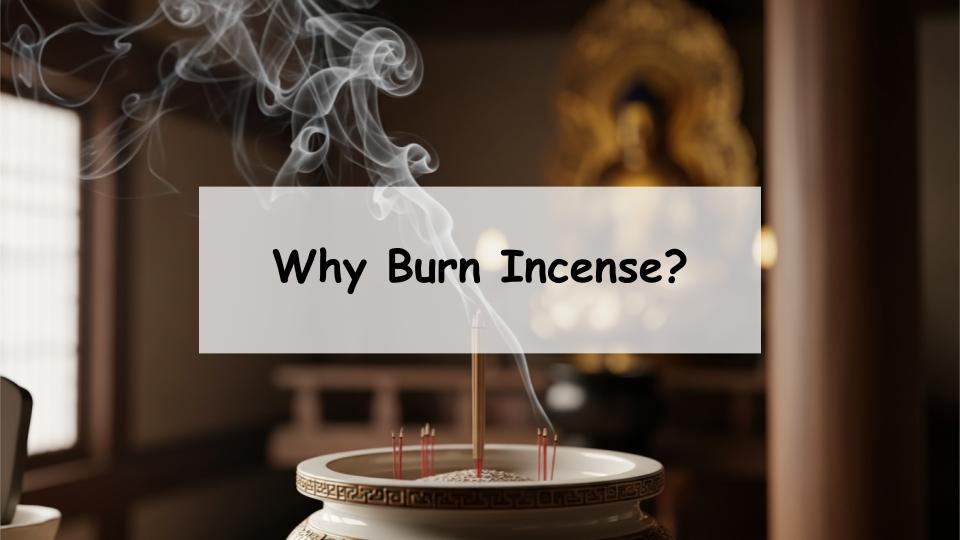
When visiting graves, attending memorial services, or praying at a home altar, burning incense is a common practice. Have you ever wondered, “Why do we offer incense in Buddhism?” or “What meaning is hidden in the smoke?”
In fact, burning incense in Buddhism is not merely a habit; it is a vital ritual to banish impurities, cleanse one’s body and mind, and connect with the Buddha. Furthermore, the fragrance itself is considered the supreme meal (Kojiki) for the Buddha.
In this article, we will explain the following in detail:
- The history showing the deep connection between Buddhism and incense.
- The true meaning and role of burning incense.
- “3 Merits” that bring peace to the mind.
By understanding the deep meaning behind incense, your time spent facing the Buddha will become more sacred and peaceful.
- 3 Main Reasons for Burning Incense in Buddhism
- From India to Japan | The Deep History of Buddhism and Incense
- The “Merit” Gained by Offering Incense
- Main Types of Incense Used in Rituals
- Basic Etiquette and How to Offer Incense by Sect
- Summary: A Time for Quiet Prayer with the Scent of Incense
- A Message from the Guide
3 Main Reasons for Burning Incense in Buddhism
Incense is indispensable in Buddhist rituals and daily worship. There are three main reasons why it is considered so important. Understanding these meanings will allow you to offer incense with greater sincerity.
1. The Role of “Purification” to Cleanse Body and Mind
The first reason is to create a pure space. The refreshing scent of incense has long been believed to change the atmosphere of a place and banish impurities. Before welcoming the Buddha, the incense is burned to purify the area and cleanse the worshippers’ bodies and clothes of worldly dirt. The scent also has a calming effect, helping to clear away worldly worries and prepare a pure heart for facing the Buddha.
2. “Kojiki” (Incense Eating): A Meal for Buddhas and Ancestors
In the Buddhist scripture Abhidharma-kosa (Kusharon), the term “Kojiki” appears. This literally means “eating fragrance.” While living humans consume physical food, Buddhas and spirits without physical bodies consume good fragrances as their meals. Therefore, offering the finest scents is considered the highest form of hospitality for Buddhas and ancestors.

3. Rising Smoke as a Bridge Connecting the Living and the Spirit World
The smoke rising from the incense and stretching toward the sky is seen as a communication link between this world and the afterlife. It carries our thoughts and wishes from where we pray to the Pure Land where the Buddha resides. Additionally, when people gather for a memorial service, sharing the same fragrance signifies uniting their hearts with the Buddha and the deceased.
From India to Japan | The Deep History of Buddhism and Incense
The connection between incense and Buddhism is ancient, dating back to India, the birthplace of Buddhism. Let’s unravel the historical background of how it traveled to Japan and took its current form.
Did Incense Originate from India’s Climate and Odor Control?
India has a hot and humid climate, and people have historically struggled with body odor and the smell of decay. To address this, the wisdom of using fragrant woods and oils to prevent bad odors was born. It is said that when Shakyamuni Buddha preached, incense was burned to eliminate odors in gathering places and create a pure space. This was the beginning of incense in Buddhist rituals, eventually taking on the meaning of purification and memorial offerings.
Arrival in Japan and Establishment in Buddhist Rituals
Incense is believed to have been introduced to Japan around the 6th century, roughly the same time as the arrival of Buddhism. The Nihon Shoki (Chronicles of Japan) contains a record of fragrant wood drifting ashore on Awaji Island; the islanders were surprised by its fragrance and presented it to the Imperial Court. Initially a precious item, it became established as an essential part of Buddhist rituals through the eras of Prince Shotoku and beyond. By the Heian period, it began to spread among the aristocracy not only for religious purposes but also as a culture to enrich daily life.
The Development of “Kodo” (The Way of Incense) and Buddhist Culture
Over time, incense evolved from a mere tool for offerings into a path of art and spiritual cultivation. In the Muromachi period, “Kodo” (The Way of Incense) was established, creating a unique culture where one “listens” to the scent rather than “smelling” it. The spirituality in Kodo is deeply connected to Zen philosophy, and the attitude of facing the scent in silence shares much with Buddhist training.
The “Merit” Gained by Offering Incense
Burning incense brings positive effects not only to the Buddha but also to the person burning it. Here, we explain the benefits and spiritual merits of incense passed down through generations.
The Meaning of the Ancient “Ten Virtues of Incense”
Incense is said to have ten benefits, known as the “Ten Virtues of Incense” (Ko-Jittoku). This concept comes from a poem written by a Northern Song poet, said to have been popularized in Japan by monks like Ikkyu Sojun. The verses teach that incense sharpens the senses, purifies the body and mind, removes filth, awakens one from drowsiness, brings peace in silence, and calms the mind even during busy times. Incense has been loved by ancients not just for its smell, but as an excellent tool for mental regulation.
Mental Peace and Improved Concentration in Practice
Certain components of incense fragrances work on the brain to induce relaxation. Burning incense during Buddhist practices such as meditation, Zazen, or chanting sutras is done to calm the mind and enhance concentration. Even in modern times, burning incense before work or study can help clear distractions and create an environment where you can focus on the task at hand.
Accumulating Virtue Through Offerings to the Deceased
In Buddhism, it is believed that doing good deeds accumulates “virtue.” Offering incense is an act of “altruism.” The act of offering fragrance for the sake of the deceased or the Buddha enriches the heart of the offerer and leads to the accumulation of virtue. The time spent thinking of someone and carefully lighting the incense becomes a form of spiritual cultivation for oneself.
Main Types of Incense Used in Rituals
There are various shapes and uses for incense. Here are four representative types frequently used in Buddhist rituals.
Senko (Incense Sticks): Most Common for Daily Worship
The most familiar type in modern Japan is Senko (incense sticks). Processed into thin sticks, they burn for a set time, historically serving as a timer. They are mainly used for daily prayers at home altars and grave visits. Made by kneading fragrant materials, there is a wide variety ranging from traditional scents like Sandalwood and Agarwood to floral scents.
Shoko (Granulated Incense): Used in Funerals and Memorials
This type is used for “O-Shoko” during funerals and memorial services. It consists of finely chopped fragrant woods and spices mixed together. It is sprinkled onto a heat source like charcoal (tadon), releasing a burst of fragrance the moment it touches the heat.
Zuko (Body Incense): Powder to Purify the Body
Zuko is a very fine powder incense used by rubbing it directly onto the hands or body. It is mainly used in Esoteric Buddhist temples to purify the body and mind before entering a hall or copying sutras. Warmed by body heat, it releases a faint, elegant scent.
Makko (Incense Powder): Powder for Long-lasting Scent
A powdered incense used primarily for burning incense for long periods or as a base for Shoko. In temples, it is often spread in a burner called a Jokoban to burn continuously over a long time during services.
Basic Etiquette and How to Offer Incense by Sect
The method of offering incense, especially incense sticks (Senko), varies by sect. Knowing the basic manners will help you pray with confidence.
Differences in Number of Sticks and Placement
Whether to “stand” or “lay down” the sticks, and “how many to offer,” depends on the teachings of the sect.
For Jodo Shinshu (Hongwanji and Otani Schools)
In Jodo Shinshu, the basic rule is to lay the incense sticks down rather than standing them up. This is called “Ne-senko.”
- Hongwanji School (Nishi): Break one stick in the middle, light it, and lay it sideways.
- Otani School (Higashi): Break the stick to fit the size of the burner, light it, and lay it sideways. Usually, one stick is broken and used.
For Shingon, Soto, Jodo, and Other Sects
In many sects, sticks are stood up, but the number varies.
- Shingon Sect: Often 3 sticks, representing the purification of the “Three Karmas” (body, speech, mind) or offering to the “Three Treasures” (Buddha, Dharma, Sangha).
- Soto/Rinzai (Zen) Sects: Generally 1 stick is stood in the center of the burner.
- Jodo Sect: Sometimes 1 stick is broken in two and laid down, but generally, 1 or 3 sticks are stood up.
Note: Customs may vary by region or specific temple. If you are unsure, follow those around you or offer one stick with sincerity.
Basic Etiquette for Shoko (Granulated Incense)
The number of times one performs Shoko also has guidelines per sect, but generally, it is 1 to 3 times.
- Examples: Shingon (3 times), Soto (2 times; raise to forehead the first time, not the second), Jodo Shinshu Hongwanji (1 time; do not raise to forehead), Otani (2 times; do not raise to forehead).
- Crowded Situations: If there are many attendees, you may be asked to perform “Single Shoko” regardless of your sect. In that case, follow the guidance and perform it once politely.
Summary: A Time for Quiet Prayer with the Scent of Incense
In Buddhism, incense plays the vital roles of purifying the space, serving as a meal for the Buddha, and delivering our prayers. While it is important to know the historical background and the etiquette of each sect, what matters most is the state of your heart when offering it.
Next time you offer incense at your altar or visit a temple, why not focus on the rising smoke and fragrance, and spend a moment in quiet, mindful prayer?
A Message from the Guide
I burn incense sticks every day at home. Here is my recommendation.


Comment