“I am looking for a unique sightseeing spot in Kyoto that is different from the others.”
“What kind of temple is ‘Manpuku-ji’ in Uji? What can I see there?”
Many people planning a trip to Uji, Kyoto, might have these questions. If you are going to visit, you certainly want to fully enjoy the history and charm unique to that location.
To give you the conclusion first, Manpuku-ji is a Zen temple with a very exotic atmosphere, built in the “Chinese Ming Dynasty style,” which is completely different from general Japanese temples. It is the head temple of the Obaku Sect, and the moment you enter the precincts, you are enveloped in a unique scenery and atmosphere that makes you feel as if you have time-traveled to China.
Therefore, in this article, we will explain the following information in detail so that you can enjoy Manpuku-ji to the fullest.
- The unique characteristics and historical background of Manpuku-ji
- Must-see highlights within the precincts (Architecture, Buddha statues, the Kaipan, etc.)
- The charm of the famous “Fucha Cuisine”
- Access methods from Kyoto Station and major areas
By reading this article, you will understand the deep appeal of Manpuku-ji, and your next Kyoto travel plan will surely become more fulfilling. Please read through to the end.
- What is Manpuku-ji? The Head Temple of the Obaku Sect with Beautiful Chinese Ming Style
- Must-See! 5 Tourism Highlights of Manpuku-ji
- Golden “Hotei” (Maitreya Bodhisattva) Welcomes You
- The Symbol of Manpuku-ji! “Kaipan,” the Prototype of the Wooden Fish
- “Daiyu-hoden,” One of the Largest Teak Wood Structures in Japan
- Distinctive “Snake-Belly Ceiling” and Diamond-Shaped Stone Paving
- The Beauty of Important Cultural Properties like the Sanmon Gate and Corridors
- Recommended for Lunch! Enjoy Manpuku-ji’s Famous “Fucha Cuisine”
- Manpuku-ji’s Goshuin, Charms, and Popular Events
- Access to Manpuku-ji, Visiting Hours, and Fees
- Summary
- A Message from the Guide
What is Manpuku-ji? The Head Temple of the Obaku Sect with Beautiful Chinese Ming Style
Manpuku-ji Temple, located in Uji City, Kyoto Prefecture, is a very unique existence that draws a clear line from traditional Japanese temples. When you step into the precincts, you will find buildings based on vermilion colors and a space that makes you feel a somewhat exotic mood. First, let’s unravel what kind of temple Manpuku-ji is from the perspective of its history and architectural style.
History and Origins Founded by Zen Master Ingen
The history of Manpuku-ji dates back to 1661 in the early Edo period. It was founded by Zen Master Ingen Ryuki, a high-ranking monk in Ming Dynasty China who had a great influence on the Buddhist world at that time. Zen Master Ingen came to Japan in response to repeated invitations from Japan, and later established this temple on land donated by the Shogun at the time, Tokugawa Ietsuna.
The temple was named after “Manpuku-ji” in China, where Zen Master Ingen served as the chief priest. Since then, as the head temple of the Obaku Sect, one of the Zen sects, it has trained many ascetic monks and continues to protect its Buddhist teachings to the present day. Zen Master Ingen is also known for bringing various cultures and foods to Japan, such as kidney beans (ingen-mame), watermelon, lotus root, and Sencha tea, breathing new life into Japanese culture at that time.
Distinctive Architectural Style Different from Japanese Temples
The greatest feature of Manpuku-ji lies in its architectural beauty incorporating the Chinese Ming Dynasty style. Unlike the white wood construction and cypress bark roofs seen in general Japanese temple architecture, a major difference is the extensive use of teak wood, which is timber from southern countries. In addition, the scent of Chinese culture drifts everywhere, such as in the circular windows, the characteristic curve of the roofs, and elaborate decorations.
The layout of the temple buildings (Garan) is also very orderly, with a composition based on symmetry. This faithfully reproduces the style of Chinese temples in the Ming period, creating a landscape that is extremely rare in Japan. Another point to note is that the main buildings are connected by corridors, making it a functional structure that allows worship without getting wet even on rainy days.
Must-See! 5 Tourism Highlights of Manpuku-ji
Manpuku-ji, with its vast precincts, is dotted with many highlights that are valuable both artistically and historically. Here, we carefully select and introduce five points that you should definitely check when visiting.
Golden “Hotei” (Maitreya Bodhisattva) Welcomes You
When you enter the Tenno-den (Hall of Heavenly Kings), which can be called the entrance to Manpuku-ji, the first thing that catches your eye is the golden, plump Hotei-sama. In Japan, he is popular as one of the Seven Lucky Gods, but at Manpuku-ji, he is enshrined as an incarnation of Maitreya Bodhisattva.
His figure, holding a large belly with a full smile, makes you feel happy just by looking at him. This Hotei statue is the face of Manpuku-ji, and many worshipers stop in front of it to put their hands together. Please be healed by his gentle expression and receive his blessings.
The Symbol of Manpuku-ji! “Kaipan,” the Prototype of the Wooden Fish
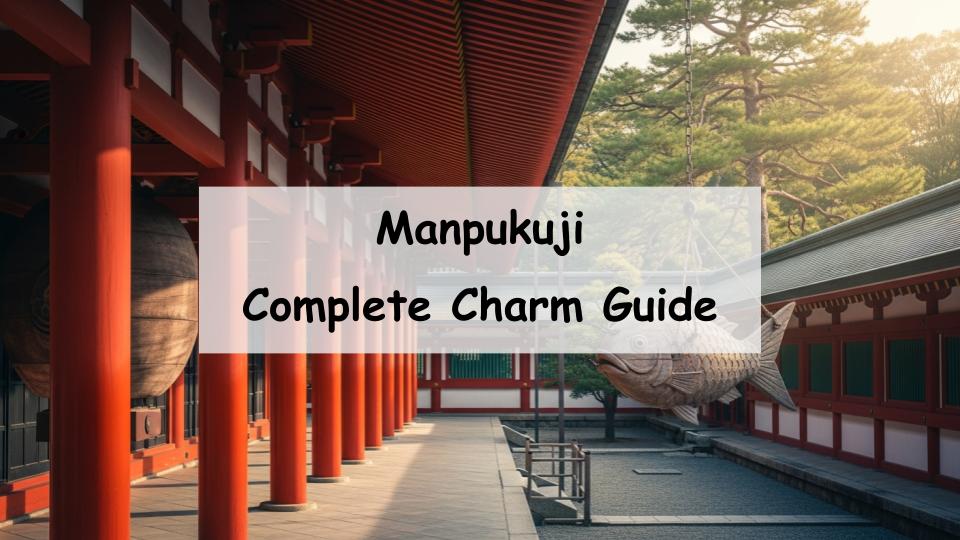
Do you know the huge wooden fish hanging in front of the Sai-do (Dining Hall)? This is called “Kaipan” or “Gyoban,” and it is the prototype of the current wooden fish (mokugyo). It is struck to announce the time or as a signal for rituals.
The round ball held in the fish’s mouth represents “worldly desires,” and striking the fish’s back signifies spitting out those desires. Also, since fish sleep with their eyes open, it carries the meaning of an admonition to ascetic monks to “practice hard without sparing time for sleep.” Despite its humorous appearance, it is an important ritual implement symbolizing Manpuku-ji that holds deep meaning.
“Daiyu-hoden,” One of the Largest Teak Wood Structures in Japan
The building corresponding to the main hall located in the center of the precincts is the “Daiyu-hoden.” It is the largest building in Manpuku-ji, and teak wood is abundantly used for its structural materials. While undergoing repairs since the Meiji era, it conveys the majestic appearance of the time of its founding to the present.
Inside the hall, the principal image, Shakyamuni Buddha, is enshrined, flanked by the two venerable disciples Kasyapa and Ananda, and surrounded by statues of the Eighteen Arhats. All of these Buddha statues were made by Chinese sculptors, characterized by realistic and expressive modeling different from Japanese Buddha statues. The height of the ceiling and the expanse of the space are also overwhelming, allowing you to feel the scale unique to Chinese temples firsthand.
Distinctive “Snake-Belly Ceiling” and Diamond-Shaped Stone Paving
When walking through the corridors connecting the buildings, please pay attention to the ceiling and your feet. The ceiling of the corridor has a unique structure called “Obaku ceiling” or “Snake-belly ceiling,” where arched beams are connected. This is said to imitate the belly of a dragon.
There is also meaning in the stone pavement spread under your feet. The diamond-shaped paving stones, where square stones are placed diagonally, represent “dragon scales,” and walking here is said to symbolize riding on the dragon’s back to learn Buddhism. However, since the central part is a path that only the chief priest is allowed to pass, it is proper etiquette for worshipers to walk on the edges.
The Beauty of Important Cultural Properties like the Sanmon Gate and Corridors
Many of the structures at Manpuku-ji are designated as Important Cultural Properties of Japan. The Sanmon gate towering at the entrance has a profound presence, heightening expectations for the extraordinary space that begins from there. Passing through the Sanmon gate, the pine tree-lined approach continues, and the layout where the Tenno-den can be seen ahead is a calculated beauty.
Also, the beauty of the corridors connecting each hall cannot be missed. The scenery woven by the vermilion pillars, the geometric design of the handrails, and the orderly lined lanterns becomes picturesque no matter where you cut it out. Enjoying the architectural beauty along with the changing light of each season is one of the ways to enjoy Manpuku-ji.
Recommended for Lunch! Enjoy Manpuku-ji’s Famous “Fucha Cuisine”
If you visit Manpuku-ji, you definitely want to taste “Fucha Cuisine.” Even if you have heard the name, you may not know the specific details. Here, we introduce the food culture unique to Manpuku-ji.
What is Fucha Cuisine? Differences from Shojin Ryori
Fucha Cuisine is a type of vegetarian cooking (Shojin Ryori) introduced from China by Zen Master Ingen. It means “drinking tea with the masses universally,” and is characterized by sitting around a single table regardless of rank and sharing food served on a large platter.
While general Japanese vegetarian cooking has a light taste, Fucha Cuisine often uses vegetable oil and uses kudzu starch to add thickness, resulting in many rich and flavorful dishes. “Modoki cuisine” (mock cuisine) is also famous, where ingenuity is used in cooking methods, such as reproducing the texture and appearance of meat and fish using tofu and vegetables. It is a cuisine that is gorgeous in appearance and can be enjoyed with both the eyes and the tongue.
Is Reservation Necessary? Meal Plans and How to Book
If you wish to eat Fucha Cuisine within the precincts of Manpuku-ji, advance reservation is basically required. For authentic course meals, reservations at least 3 days in advance are recommended. The meal is basically in a style where four people surround one table, but plans available for smaller numbers or bento box styles (such as Shokado Bento) may also be prepared.
Reservations are accepted via Manpuku-ji’s official website or by phone. Depending on the season and events, it may be difficult to get a reservation, so we recommend planning early. Traditional cuisine eaten in a historic space will surely become a special memory of your trip.

Manpuku-ji’s Goshuin, Charms, and Popular Events
The popular Goshuin (red ink stamps) as proof of worship and events held every season are also major attractions of Manpuku-ji. We introduce how to enjoy the temple, showing different expressions depending on the timing of your visit.
Note the Unique Calligraphy! Goshuin Types and Locations
Manpuku-ji’s Goshuin are often written with unique brushstrokes and are popular among collectors. In addition to the basic “Daiyu-hoden” Goshuin, multiple types such as Hotei and Idaten are granted. Sometimes you can witness powerful characters that make you feel the calligraphy style of the Ming Dynasty or the unique font of the Obaku Sect.
Goshuin can be received at designated reception places such as the shop or the stamp office in the precincts. Original Goshuin books are also on sale, and those decorated with Manpuku-ji’s crest or dragon designs are perfect as souvenirs to commemorate your visit.
The Magical Festival of Lights “Obaku Lantern Festival”
Recently, the “Obaku Lantern Festival” held from autumn to winter has become a big topic. During this period, the precincts are colored with traditional Chinese lanterns, wrapped in a magical world completely different from the daytime.
The sight of colorful lanterns imitating huge dragons, phoenixes, and historical figures illuminating the precincts at night is a masterpiece. There are many photogenic spots, and it is bustling with many people such as couples and families. It is also recommended to visit in conjunction with this event where the exotic atmosphere is further heightened.
“Hotei Festival (Handmade Market)” Held on the 8th of Every Month
On the 8th of every month, the “Hotei Festival” is held in the precincts of Manpuku-ji. This is a handmade market bustling with locals and tourists, lined with shops selling handmade goods, accessories, homemade sweets, and bread.
A warm market spreads within the solemn atmosphere of the temple, and you can enjoy shopping while conversing with the stallholders. Also, events and memorial services limited to this day may be held, making it a day where you can feel the liveliness of the temple rooted in the community. If your schedule fits, please definitely visit.
Access to Manpuku-ji, Visiting Hours, and Fees
Finally, we have summarized basic information for visiting Manpuku-ji. Let’s check in advance for smooth sightseeing.
How to Go by Train (JR Nara Line / Keihan Uji Line)
When using public transportation, access to Manpuku-ji is very convenient. If using the JR Nara Line, get off at “Obaku Station” and walk for about 5 minutes. If using the Keihan Uji Line, also get off at “Obaku Station” and arrive in about 5 minutes on foot. Since you can arrive at the nearest station in about 20 to 30 minutes from Kyoto Station by taking a train bound for Uji, it is a location easy to combine with sightseeing in Kyoto City.
Access by Car and Parking Information
If visiting by car, you will arrive in about 10 to 15 minutes from “Uji-West IC” or “Uji-East IC” on the Keiji Bypass. Manpuku-ji is equipped with a parking lot for worshipers, and the first parking lot in front of the gate can often be used for free for up to 90 minutes (subject to change due to events, etc.). However, congestion is expected during major events and tourist seasons, so consider using public transportation.
Visiting Hours and Admission Fees
Manpuku-ji’s visiting hours are usually from 9:00 to 17:00 (reception closes around 16:30). The admission fee is 500 yen for adults and 300 yen for elementary and junior high school students. Please note that fees and times may change during special openings or events, so we recommend checking the latest information on the official website before visiting.
Summary
Manpuku-ji is a very precious and attractive temple that strongly retains the culture of the Chinese Ming Dynasty while being in Kyoto. It is full of highlights not seen elsewhere, such as the Golden Hotei, the Kaipan which is the prototype of the wooden fish, and the magnificent teak wood architecture. Furthermore, the charm deepens by tasting the famous Fucha Cuisine or participating in events like the Lantern Festival. On your next trip to Kyoto, why not visit Manpuku-ji and experience a mysterious space and time full of exotic emotion?
A Message from the Guide
The grounds are spacious and well worth seeing.



Comment