Are you planning a sightseeing trip to Onomichi, Hiroshima, and wondering what kind of place Tenneiji Temple is? Or perhaps you want to know the absolute must-see spots and the smoothest way to get there.
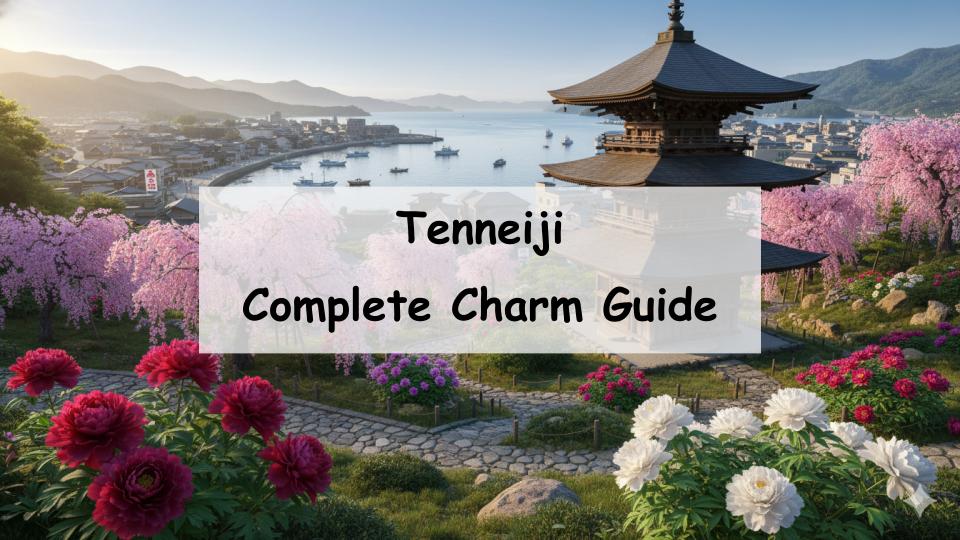
Tenneiji Temple, a representative sightseeing spot in Onomichi, is a fascinating historic temple packed with highlights. These include the Three-Storied Pagoda (Kaiun Pagoda) designated as a National Important Cultural Property, the highly expressive 500 Rakan statues, and beautiful seasonal flowers.
This article thoroughly explains the history and features of Tenneiji Temple, the absolute must-see points within the grounds, and detailed directions from the nearest station. By reading this article, you will fully understand the charm of Tenneiji Temple, making your Onomichi sightseeing even more fulfilling! Please use this as a reference before you head out on your trip.
- What is “Tenneiji Temple” in Onomichi, Hiroshima? History and Features
- 4 Must-See Highlights of Tenneiji Temple
- Goshuin (Temple Seals) and Admission Information at Tenneiji Temple
- Access and How to Get to Tenneiji Temple
- Recommended Sightseeing Spots Nearby to Visit Along with Tenneiji Temple
- Conclusion: Enjoy Hiroshima and Onomichi Sightseeing at the Charming Tenneiji Temple!
- A Message from the Guide
What is “Tenneiji Temple” in Onomichi, Hiroshima? History and Features
A Historic Soto Sect Temple Representing Onomichi
Tenneiji Temple, located in Onomichi City, Hiroshima Prefecture, is a popular tourist spot you simply cannot miss when visiting the many temples in Onomichi. Taking advantage of its location on the middle of a mountain, the temple grounds offer scenery typical of Onomichi, attracting many tourists and worshipers daily. Today, it is well-loved as a Soto Zen sect temple, offering a tranquil and calming space.
The Founding and History of Tenneiji Temple
The history of Tenneiji Temple dates back to 1367 during the Muromachi period when it was established by Ashikaga Yoshiakira, the second shogun of the Muromachi shogunate, with Fumyo Kokushi as the founding priest. Although it was originally a Rinzai sect temple, it was converted to the Soto sect during the Edo period. Despite undergoing several restorations over its long history, the precious buildings and Buddhist statues from the Muromachi period are still carefully preserved today.
4 Must-See Highlights of Tenneiji Temple
The Three-Storied Pagoda (Kaiun Pagoda), a National Important Cultural Property
When you visit Tenneiji Temple, you must see the Three-Storied Pagoda, which is designated as a National Important Cultural Property. Also known as the Kaiun Pagoda, this structure was originally built as a five-storied pagoda in 1388. However, due to aging during the Edo period, the top two tiers were removed to create the current three-storied structure, giving it a very unique history. The beautiful appearance that strongly retains the architectural style of the Muromachi period is a true masterpiece.
The Spectacular View of the Onomichi Channel from the Three-Storied Pagoda
The pagoda is situated on a slightly elevated area within the temple grounds, and the view looking down from there is known as one of the most spectacular landscapes representing Onomichi. Over the beautiful roof of the Three-Storied Pagoda, you can look out over the old townscape of Onomichi, the calm Onomichi Channel, the opposite shore of Mukaishima Island, and passing ships, all looking like a single painting. It is a perfect photo spot where visitors constantly ready their cameras.
Overwhelming Presence! The “500 Rakan” Statues Lined Up in the Hall
In the Rakan Hall located to the left of the main hall, countless wooden Buddhist statues called the 500 Rakan are enshrined. As you step into the hall, you will be overwhelmed by the approximately 500 Arhat statues lined up on tiered stands. These statues were donated from the Edo period to the Meiji period, and each has a different expression showing emotions like joy, anger, sorrow, and pleasure. Finding a statue with a face similar to yourself or your family members is a unique way to enjoy Tenneiji Temple.
The “Sasuri-botoke” (Binzuru-san) for Healing Illnesses
Within the grounds, there is the “Sasuri-botoke” (rubbing Buddha), which has gathered the faith of people since ancient times. Also known as Binzuru-san, it is believed that rubbing the same part of the statue as your own ailing body part will bring blessings such as healing illnesses and reducing pain. Because many worshipers have rubbed it with their wishes, the surface of the statue has taken on a smooth gloss, allowing you to feel the history of how deeply it has been loved by the local people.
Beautiful Grounds with Seasonal Flowers
Tenneiji Temple is also famous as a temple of flowers that shows different expressions depending on the season. A wide variety of plants are planted in the well-maintained grounds, soothing your heart with beautiful nature whenever you visit. The contrast between the solemn atmosphere of the temple and the colorful flowers makes strolling even more enjoyable.
Weeping Cherry Blossoms and Peonies Heralding the Arrival of Spring
In spring, the magnificent weeping cherry trees planted in the grounds come into full bloom, fascinating many blossom viewers. Furthermore, Tenneiji Temple is so famous for its peony flowers that it is also known as the “Peony Temple.” From mid to late April, large peonies in red, pink, and white bloom beautifully in the grounds, enveloping the area in a gorgeous fragrance. The period of spring in full bloom can be said to be the most beautiful season of the year at Tenneiji Temple.
Goshuin (Temple Seals) and Admission Information at Tenneiji Temple
Types of Goshuin and Reception Hours
At Tenneiji Temple, you can receive a Goshuin (temple seal) at the granting office near the main hall. The Goshuin, with the name of the principal image written in powerful brushstrokes, makes a wonderful memento of your Onomichi sightseeing trip. The reception hours for Goshuin are basically within the daytime admission hours, but it is recommended to visit with plenty of time to spare, as the staff may not be able to respond due to temple events.
Admission Fees and Hours
You can stroll around the grounds of Tenneiji Temple freely without any admission fee. The Rakan Hall, where the 500 Rakan are enshrined, can also be visited for free. The admission hours are basically from around 9:00 AM to 5:00 PM. While you can enjoy beautiful scenery even in the early morning or at dusk, it is best to visit during the bright daytime hours if you want to take your time viewing the inside of the halls.
Access and How to Get to Tenneiji Temple
Access by Train and Foot (How to Get There from JR Onomichi Station)
Tenneiji Temple is about a 15-minute walk from JR Onomichi Station. After leaving the station, walk east along the coastal road or the charming shopping street, heading towards the ropeway boarding area. Cross the railroad crossing and climb the slope and stone steps a little further to reach the grounds of Tenneiji Temple. The walking route, where you can feel the atmosphere of the town while walking along Onomichi’s unique slopes and narrow alleys, is very popular among tourists.
Recommended Route Using the Senkoji Mountain Ropeway
For those who are worried about climbing slopes and stairs, a route using the Senkoji Mountain Ropeway is highly recommended. If you go up to the summit station by ropeway and walk down the slope while sightseeing at Senkoji Temple and other places, you will naturally arrive at the Three-Storied Pagoda and the main hall of Tenneiji Temple. Since it is a route mainly consisting of downhill slopes, it is physically easier and allows you to access the temple smoothly while enjoying the spectacular view overlooking the Onomichi Channel.
Access by Car and Nearby Parking Information
If you are heading to Tenneiji Temple by car, you need to be careful when driving because there are many narrow slopes around the temple and no large dedicated parking lot. Therefore, the smoothest and safest way is to park your car at a municipal parking lot or a private coin-operated parking lot around JR Onomichi Station or near the ropeway base station, and then access the temple by foot or ropeway from there.
Recommended Sightseeing Spots Nearby to Visit Along with Tenneiji Temple
A Classic Onomichi Sightseeing Spot: “Senkoji Temple and Senkoji Park”
Spreading from the middle to the top of Mount Senkoji, further up from Tenneiji Temple, are Senkoji Temple and Senkoji Park, which represent classic Onomichi sightseeing. There are many highlights, such as the grounds lined with strange rocks and the “Tama no Iwa” (Jewel Rock), and you can overlook the beautiful islands of the Seto Inland Sea from the observation deck. Since you can head there on foot from Tenneiji Temple, visiting them together is a standard Onomichi sightseeing course.
A Retro and Mysterious Space: “Cat Alley (Neko no Hosomichi)”
Very close to Tenneiji Temple is an alley called “Neko no Hosomichi” (Cat Alley), continuing from Ushitora Shrine to the Three-Storied Pagoda of Tenneiji Temple. Fukuishi-neko (lucky stone cats) painted on round stones are placed here and there, and stylish cafes and museums renovated from old folk houses dot the area. There is also a high probability of meeting real cats, making it a popular walking spot where you can immerse yourself in a somewhat nostalgic and mysterious worldview.
Conclusion: Enjoy Hiroshima and Onomichi Sightseeing at the Charming Tenneiji Temple!
Tenneiji Temple is a wonderful historic temple packed with elements that fascinate visitors, such as the spectacular view from the Three-Storied Pagoda, the powerful 500 Rakan statues, and the seasonal flowers. By strolling through the grounds while feeling the historical background, you can spend a relaxing time unique to Onomichi. Because it is highly accessible and easy to visit along with surrounding sightseeing spots, please be sure to visit Tenneiji Temple and experience its deep charm when you travel to Onomichi, Hiroshima.
A Message from the Guide
The beautifully maintained garden and the overwhelming presence of the 500 Rakan statues left a lasting impression on me.

Comment