
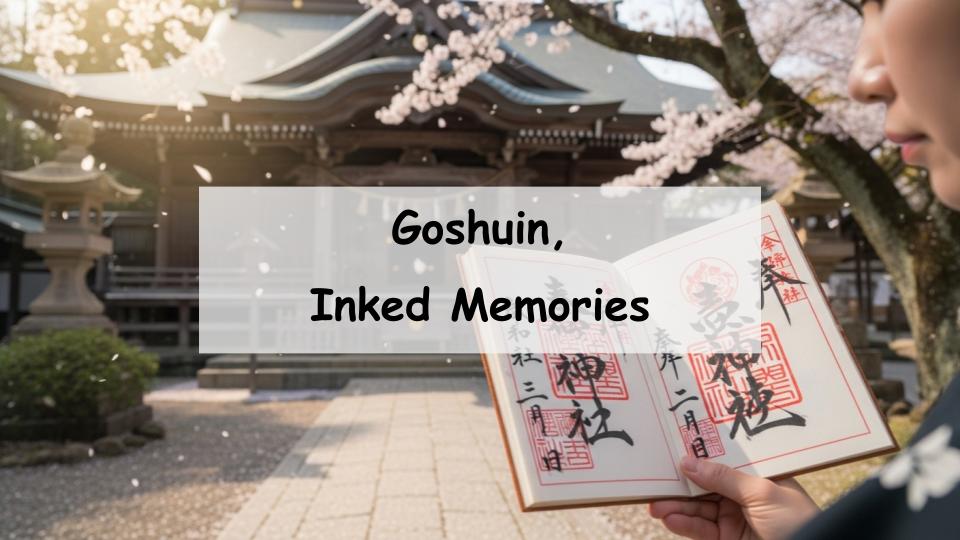
You may have seen them on social media or while traveling in Japan: beautiful calligraphy stamps known as “Goshuin.” While they look fascinating, you might hesitate to start collecting them due to questions like:
“What exactly is a Goshuin? Is it just a tourist souvenir stamp?”
“I’m worried about being rude at a temple or shrine…”
“What do I need to prepare?”
If you are feeling unsure, you are not alone.
In short, a Goshuin is a ‘proof of worship’ that connects you with the deities or Buddha. While it may seem formal, anyone can enjoy collecting them by understanding the basic meaning and etiquette. Collecting Goshuin with the right knowledge will make your trip to Japan much more special and memorable.
In this article, we will explain everything a beginner needs to know:
- The true meaning and history of Goshuin
- The charm of their designs and spiritual benefits
- 5 tips for collecting them and essential manners
Read on to clear up your doubts and confidently start your “Goshuin pilgrimage.”
What is Goshuin? Meaning and History
Before you start collecting, it is important to understand the essence of Goshuin. It is not just a stamp for a collection; treating it with respect changes the entire experience.
A “Proof of Worship” and a Sacred Symbol
A Goshuin (御朱印) is a stamp and calligraphy given at shrines and temples as a testament to your visit. Unlike the rubber souvenir stamps found at train stations or tourist centers, a Goshuin is hand-written by a monk or Shinto priest. It is considered a sacred object, often viewed as an alter ego of the deity or Buddha enshrined there. Therefore, it should be treated with care and respect, not handled roughly. Since it is a proof of worship, getting a stamp without praying is considered disrespectful.

History and Origin (The Connection to Sutras)
While known today as a proof of visit, the Goshuin is believed to have originated as a receipt for dedicating hand-copied sutras (Buddhist scriptures) to temples. This practice, known as Nokyo, dates back to the Heian or Kamakura periods. Over time, the practice evolved so that simply visiting and praying was enough to receive one. By the Edo period, as pilgrimage became popular among commoners, shrines also began issuing them. Thus, every stamp carries a long history of faith.
Decoding the Goshuin (Stamps and Calligraphy)
When you open your Goshuin book, you will see a combination of red stamps and black ink. Generally, the central calligraphy represents the name of the shrine/temple or the main deity worshiped there. Over this, red stamps showing the shrine crest or Sanskrit characters are pressed. The right side usually says “Houhai” (奉拝), meaning “reverently worshiped,” and the left side shows the date of your visit. Knowing these elements makes deciphering each unique design much more enjoyable.
The Appeal of Goshuin: Why Everyone is Hooked
Recently, Goshuin collecting has boomed among young people and international tourists. Here is why it captivates so many hearts.
Unique Artistry and Diverse Designs
The most obvious charm is the visual beauty. The brushwork varies greatly depending on the writer—some are bold and powerful, while others are delicate and flowing. Recently, there has been a rise in “art Goshuin” featuring colorful illustrations of flowers or animals associated with the shrine, or special limited-time designs. Even at the same location, a different writer means a different look, making each Goshuin a “once-in-a-lifetime” piece of art.
Turning Travel Memories into a Physical Record
Because every Goshuin includes the date, looking back at your book brings back vivid memories. You will remember where you went, who you were with, the atmosphere of the shrine, and how you felt that day. While photos capture the scenery, a Goshuin captures the spiritual experience of the journey. Watching your book fill up gives a great sense of accomplishment.
Peace of Mind and Spiritual Blessings
Having the goal of collecting Goshuin naturally leads you to visit more shrines and temples. Standing in the quiet, sacred grounds and praying allows you to reset your mind away from daily stress. Additionally, each location offers different blessings (Gokito), such as matchmaking, academic success, or safety. Deepening your connection with the divine through these visits is a major part of the appeal.

Basic Manners: How to Receive Goshuin Respectfully
Since Goshuin are sacred, there are rules to follow. Ensure you don’t accidentally cause offense by learning the correct procedure.
The Correct Order: Worship First
The most important rule is “Worship first, Goshuin second.”
- Cleanse your hands and mouth at the Chozuya (water pavilion).
- Proceed to the main hall to pray.
- Only after praying should you go to the shrine office (Shamusho) or temple office (Nokyojo) to ask for the Goshuin.
Skipping the prayer is considered rude. The only exception is if the office is very crowded and there is a sign asking you to drop off your book before praying.
Major “Don’ts” to Avoid
Never hand over a regular notebook, a piece of loose paper, or a tourist stamp book. You must use a proper Goshuin-cho (Goshuin book). Also, avoid talking loudly or taking photos/videos of the staff while they are writing, as they need to concentrate. Wait quietly and receive the book with both hands, saying “Arigato gozaimasu” (Thank you) when finished.
What if You Forget Your Book? (Writing on Paper)
If you forget your book or haven’t bought one yet, ask for a “Kaki-oki” (書き置き). This is a Goshuin written on a loose sheet of Japanese washi paper. Most places have these prepared. Simply say, “Goshuin-cho wo wasuremashita. Kaki-oki de onegaishimasu” (I forgot my book. Please give me a loose paper one). Take it home carefully without folding it, and paste it into your book later.
5 Tips for Smart Goshuin Collecting
Here are five tips to help beginners enjoy their Goshuin pilgrimage smoothly.
Tip 1: Get Your Own “Goshuin-cho”
First, buy your “partner” for the journey. You can buy Goshuin books at shrines, temples, stationery stores, or online.
- Size: There are generally two sizes: small (approx. 16cm x 11cm) and large (approx. 18cm x 12cm). The large size is great for dynamic calligraphy, while the small size is portable.
- Style: Most are “accordion” style (Jabara), which allows you to open the whole book to see your collection at a glance.

Famous temples like Horyu-ji, To-ji, Chuson-ji, and Kongobu-ji sell their own Goshuin books, and I usually buy one if I find a design I like. However, since you can’t guarantee they’ll always be available, it’s safer to check online beforehand and buy one if something catches your eye. They don’t have an expiration date, so it’s perfectly fine to have a few extra on hand!
Tip 2: Prepare Exact Change (Coins)
The fee for a Goshuin (called Hatsuho-ryo at shrines) is usually between 300 and 500 yen. Special artistic ones may cost 1,000 yen or more. Shrines often have limited change, so avoid using large bills like 5,000 or 10,000 yen notes. Preparing 100-yen coins and 1,000-yen bills in advance is a sign of good manners.
Tip 3: Know the Rules on Mixing Shrines and Temples
A common question is: “Can I mix shrine and temple stamps in the same book?” Generally, it is fine to mix them. However, a very small number of strict temples/shrines may refuse to write in a mixed book due to the separation of Buddhism and Shintoism. If you want to be safe or organized, you might consider having two separate books: one for shrines and one for temples.
Tip 4: Check for Limited Editions and Hours
Some shrines offer special Goshuin only during festivals, specific seasons, or monthly changes. These are often limited in number, so research is key. Also, most shrine/temple offices close relatively early, often around 4:00 PM or 5:00 PM. Always check the official website or social media for the latest hours before you go.
Tip 5: Store Your Goshuin Book Carefully
At home, store your book in a clean, elevated place, such as near a household altar (Kamidana or Butsudan) or on a high shelf. Do not leave it on the floor or buried under magazines. Avoid direct sunlight and humidity. Using a protective cover or case can also keep it safe from dirt and damage.
Frequently Asked Questions
Finally, here are answers to common questions beginners often have.
Can I get a Goshuin for a friend or family member?
In principle, no. A Goshuin is a proof of your specific visit and worship. It cannot be collected by proxy. However, if a family member is hospitalized or physically unable to visit, you can explain the situation to the shrine staff. They might make an exception, but understand that it is different from buying a lucky charm (Omamori) as a gift.
Are there places that refuse to give Goshuin?
Most major shrines and temples offer them, but not all. For example, temples of the Jodo Shinshu sect of Buddhism generally do not offer Goshuin due to their doctrinal beliefs. Also, small, unmanned neighborhood shrines will not have anyone to write them. If a place doesn’t offer one, respect their rules and faith without complaint.
Summary: Manners First, Collection Second
Collecting Goshuin is a wonderful way to experience Japanese tradition and feel a connection with the spiritual world. While the beautiful designs are a great reason to start, never forget the meaning behind them: a “proof of worship.”
If you visit with proper manners and a grateful heart, your Goshuin book will become a treasure filled not just with ink, but with memories and spiritual peace. Why not grab a Goshuin book and start your journey this weekend?
A Message from the Guide
I’m not visiting temples just to collect goshuin (temple stamps), but if they don’t have one, I can’t help but feel a little disappointed.



Comment