You may have heard the name “Kukai” or “Kobo Daishi” in history books or at famous tourist destinations in Japan. However, many people often wonder about his actual accomplishments, whether the legends scattered across the country are true, and how he differed from his contemporary, Saicho.
To get straight to the point, Kukai was one of the greatest genius monks in Japanese history. In the early Heian period, he brought the latest teachings of Esoteric Buddhism from Tang Dynasty China to Japan and founded the sacred site of Mount Koya. His extraordinary activities extended far beyond religion into civil engineering, education, and calligraphy. He left behind numerous mysterious legends across the nation, establishing a legacy deeply connected to the daily lives of the people.
In this article, we will summarize the turbulent life of Kukai and his monumental historical achievements. We will also explore the miraculous legends passed down through generations and his profoundly compassionate personality that continues to captivate people today.
By reading this, you will clearly understand why Kukai has been deeply revered for over 1,200 years. Let us embark on a journey tracing the footsteps of Kukai to make Japanese history and culture even more fascinating. Please read to the very end.
- Who is Kukai (Kobo Daishi)? Basic Profile You Should Know
- Living Through a Turbulent Era! Tracing Kukai’s Life and Journey
- Kukai’s Great Achievements That Deeply Impacted Japanese Society
- Passed Down Across the Country! The Mysterious Legends of Kukai
- Genius Monks of the Same Era! The Differences and Relationship Between Kukai and Saicho
- Relevant to Us Today! Kukai’s Quotes and Teachings
- Conclusion: Trace the Footsteps of Kukai (Kobo Daishi) and Experience His Greatness
- A Message from the Guide
Who is Kukai (Kobo Daishi)? Basic Profile You Should Know
The Origin of the Names “Kukai” and “Kobo Daishi”
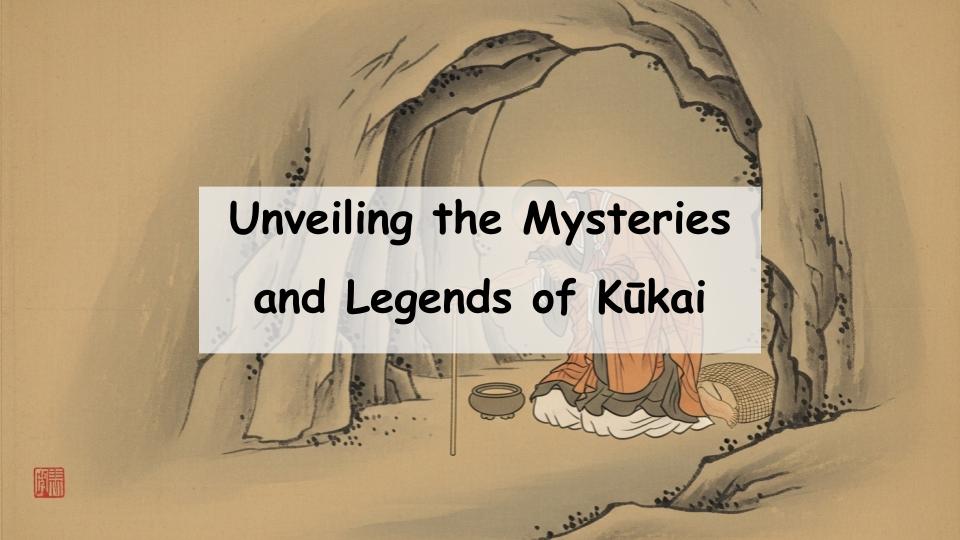
The name “Kukai” is said to have originated during his early ascetic training at the Mikurodo Cave in Cape Muroto. Looking out from the cave, the only scenery he could see was the vast sky (Ku) and the ocean (Kai). On the other hand, “Kobo Daishi” is a posthumous title bestowed upon him by Emperor Daigo after his passing. “Kobo” means spreading the teachings of the Buddha widely, while “Daishi” (Great Master) is the highest honorific title granted by the imperial court only to the most exceptional monks. This rich history explains why he is still affectionately called “Odaishi-sama” today.
The Founder of Shingon Buddhism Who Brought Esoteric Buddhism to Japan
During the early Heian period, Kukai traveled to Tang China as an official envoy to study the most advanced forms of Buddhism. He mastered Esoteric Buddhism and brought it back to Japan, using these teachings to establish a unique Japanese Buddhist sect known as “Shingon Buddhism.” The Shingon sect teaches practitioners to chant the true words of the Buddha (Mantra) and aim for enlightenment through the training of body, speech, and mind. The magnificent worldview of Esoteric Buddhism introduced by Kukai was widely embraced by everyone from nobles to commoners, significantly influencing Japanese religious perspectives.
A Multi-Talented Genius! Kukai’s Human and Compassionate Persona
Kukai’s appeal lies in the fact that he cannot be confined solely to the role of a religious figure. He possessed vast knowledge in linguistics, literature, architecture, and pharmacology, demonstrating overwhelming talent in every field. At the same time, he was known for his deeply compassionate nature, never turning a blind eye to those in need. Despite his immense intellect, he remained humble and always stayed close to the common people, which is exactly why he remains beloved across generations.
Living Through a Turbulent Era! Tracing Kukai’s Life and Journey
Birth and Early Youth
Born in Sanuki Province and Elite Education
Kukai was born in the year 774 in Sanuki Province, which is present-day Kagawa Prefecture. His childhood name was Mao, and he was known to be exceptionally brilliant from a young age. Born into a local aristocratic family, Kukai carried the expectations of his relatives and went to the capital to enter the national university, the highest educational institution for training government officials. There, he received an elite education in Confucianism, history, and literature, beginning his path as a top scholar.
Dropping Out of College and Rigorous Ascetic Training in the Mountains
While studying at the university, Kukai gradually began to feel a sense of emptiness in pursuing academics solely for worldly success. To seek absolute truth, he decided to abandon his promised elite career, drop out of the university, and enter the Buddhist path. He threw himself into life-threatening, rigorous ascetic practices in the harsh mountains of Yoshino, Mount Omine, and Shikoku. These extreme experiences in nature formed the crucial foundation of his later Esoteric Buddhist philosophy.
Traveling to Tang China as an Envoy
Overcoming Severe Storms to Reach Chang’an
In 804, Kukai boarded an envoy ship bound for Tang China to study the most advanced culture and Buddhism of the time. The voyage was extremely treacherous, and due to severe storms, only two of the four ships managed to reach the Chinese continent. After overcoming numerous hardships to enter the capital city of Chang’an, Kukai’s extraordinary linguistic ability and intellect allowed him to quickly form deep relationships with local scholars and cultural figures.
A Fateful Encounter with Master Huiguo and Inheriting Orthodox Esoteric Buddhism
At Qinglong Temple in Chang’an, Kukai had a fateful encounter with Master Huiguo, the supreme authority on Esoteric Buddhism. Upon seeing Kukai, Huiguo immediately recognized his immense talent and decided to transmit the entirety of Esoteric Buddhism to him. Training that normally took many years was completed by Kukai in just a few months, establishing his position as the orthodox successor of Esoteric Buddhism. This unprecedentedly rapid transmission is a famous episode symbolizing Kukai’s genius.
Activities After Returning and Spreading Shingon Esoteric Buddhism
Gaining the Deep Trust of Emperor Saga
Upon returning to Japan, Kukai presented a vast collection of sutras, mandalas, and Buddhist ritual implements to the imperial court, introducing the latest Esoteric Buddhist philosophy. These new teachings, combined with Kukai’s charismatic personality, were highly evaluated by Emperor Saga, the ultimate authority of the time. Earning the deep trust and strong backing of the emperor, Kukai was entrusted with vital rituals to pray for national peace, allowing Shingon Buddhism to spread rapidly throughout the country.
Founding the Training Ground “Mount Koya” and the Granting of To-ji Temple
In 816, Kukai was granted Mount Koya in Wakayama Prefecture by the imperial court to establish a fundamental training ground for Shingon Buddhism. He built a magnificent temple complex deep in the mountains, creating an ideal environment where monks could focus entirely on their ascetic practices away from the secular world. Furthermore, the emperor entrusted him with To-ji Temple in Kyoto to serve as a base for spreading his teachings. Mount Koya and To-ji remain the central hubs of the Shingon sect, attracting profound faith to this day.
Nyujo (Entering Eternal Meditation)
His Final Moments in Okunoin and Enduring Faith
In 835, Kukai entered “Nyujo” at Okunoin on Mount Koya, passing into a state of eternal meditation. In the Shingon faith, it is believed that Kukai did not die but remains alive in his physical body at Okunoin, continuously praying for world peace and human happiness. This strong faith in Kobo Daishi has been passed down powerfully to the present day, with a solemn ritual of serving him daily meals still being strictly observed.
Kukai’s Great Achievements That Deeply Impacted Japanese Society
Establishing “Shugei Shuchi-in,” Japan’s First School for Commoners
Kukai’s contributions were not limited to religious activities. In 828, he established “Shugei Shuchi-in” in Kyoto, Japan’s first private school open to anyone regardless of social class or wealth. While educational institutions of that era were exclusively for a fraction of the nobility, Kukai opened the doors to commoners, providing comprehensive education that included Buddhism, Confucianism, and Taoism. This groundbreaking educational philosophy holds immense significance in the history of Japanese education.
Active in Civil Engineering: Restoring the Manno Reservoir
Kukai’s greatness is also evident in his contributions to social infrastructure. When the Manno Reservoir, one of Japan’s largest agricultural irrigation ponds located in his home province of Sanuki, collapsed, Kukai directed the restoration project at the request of the imperial court. He successfully completed the reservoir by applying the latest arched dam technology he had learned in Tang China. Kukai’s outstanding technical skills and leadership vastly improved the living conditions of the local people.
An Overwhelming Talent in Calligraphy: One of the “Sanpitsu” (Three Great Brushes)
Kukai is celebrated as one of the “Sanpitsu,” the three greatest calligraphers of the Heian period, alongside Emperor Saga and Tachibana no Hayanari. Absorbing various calligraphy styles, including that of Wang Xizhi which he studied in Tang China, Kukai created a uniquely powerful yet elegant writing style. His calligraphy was highly praised by contemporary nobles and is carefully preserved today as national treasures. Reaching the pinnacle of art through written characters is another testament to his multifaceted brilliance.
The Roots of the Shikoku 88 Temple Pilgrimage (Ohenro) Still Alive Today
The “Shikoku 88 Temple Pilgrimage,” which attracts numerous pilgrims year-round, also traces its roots back to Kukai’s ascetic journeys. The locations where the young Kukai trained across Shikoku were later designated as sacred sites. Even today, the phrase “Dogyo Ninin” (two traveling together) is widely used, signifying the belief that pilgrims are always walking alongside Kukai. This pilgrimage culture remains deeply ingrained in the spirituality of the Japanese people.
Passed Down Across the Country! The Mysterious Legends of Kukai
Striking the Ground to Bring Forth Water? Legends of “Water and Wells”
Throughout Japan, there are countless legends of “Kobo Water,” where clear water is said to have sprung forth when Kukai struck the ground with his staff. According to these stories, when Kukai prayed to save villagers suffering from a water shortage, an inexhaustible well miraculously appeared. These legends are believed to reflect the historical fact that Kukai possessed advanced civil engineering skills and knowledge of locating water veins, genuinely helping communities solve their water crises.
Pioneering Hot Spring Resorts? Legends of Finding “Onsen” Across Japan
In addition to water, legends of Kukai discovering hot springs exist all over Japan. Famous stories claim that Kukai struck rocks with his vajra (a Buddhist ritual tool) to bring forth hot springs in places like Shuzenji Onsen in Izu and Shima Onsen in Gunma Prefecture. His deep compassion to heal people suffering from illnesses and injuries by finding therapeutic hot springs is what likely gave rise to these enduring legends.
Legends Rooted in Local Specialties and Healing Illnesses
Furthermore, there are many traditions stating that Kukai introduced local specialty crops to regions or quelled epidemics. Stories of him teaching struggling farmers how to grow delicious crops or curing incurable diseases through prayer have been passed down nationwide. These precious folk tales demonstrate just how closely connected Kukai was to the daily lives of ordinary people, offering concrete salvation and support.
Genius Monks of the Same Era! The Differences and Relationship Between Kukai and Saicho
Differences Between Kukai’s Shingon Buddhism and Saicho’s Tendai Buddhism
Although Kukai and Saicho represent the pinnacle of Heian Buddhism, their teachings have distinct differences. Kukai’s Shingon Buddhism views Mahavairocana (Dainichi Nyorai) as the universal truth, focusing heavily on Esoteric Buddhism aimed at achieving salvation and enlightenment in this world through incantations and mantras. On the other hand, Saicho’s Tendai Buddhism holds the Lotus Sutra as its fundamental text, teaching that all people have the potential to become a Buddha, and integrates various elements including Esoteric Buddhism and Zen.
Their Deep Interaction and Eventual Parting of Ways
Kukai and Saicho, who traveled to Tang China on the same envoy fleet, maintained a deep friendship after returning to Japan. Their relationship was built on Saicho, the senior monk, humbly asking the younger Kukai for teachings on authentic Esoteric Buddhism. However, disagreements over the interpretation of Esoteric texts regarding the borrowing of sutras, along with the fact that Saicho’s beloved disciple chose to stay with Kukai, gradually cooled their relationship, ultimately leading them to part ways.
Relevant to Us Today! Kukai’s Quotes and Teachings
What is “Sokushin Jobutsu,” the Core Philosophy of Esoteric Buddhism?
At the heart of Kukai’s teachings is the philosophy of “Sokushin Jobutsu.” This revolutionary concept states that one does not need to repeat rigorous training through multiple reincarnations; instead, a person can attain enlightenment and become a Buddha in this very body, in this very lifetime. Believing in the infinite potential hidden within oneself and aiming to unify with the universal truth by harmonizing mind and body, this philosophy carries a powerful message that strongly resonates with modern self-affirmation.
Inspiring Quotes by Kukai That Enrich Life
Kukai left behind many profound quotes in his writings that still touch the hearts of modern people. He emphasized the importance of polishing one’s own mind rather than blaming circumstances or other people, and taught the value of discerning the true essence of things. Seeking spiritual richness rather than just visible material wealth, Kukai’s words continue to give courage to countless people as essential guidance for surviving our stressful modern society.
Conclusion: Trace the Footsteps of Kukai (Kobo Daishi) and Experience His Greatness
Kukai was not only a great religious leader who brought Shingon Esoteric Buddhism to Japan but also an unparalleled genius who demonstrated extraordinary talent in civil engineering, education, and art. His monumental achievements, such as founding Mount Koya and establishing the Shugei Shuchi-in, deeply breathe life into modern Japanese culture and social systems. The countless legends remaining nationwide serve as proof of how closely he stood by the people and how long he has been cherished.
Learning about the life of Kukai, who transcended the boundaries of Buddhism to leave a massive impact on Japanese society, will profoundly deepen your understanding of history and culture. Places intimately connected to Kukai, such as the Shikoku Pilgrimage routes, Mount Koya, and To-ji Temple in Kyoto, are still bustling with visitors today. We highly encourage you to go on a journey tracing the footsteps of Kukai and physically experience the great energy that continues to live on even after 1,200 years.
A Message from the Guide

Kūkai was unconventional but had so many talents. He really feels like the main character, and that’s why I like him.



Comment