Have you ever come across the name “Kokuzo Bosatsu” (Akasagarbha Bodhisattva) while visiting temples or collecting Goshuin stamps? Alternatively, you may have arrived at this deity while searching for divine help to “gain wisdom” or “improve memory” before an entrance exam or qualification test. However, many people harbor doubts, thinking, “The name sounds magnificent, but I don’t really know what kind of Buddha this is,” or “What specific benefits are there for me?” Furthermore, for those born in the years of the Ox and the Tiger, this deity serves as a lifelong “Guardian Buddha,” yet opportunities to deeply understand the reasons and origins behind this are surprisingly rare.
To give you the conclusion first, Kokuzo Bosatsu is “a Buddha who stores infinite wisdom and compassion as vast as the universe (the void).” As the name suggests, this deity is believed to bestow unfathomable memory and knowledge upon people. Since ancient times, Kokuzo Bosatsu has been deeply worshipped as the Buddha of academic achievement, improvement in arts and crafts, and good fortune.
In this article, we will unravel the unknown meanings and origins of Kokuzo Bosatsu and thoroughly explain the following points:
Why “Kokuzo” (Void)? The true meaning of the name.
Not just for studies? The surprisingly diverse benefits.
Mantras to enhance effects and key points for worship.
By reading this article, you will gain a correct understanding of the profound virtues of Kokuzo Bosatsu and touch upon the “true faith” needed to deliver your wishes. Please read through to the end.
- What Kind of Buddha is Kokuzo Bosatsu? Meaning and Characteristics
- The Amazing Benefits of Kokuzo Bosatsu | Wisdom and Fortune
- Kobo Daishi (Kukai) and the Legend of the “Gumonji-ho”
- The Mantra of Kokuzo Bosatsu and Its Effects
- Places to Meet Kokuzo Bosatsu | The Three Great Kokuzo of Japan and Famous Temples
- Conclusion
- A Message from the Guide
What Kind of Buddha is Kokuzo Bosatsu? Meaning and Characteristics
Buddhism has many deities, but among them, Kokuzo Bosatsu embodies a particularly vast worldview. Let us first look in detail at the origin of the name, the relationship with other Bodhisattvas, and the characteristics of the statues.
Meaning and Origin of the Name “Kokuzo”
The name Kokuzo Bosatsu is a translation of the Sanskrit term “Akasagarbha.” “Akasha” means void, space, or universe, while “Garbha” means womb, matrix, or storehouse. Therefore, this name represents a state of “containing infinite wisdom and compassion within one’s body (storehouse) like the vast universe.”
The “void” here does not refer to empty space where nothing exists, but rather an expanse that encompasses everything without obstruction. Kokuzo Bosatsu has been worshipped as a Buddha who takes wisdom and treasures from this inexhaustible treasury according to people’s wishes and gives them generously. Derived from this origin, the deity is believed to have the power to satisfy both the spiritual richness and material abundance of people, going beyond merely being a Buddha of knowledge.
Role as a Bodhisattva and Contrast with Jizo Bosatsu
To understand Kokuzo Bosatsu, it is often helpful to look at Jizo Bosatsu (Ksitigarbha). These two are sometimes viewed as a pair. While Jizo Bosatsu symbolizes the blessings and compassion of the “Earth” (Ksiti), supporting and saving suffering people from the ground up, Kokuzo Bosatsu symbolizes the expanse and wisdom of the “Sky” (Akasha), guiding and illuminating people from above.
It is thought that the blessings of heaven and earth are complete when both are present, saving sentient beings with the virtues of the sky and the ground, respectively. While Jizo Bosatsu is worshipped with a common, approachable familiarity, Kokuzo Bosatsu has gathered special reverence from those aspiring to learning and those honing specialized skills, due to the deity’s noble wisdom and the virtue of memory.
How to Identify the Statue | Sword and Wish-Fulfilling Jewel
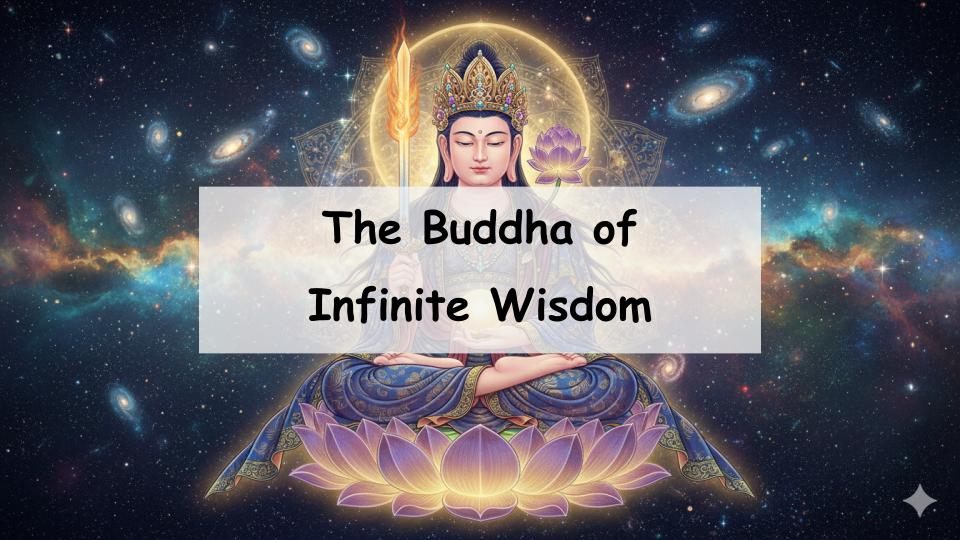
When viewing a statue of Kokuzo Bosatsu at a temple, there are several distinct characteristics to look for. Generally, the figure wears a “Five Buddha Crown” on the head, representing five types of wisdom. The figure is often depicted holding a “Sword of Wisdom” in the right hand, symbolizing the sharpness of intellect, and a lotus flower topped with a “Nyoi-hoju” (Cintamani stone or Wish-Fulfilling Jewel) in the left hand, which grants wishes as one desires.
Alternatively, the right hand may be lowered with the palm facing outward in the “Varada Mudra” (Gift-bestowing gesture). This is an expression of the intent to hear people’s wishes and grant what they desire. In esoteric Buddhist iconography, the deity is often depicted with white skin, from which one can sense a pure, unclouded light of wisdom. Knowing these features allows you to face the Buddha more deeply during your visit.
The Amazing Benefits of Kokuzo Bosatsu | Wisdom and Fortune
What specific virtues does Kokuzo Bosatsu, who holds an infinite storehouse, bring to us? Here, we explain the famous benefits regarding academics, the role as a guardian deity for specific birth years, and the important positioning in memorial services.
A Must for Students! Memory Enhancement and Academic Success
The most widely known benefit of Kokuzo Bosatsu is the improvement of memory and academic achievement. Being the Buddha who stores infinite wisdom, it is said that he activates the workings of the brain and grants the power not to forget what one has learned once.
For this reason, many students and people taking qualification exams visit to worship during the exam season. Additionally, the “Jusan Mairi” (Thirteen-Year-Old Visit) held at temples like Horin-ji in Arashiyama, Kyoto, is a traditional event where children who have turned 13 years old pay homage to Kokuzo Bosatsu to be granted wisdom. The legend that one must cross the bridge without looking back after visiting, or else return the bestowed wisdom, also illustrates how deeply this Buddha is connected to wisdom.
Guardian Deity for Those Born in the Year of the Ox and Tiger
In Buddhism, there is a concept of “Twelve Zodiac Guardian Deities,” where a specific Buddha is assigned to protect a person for life depending on their birth year. Kokuzo Bosatsu is the Guardian Buddha for those born in the Year of the Ox and the Year of the Tiger.
People born in these years are believed to be able to escape calamity and grasp happiness in life by cherishing their faith in Kokuzo Bosatsu. Knowing one’s own guardian deity and offering gratitude daily is the first step toward mental stability and good fortune. The direction of the Ox and Tiger (Northeast) is sometimes considered the “Demon Gate” (Kimon) in geomancy, but it is believed that the mighty dharma power of Kokuzo Bosatsu can banish all evil spirits and invite fortune.
Role in Presiding Over the 33rd Memorial Service
Kokuzo Bosatsu plays an important role not only during life but also in the afterlife. In the faith of the Thirteen Buddhas, which is observed for the memorial services of the deceased, Kokuzo Bosatsu presides over the final “33rd Memorial Service.”
The 33rd memorial is also called “Tomurai-age” (End of Mourning), a significant milestone where the deceased completely departs for the Pure Land and becomes an ancestral spirit. At this time, Kokuzo Bosatsu guides the deceased with vast compassion and sends them off to eternal peace. His figure, watching over everything from the granting of wisdom in this world to the attainment of Buddhahood after death, can be said to be a reliable guide on the soul’s journey.
Kobo Daishi (Kukai) and the Legend of the “Gumonji-ho”
When discussing faith in Kokuzo Bosatsu, the connection with Kobo Daishi (Kukai), the founder of Shingon Buddhism, is essential. The practice Kukai cultivated in his youth was one to gain superhuman memory by borrowing the power of Kokuzo Bosatsu.
Never Forget What You See or Hear? The Ultimate Memory Technique
That practice is called the “Kokuzo Gumonji-ho” (Morning Star Meditation). It is a rigorous ascetic practice that involves reciting the mantra of Kokuzo Bosatsu one million times while following specific protocols. It is preached in the sutras that one who completes this practice will memorize all scriptures and gain the miraculous memory to never forget what they have seen or heard once.
It is not merely a memorization technique, but a method of acquiring wisdom obtained by heightening concentration to the limit and becoming one with the truths of the universe. For monks of that time, memorizing vast amounts of scriptures was an essential ability, making this Gumonji-ho a coveted practice.

Origin and History of Kukai’s Enlightenment
In his youth, Kukai secluded himself in a cave (Mikurodo Cave) at Cape Muroto in Kochi Prefecture and practiced this Kokuzo Gumonji-ho. According to legend, just as the practice was about to be fulfilled, the Morning Star (Venus) descended from the sky and flew into Kukai’s mouth.
Through this mystical experience, Kukai attained enlightenment, and it is said he took the name “Kukai” (Sky-Sea) because the world appeared to shine brightly, consisting of the sky and sea. This legend tells how intense the light of wisdom brought by Kokuzo Bosatsu is and that it possesses the power to transform human consciousness. Although this practice is still handed down today, it is an extremely severe discipline that must be performed carefully under the guidance of a master.
The Mantra of Kokuzo Bosatsu and Its Effects
When worshipping at a temple, you can strengthen your connection with the Buddha by chanting a “Mantra” rather than just putting your hands together. The mantra of Kokuzo Bosatsu has a unique rhythm and resonance.
How to Read the Representative Mantra and Its Meaning
The most commonly chanted mantra for Kokuzo Bosatsu is: “On Basara Aratannou Ontaraku Sowaka.”
Each of these words has a meaning. “On” (Om) represents taking refuge or adoration. “Basara” (Vajra) means diamond-like firmness. “Aratannou” (Ratna) means treasure or jewel. “Ontaraku” contains the sacred seed syllable of Kokuzo Bosatsu. “Sowaka” (Svaha) means “may it be achieved.” As a whole, it contains a prayer like, “O Kokuzo Bosatsu who holds the Diamond Treasure, please grant my wish.”
Points to Remember When Chanting
When chanting the mantra, it is more important to focus on the resonance of the sound and visualize the figure of Kokuzo Bosatsu in your mind rather than deeply analyzing the meaning of the words. The number of times is generally said to be good at 3, 7, or 21 times, but the sincerity of the heart is more important than the count.
Quietly take a deep breath to settle your mind, and try chanting “On Basara Aratannou Ontaraku Sowaka” with the image of Kokuzo Bosatsu’s vast wisdom flowing into you. You will likely feel a sensation of impatience and anxiety subsiding, and your mind becoming clear. It is also recommended to make a habit of chanting this before studying or working.
Places to Meet Kokuzo Bosatsu | The Three Great Kokuzo of Japan and Famous Temples
Although Kokuzo Bosatsu is enshrined in temples throughout Japan, places known as the “Three Great Kokuzo of Japan” have gathered much faith since ancient times. If you are traveling in search of blessings, these are sacred sites you should visit.
What are the Three Great Kokuzo Bosatsu of Japan?
There are various theories about the combination of the “Three Great Kokuzo of Japan,” but the definition comprising “Fukuman,” “Daiman,” and “Noman” is one of the most prominent and historically significant.
1. Fukuman Kokuzo Bosatsu (Enzo-ji)
Located in Yanaizu-machi, Kawanuma-gun, Fukushima Prefecture. “Fukuman” signifies the fulfillment of fortune and virtue. This temple is famous for the origin of the “Akabeko” (Red Cow) legend and is widely worshipped for warding off evil and inviting good luck.

2. Daiman Kokuzo Bosatsu (Muramatsu-san Hidaka-ji)
Located in Tokai-mura, Naka-gun, Ibaraki Prefecture. “Daiman” signifies great fulfillment. It is a famous spot for the Jusan Mairi (Thirteen-Year-Old Visit) in the Kanto region, attracting endless visitors praying for academic success and wisdom.
3. Noman Kokuzo Bosatsu (Seicho-ji)
Located in Kiyosumi, Kamogawa City, Chiba Prefecture. “Noman” signifies the fulfillment of ability and capacity. This ancient temple is situated on a mountain with a mysterious atmosphere and is also known as the place where Nichiren Shonin first declared the establishment of his sect.
Other Main Temples Gathering Faith Nationwide
Beyond the Three Great Kokuzo, “Horin-ji” in Kyoto Prefecture is familiarly known as “Saga no Kokuzo-san” and is an important temple said to be the birthplace of the Jusan Mairi. Additionally, “Kongosho-ji” in Mie Prefecture, guarding the Demon Gate of Ise Jingu, is also a significant site of Kokuzo faith.
Each temple has its own unique history and legends, and the amulets and Goshuin stamps offered differ. By searching for and visiting a temple enshrining Kokuzo Bosatsu close to your home or at your travel destination, you will be able to feel the benefits more intimately.
Conclusion
Kokuzo Bosatsu is a precious existence that bestows upon us wisdom and compassion as vast as the universe, just as the name implies. Beyond the academic benefits such as passing exams and improving memory, this deity is deeply involved in the milestones of our lives as the Guardian Buddha for those born in the years of the Ox and Tiger, and as the principal image for the 33rd memorial service guiding the deceased.
Just as Kobo Daishi (Kukai) attained enlightenment through his practice, faith in Kokuzo Bosatsu can serve as a catalyst to draw out our own dormant talents and possibilities. When you need wisdom in your daily life, or when you are lost regarding the direction of your life, why not chant Kokuzo Bosatsu’s mantra “On Basara Aratannou Ontaraku Sowaka” and turn your heart toward that infinite merit? That prayer will surely reach the void and return to you as a rich blessing.
A Message from the Guide

I was born in the Year of the Tiger, so Kokuzo Bosatsu is my guardian deity. He is a Buddha I deeply cherish.

Comment