“I want to visit Kongoshoji Temple along with Ise Jingu, but what kind of temple is it?”
“I want to know the highlights of the grounds and how to get there without getting lost!”
Do you have these questions about Kongoshoji Temple in Mie Prefecture?
Sung about in the traditional Ise Ondo folk song as “If you visit Ise, you must also visit Asama, otherwise it is only a half-pilgrimage,” Kongoshoji Temple is a prestigious temple that protects the northeastern gate (demon gate) of Ise Jingu. It is a powerful spiritual spot that should be visited together with Ise Jingu, full of numerous charms such as nationally designated important cultural properties and beautiful seasonal nature.
In this article, we will thoroughly explain the history and features of Kongoshoji Temple, the absolute must-see highlights on the grounds, and detailed access methods using a car or public transportation.
By reading to the end, you can fully enjoy the charms of Kongoshoji Temple and plan a more fulfilling sightseeing trip to Mie and pilgrimage to Ise. Please use this as a reference.
- What is Kongoshoji Temple? Features and History of the Famous Temple in Ise City, Mie Prefecture
- Absolute Must-See Highlights and Spiritual Spots of Kongoshoji Temple
- The Main Hall (Maniden): A Nationally Designated Important Cultural Property
- Benefits of Warding Off Evil and Good Fortune: The “Tiger of Good Fortune” and “Ox of Fortune (Ox of Wisdom)”
- The Solemn Atmosphere of the “Okunoin” (Inner Sanctuary) and Giant Stupas
- The Beautiful Water Lilies of “Renma-no-ike Pond” and the Drum Bridge
- The Spectacular View from the Mt. Asama Summit Observatory and the “Postbox in the Sky”
- Information on Goshuin (Temple Seals) and Amulets at Kongoshoji Temple
- How to Get to Kongoshoji Temple: Access Methods
- Visiting Hours, Required Time, and Basic Information for Kongoshoji Temple
- Conclusion: Visit the Charming Kongoshoji Temple on Your Mie Sightseeing Trip!
- A Message from the Guide
What is Kongoshoji Temple? Features and History of the Famous Temple in Ise City, Mie Prefecture
History and Origins of Kongoshoji Temple
Kongoshoji Temple is a renowned temple of the Nanzen-ji branch of the Rinzai sect, located near the summit of Mount Asama in Ise City, Mie Prefecture. Its history is incredibly ancient, and it is said to have been founded by a monk named Kyotai during the Asuka period. In the Heian period, Kobo Daishi Kukai revitalized it as a Shingon sect training ground and built temple structures, leading to great prosperity. Later, it was restored as a Rinzai Zen temple during the Muromachi period, and it has continued to attract the faith of many people to this day.

Deep Connection with Ise Jingu: “If you visit Ise, you must also visit Asama”
When talking about Kongoshoji Temple, its deep connection with Ise Jingu is essential. Because Mount Asama is located in the direction of the “Kimon” (demon gate or unlucky northeastern direction) of Ise Jingu, Kongoshoji Temple has long played an important role in protecting the shrine from evil spirits. During the Edo period, pilgrimages to Ise became a massive boom, but visiting only Ise Jingu was called a “half-pilgrimage.” It became the formal custom to always visit Kongoshoji Temple on Mount Asama after worshiping at Ise Jingu. Strongly retaining the history of the syncretism of Shinto and Buddhism, this place welcomes many worshipers today as a powerful spiritual spot.
Absolute Must-See Highlights and Spiritual Spots of Kongoshoji Temple
The Main Hall (Maniden): A Nationally Designated Important Cultural Property
Standing imposingly in the center of the grounds is the main hall, known as the “Maniden,” which is designated as a national important cultural property. The current building was reconstructed during the Edo period through a donation by Keishoin, the mother of the fifth Tokugawa shogun, Tsunayoshi. It features a brilliant vermilion-lacquered exterior and a solid structure that conveys the beauty of traditional Japanese architecture, emitting an overwhelming presence to visitors. The principal image, Fukuichiman Kokuzo Bosatsu, is enshrined inside, allowing visitors to press their hands together quietly in a solemn atmosphere.

Benefits of Warding Off Evil and Good Fortune: The “Tiger of Good Fortune” and “Ox of Fortune (Ox of Wisdom)”
Sitting in front of the main hall are the wooden “Tiger of Good Fortune” and the bronze “Ox of Fortune.” These originate from the fact that the principal image, Kokuzo Bosatsu, is the guardian deity for those born in the years of the Ox and the Tiger, making them popular spots for divine favor among worshipers. It is said that touching the head of the Ox grants wisdom, while touching the Tiger brings protection from evil and increased luck. When visiting Kongoshoji Temple, be sure to gently touch these two statues to receive their power.
The Solemn Atmosphere of the “Okunoin” (Inner Sanctuary) and Giant Stupas
Passing through the Gokuraku-mon gate from the main hall and walking a short distance through the trees leads to the “Okunoin.” On both sides of the approach to the Okunoin stand countless giant stupas soaring into the sky, creating a unique and mystical landscape not seen at other temples. In this region, it is believed that the souls of the deceased ascend Mount Asama, and the custom of “Take-mairi,” which involves erecting stupas to memorialize the departed, is still practiced today. The tranquil Okunoin is the perfect place to calm your mind and face yourself.
The Beautiful Water Lilies of “Renma-no-ike Pond” and the Drum Bridge
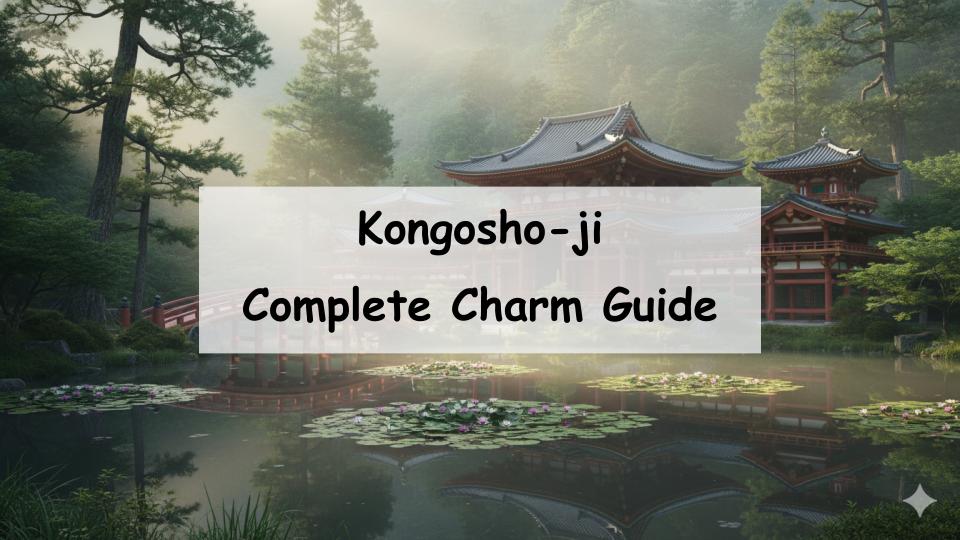
Spreading out in front of the main hall is “Renma-no-ike Pond,” a historic pond said to have been dug by Kobo Daishi Kukai himself. From early summer through mid-summer, beautiful water lily flowers bloom on the water’s surface, delighting the eyes of visitors. A beautifully curved drum bridge spans the center of the pond, and the scenery woven by the vermilion railings, the surrounding greenery, and the water lilies on the surface is extremely elegant. It is also highly popular as an excellent spot for photography.
The Spectacular View from the Mt. Asama Summit Observatory and the “Postbox in the Sky”
A must-visit spot in conjunction with a visit to Kongoshoji Temple is the Mt. Asama Summit Observatory, located just a short drive from the temple. From here, you can enjoy a panoramic view of Ise Bay, and on clear days, you can see all the way to Mount Fuji. In addition, a solitary retro red round postbox called the “Postbox in the Sky” stands in the observatory plaza, and photos taken with the blue sky and ocean in the background have become a hot topic on social media. Since you can actually mail a letter from it, sending a message to a loved one as a memento of your trip is highly recommended.
Information on Goshuin (Temple Seals) and Amulets at Kongoshoji Temple
Types of Goshuin, Reception Hours, and Where to Get Them
At Kongoshoji Temple, you can receive beautiful goshuin (temple seals) as proof of your visit. Several types are available, including the standard seal for the principal image, “Kokuzo Daibosatsu,” and a special seal available at the Okunoin. Goshuin are mainly issued at the amulet reception counter in the main hall and the window at the Okunoin, and you can receive them during visiting hours from the time the gates open until they close. It is a good idea to prepare a separate goshuin book for temples, distinct from the one used at Ise Jingu, and have the seal carefully written for you.
Recommended Amulets and Sacred Items
At the reception counter, various amulets are distributed for purposes such as warding off evil, good fortune, and traffic safety. Particularly popular are the adorable amulets and figurines featuring the ox and tiger, which are the messengers of the principal deity. In addition, there are special amulets that serve as a commemoration of visiting both Ise Jingu and Kongoshoji Temple, and many worshipers purchase them as the finishing touch to their Ise pilgrimage. These sacred items make excellent gifts for family and friends, as well as for yourself.
How to Get to Kongoshoji Temple: Access Methods
Access by Car (Using the Ise-Shima e-POWER ROAD)
When accessing Kongoshoji Temple by car, you need to use the toll road “Ise-Shima e-POWER ROAD,” formerly known as the Ise-Shima Skyline. This road serves as a scenic driving course connecting Ise City and Toba City, with Kongoshoji Temple located near the summit. Although a toll fee is required, you can enjoy a comfortable drive and magnificent views in return.
Access from the Ise Area
If you are heading from the area around the Inner Shrine of Ise Jingu or the Ise-Nishi Interchange on the Ise Expressway, aim for the Ise Toll Gate of the Ise-Shima e-POWER ROAD. From the Ise Toll Gate to Kongoshoji Temple, you will drive up a lush, green mountain road. It takes roughly several tens of minutes to arrive from the Inner Shrine if traffic flows smoothly, making it a very convenient route for moving after visiting Ise Jingu.
Access from the Toba Area
If you are heading from the Toba area, such as Toba Aquarium or around Toba Station, enter through the Toba Toll Gate of the Ise-Shima e-POWER ROAD. The route from the Toba side features an exhilarating hill-climb drive while overlooking the beautiful scenery of Ise Bay spreading out below. You can head to Kongoshoji Temple via the summit observatory, allowing you to efficiently combine sightseeing and worship.
Access by Public Transportation (Train and Bus)
If you are heading to Kongoshoji Temple using trains or buses, Kintetsu Isuzugawa Station or Toba Station will be your main hubs. However, please note that the “Sangu Bus,” a local bus route that provides direct access to Kongoshoji Temple, operates only on weekends, national holidays, and specific dates. If you plan to visit by public transportation on a weekday, it is recommended to take a taxi from the nearest station or consider renting a car. Be sure to check the latest bus operating schedules before your visit.
Parking Information for Kongoshoji Temple
For worshipers visiting by car, Kongoshoji Temple is equipped with a vast free parking lot on its grounds. Sufficient space is secured to accommodate everything from standard cars to large buses, so you can park with relative peace of mind even during crowded tourist seasons. Because you can park near the main hall, the environment is well-suited for visits involving those who are not confident in their physical stamina or the elderly.
Visiting Hours, Required Time, and Basic Information for Kongoshoji Temple
Visiting Hours and Admission Fees
In principle, you can freely stroll around the grounds of Kongoshoji Temple, and the basic admission fee for touring the main hall and Okunoin is free. The gates are open from early morning until evening, allowing you to worship quietly while breathing the fresh mountain air. However, if you wish to tour the Treasure House where temple treasures are displayed, a separate admission fee is required, and specific opening hours are set, so those wishing to see valuable cultural properties should check the hours in advance to be certain.
Estimated Time Required for a Visit
The grounds of Kongoshoji Temple are very expansive, with highlights scattered throughout. The walking distance becomes quite long if you extend your steps to the Okunoin by passing through the Gokuraku-mon gate, in addition to visiting the area around the main hall and strolling around the pond. Therefore, it is recommended to plan for about one to one and a half hours as a standard required time to leisurely tour the entire area. If you include time for taking a break and photographing at the nearby Mt. Asama Summit Observatory, establishing a schedule with even more leeway will give you peace of mind.
Conclusion: Visit the Charming Kongoshoji Temple on Your Mie Sightseeing Trip!
As a prominent famous temple representing Mie Prefecture, Kongoshoji Temple is filled with diverse charms that attract visitors, from historical important cultural properties and the mystical Okunoin to spectacular viewing spots. As the temple that protects the demon gate of Ise Jingu, and just as the saying goes, “If you visit Ise, you must also visit Asama,” you can receive even greater blessings by visiting it in conjunction with Ise Jingu. When you visit Mie Prefecture for sightseeing, be sure to make the trip to Kongoshoji Temple, embraced by the rich nature of Ise-Shima, and spend a special, spiritually cleansing time there.
A Message from the Guide
The temple grounds are beautiful and spacious, offering great views. It’s a temple full of highlights.

Comment