“I want to visit Kakuon-ji Temple in Kamakura, but what kind of charm does it have?”
“Is it true there are special viewing rules? I want to know the highlights and detailed access beforehand!”
Are you having these questions while planning your trip to Kamakura?
Kakuon-ji Temple is a hidden gem in Kamakura where you can encounter breathtakingly beautiful and precious Buddhist statues alongside the seasonal scenery woven by rich nature. A tranquil space far from the hustle and bustle of daily life spreads out here. By knowing the key points in advance, you can fully enjoy a special, soul-cleansing time.
In this article, we will introduce in detail the unique features of Kakuon-ji Temple, the must-see highlights within the precincts, and how to get there smoothly without getting lost.
By reading to the end, you will thoroughly understand how to enjoy Kakuon-ji Temple, making your next outing to Kamakura even more fulfilling. Please use this as a reference!
- Kakuon-ji Temple: Kamakura’s Hidden Gem! What Kind of Temple Is It?
- What to Know Before You Go: Special Viewing Rules at Kakuon-ji Temple
- 5 Must-See Highlights at Kakuon-ji Temple
- The Main Hall (Yakushi-do) Featuring Spectacular Buddhist Statues
- Kuro-Jizo (Black Jizo Bodhisattva): One of the 24 Jizo in Kamakura
- The Beautiful Thatched Roof of Aizen-do Hall
- The Thirteen Buddhas and “Yagura” Caves from the Kamakura Period
- Beautiful Seasonal Scenery (Autumn Leaves, Fresh Greenery, etc.)
- Goshuin (Temple Seals) and Amulets at Kakuon-ji Temple
- How to Get to Kakuon-ji Temple: Access Information
- Recommended Tourist Spots Around Kakuon-ji Temple
- Conclusion: Spend a Special, Soul-Cleansing Time at Kakuon-ji Temple in Kamakura
- A Message from the Guide
Kakuon-ji Temple: Kamakura’s Hidden Gem! What Kind of Temple Is It?
History and Origins of Kakuon-ji Temple
Kakuon-ji Temple belongs to the Sennyu-ji school of the Shingon sect. Its origins trace back to the Okura Yakushi-do hall built by Hojo Yoshitoki, the second regent of the Kamakura shogunate. Later, Hojo Sadatoki, the ninth regent, upgraded the hall into a temple to express gratitude for overcoming the Mongol invasions and to pray for national peace, officially founding it as Kakuon-ji Temple. Receiving patronage from the shogunate and the Ashikaga clan, it flourished as a major hub for the Shingon Ritsu sect in the Kanto region.
Tranquil Precincts Surrounded by Rich Nature
Located in a unique valley terrain called “Yato,” slightly away from Kamakura’s main urban and tourist areas, the precincts of Kakuon-ji Temple are enveloped in incredible silence. Surrounded by deep greenery, it is a special space that makes you completely forget the hustle and bustle of the city. The scenery, where rich nature and historical architecture blend perfectly, deeply heals the hearts of visitors.
What to Know Before You Go: Special Viewing Rules at Kakuon-ji Temple
The Guided Tour System Led by Monks
The greatest charm and distinct feature of Kakuon-ji Temple is its unique viewing style, where visitors explore the precincts guided by a monk. The viewing times are fixed, and participants gather at the scheduled time to proceed together while listening to the monk’s detailed explanations. Learning deeply about the history of the Buddhist statues and the flora of the temple grounds offers a profound moving experience that cannot be gained by simply walking around on your own.
Photography Restricted Areas and Etiquette
To preserve the solemn atmosphere as a place of worship, photography is strictly prohibited in certain areas of Kakuon-ji Temple. You cannot take photos with cameras or smartphones, especially around the Main Hall and the sacred places where the Buddhist statues are enshrined. Please value the etiquette of quietly listening to the monk’s explanations and burning the beautiful sights into your mind’s eye instead.
Viewing Hours, Admission Fees, and Closed Days
As a general rule, guided tours start at designated times multiple times a day. Since viewing hours and the number of tours may change depending on the season, it is highly recommended to check the latest information before your trip. The admission fee varies for adults and children and is paid at the entrance reception. You must also be careful with the timing of your visit, as there are long suspension periods, such as in August, and irregular closed days.
5 Must-See Highlights at Kakuon-ji Temple
The Main Hall (Yakushi-do) Featuring Spectacular Buddhist Statues
The Main Hall, also known as Yakushi-do, is the central structure of Kakuon-ji Temple. Once you step inside, a spectacular sight unfolds with numerous Buddhist statues lined up. The beauty of these statues emerging in the dimly lit hall is said to be one of the best in Kamakura.
Wooden Seated Statue of Yakushi Nyorai and Standing Statues of Nikko and Gakko Bodhisattvas
Enshrined in the center of the Main Hall is the principal image, the wooden seated statue of Yakushi Nyorai, flanked by the standing statues of Nikko and Gakko Bodhisattvas. Designated as National Important Cultural Properties, they convey the outstanding skills of Buddhist sculptors from the Kamakura to the Nanboku-cho periods. Their gentle and affectionate expressions bring peace to the viewer’s heart.
The Powerful Standing Statues of the Twelve Heavenly Generals
Surrounding the principal image are the standing statues of the Twelve Heavenly Generals, who protect Yakushi Nyorai. Crafted in the Muromachi period, each of these statues features a Chinese zodiac animal on its head. Their dynamic poses and powerful expressions make them look as if they could start moving at any moment. Finding the general representing your own zodiac sign is another way to enjoy the Main Hall.
Kuro-Jizo (Black Jizo Bodhisattva): One of the 24 Jizo in Kamakura
Enshrined next to the Main Hall is the wooden standing statue of Jizo Bodhisattva, affectionately known as Kuro-Jizo (Black Jizo). Also called Hitaki Jizo, it is said to save the deceased from the torment of fire. Its completely black appearance is highly distinctive, and as the third amulet-issuing temple of the Kamakura 24 Jizo pilgrimage, it attracts deep faith from many people.

The Beautiful Thatched Roof of Aizen-do Hall
Standing near the entrance of the precincts, Aizen-do Hall catches the eye with its tasteful thatched roof. The hall enshrines the statue of Aizen Myoo, who is said to bring blessings for matchmaking and family harmony. The contrast between the surrounding lush greenery and the thatched roof is extremely beautiful, making it a particularly popular spot within the areas where photography is permitted.

The Thirteen Buddhas and “Yagura” Caves from the Kamakura Period
As you proceed deeper into the temple grounds, you will find “Yagura,” which are horizontal cave tombs unique to Kamakura. Inside these caves, the Thirteen Buddhas, carved to hold memorial services for the deceased, stand quietly. The sight of these stone buddhas lined up on the walls allows you to feel the deep faith and historical breath of medieval Kamakura firsthand.
Beautiful Seasonal Scenery (Autumn Leaves, Fresh Greenery, etc.)
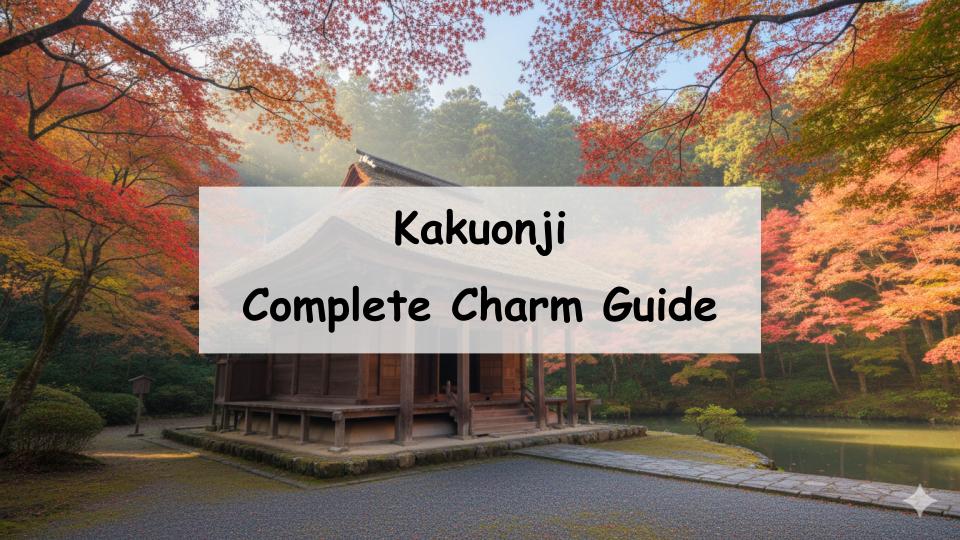
Kakuon-ji Temple is a treasure trove of nature that shows different faces each season. From spring to early summer, fresh greenery beautifully dyes the precincts, while late autumn wraps the temple in magnificent autumn leaves. The autumn foliage here is exceptionally famous in Kamakura, and the breathtaking view woven by historical buildings and vibrant red and yellow leaves is an absolute must-see.
Goshuin (Temple Seals) and Amulets at Kakuon-ji Temple
Types of Goshuin and Reception Hours
At Kakuon-ji Temple, you can receive several types of Goshuin, including those of the principal image Yakushi Nyorai, Kuro-Jizo, and Aizen Myoo. The common system is to leave your Goshuin book at the viewing reception window and pick it up when you return from the guided tour. Since the window is open in accordance with the guided tour schedule, it is smooth to complete the Goshuin reception first upon arrival.
The Popular “Kuro-Jizo” Amulet
Many people purchase the amulet associated with Kuro-Jizo as a memento of their visit. It is said to offer blessings for warding off evil, preventing fire disasters, and ensuring good health, making it highly popular as a charm for daily safety. Amulets related to the Twelve Heavenly Generals corresponding to the zodiac signs are also available and make great gifts for yourself or your loved ones.
How to Get to Kakuon-ji Temple: Access Information
Access by Bus from Kamakura Station
When accessing Kakuon-ji Temple by public transportation, using the Keikyu Bus from the east exit of Kamakura Station is the most convenient method. Take the bus bound for Kamakura-gu (Oto-no-miya) and get off at the final stop. The bus ride takes about ten minutes. From the bus stop, walk through a quiet residential area following the signboards for another ten minutes to reach the entrance of Kakuon-ji Temple.
Walking Route and Required Time from Kamakura Station
It is also entirely possible to walk to the temple while enjoying the streets of Kamakura. The recommended route goes from the east exit of Kamakura Station, along Wakamiya Oji Street, and passes through Tsurugaoka Hachimangu Shrine. It takes about forty minutes on foot from the station to Kakuon-ji Temple. On a sunny day, it is perfect for a stroll while enjoying the atmosphere of Kamakura’s unique alleyways and making side trips.
Access by Car and Parking Information
If you are driving, it takes about fifteen minutes from the Asahina Interchange on the Yokohama-Yokosuka Expressway. Kakuon-ji Temple has a free parking lot with a few spaces dedicated to visitors. However, because the roads are narrow and parking is extremely limited, the lot often fills up on weekends and during the autumn leaf season. During expected busy periods, it is strongly recommended to park at a paid parking lot near Kamakura Station and use the bus or public transportation.
Recommended Tourist Spots Around Kakuon-ji Temple
Kamakura-gu Shrine (Oto-no-miya)
Located at the final bus stop on the way to Kakuon-ji Temple, Kamakura-gu Shrine is dedicated to Prince Morinaga, the son of Emperor Go-Daigo. The shrine is famous for “Yakuwari,” a ritual for warding off evil where visitors smash unglazed cups against a large stone called Yakuwari-ishi. Since it is located conveniently on the way to or from Kakuon-ji Temple, visiting both together will make your Kamakura sightseeing even more fulfilling.
Egara Tenjinsha Shrine
Situated close to Kamakura-gu, Egara Tenjinsha Shrine is a historic shrine dedicated to Sugawara no Michizane and is counted as one of Japan’s three major Tenjin shrines. Known as the deity of learning, it attracts many students and families praying for academic success during the exam season. It is also famous for its plum blossoms, and in early spring, beautiful plum flowers bloom vibrantly in the precincts, delighting the eyes of visitors.
Conclusion: Spend a Special, Soul-Cleansing Time at Kakuon-ji Temple in Kamakura
Kakuon-ji Temple is a wonderful temple quietly nestled deep in Kamakura, where nature and history blend perfectly. The special viewing style guided by monks and the spectacular group of Buddhist statues emerging in the dimly lit hall offer a deeply moving experience that is hard to find at other temples. The time spent facing the Buddhas in a tranquil space, forgetting the busyness of daily life, will surely bring profound peace to your heart. On your next trip to Kamakura, be sure to visit Kakuon-ji Temple and spend a special, soul-cleansing time.
A Message from the Guide
It’s a quiet, non-touristy temple.



Comment