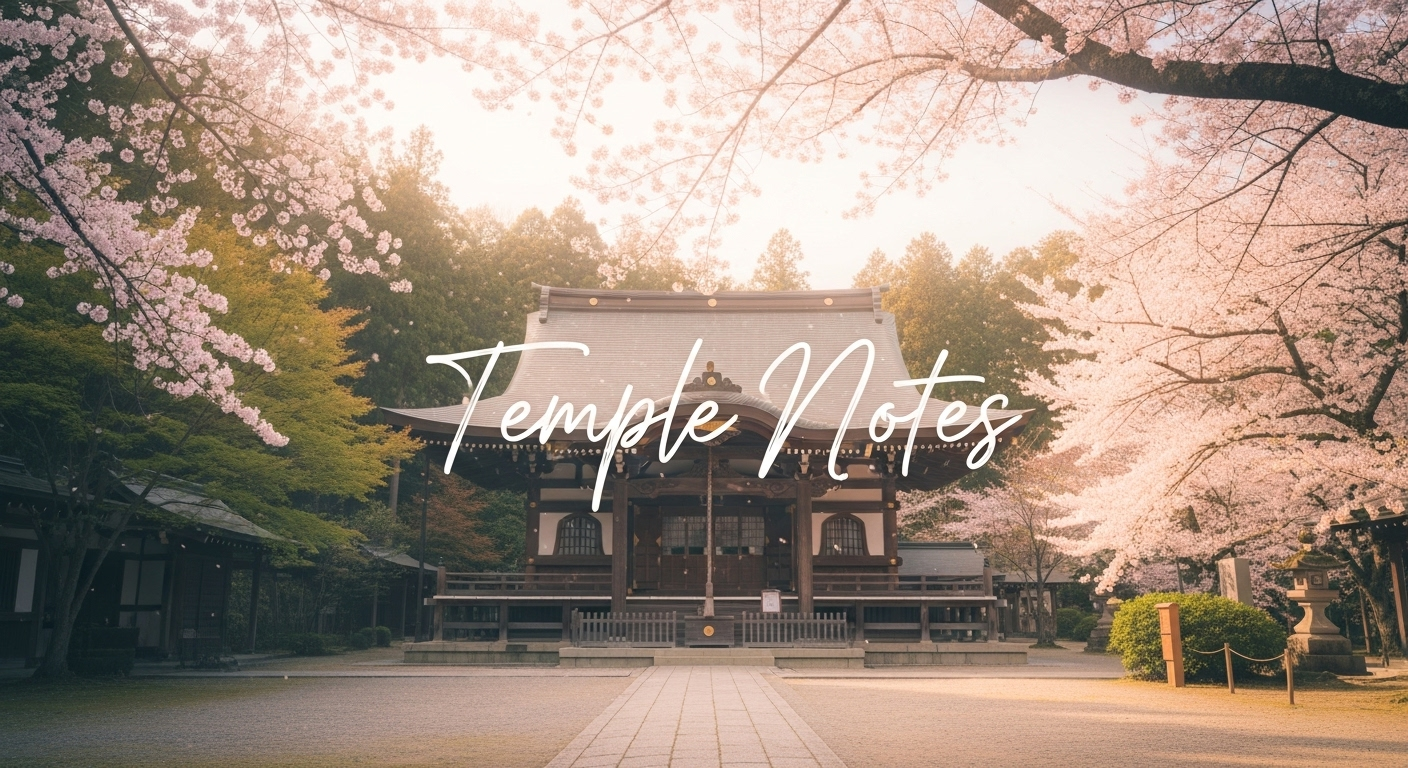

My destination for the day was Kenchoji, one of the most prestigious and historically significant Zen temples in Japan. Staying in Yokohama the night before, I took the train early in the morning and decided to walk from Kamakura Station. Taking a leisurely stroll up and over a gentle pass, I made my way toward the grounds. Reaching the top of the incline with a light sweat, the grand entrance of this massive temple complex immediately washed away all the fatigue of the walk.
Nestled in the natural beauty of ancient Kamakura, Kenchoji greets you with a profound sense of quietude and refined atmosphere. Here is my firsthand experience walking the route, along with the captivating highlights and unforgettable statues found within.
By the way, this is the hotel I stayed at.

First Impressions: The imposing Sanmon Gate and Sacred Atmosphere
Arriving over the low mountain pass from Kamakura Station, the first sight that commands your attention is the towering Sanmon Gate (an Important Cultural Property). Looking up from its base, you cannot help but admire the sheer beauty and weight of its traditional timber architecture. The massive interlocking wooden beams, having weathered centuries, radiate an overwhelming sense of dignity fitting for a Zen guardian gate.
Passing through the Sanmon Gate and following the straight cedar-lined approach, you arrive at the Butsuden (Buddha Hall), which houses the main deity. On the day of my visit, the hall was undergoing restoration work. While it was a bit disappointing not to see it in its full glory, I reminded myself that encountering ongoing preservation is part of the authentic journey—a reminder of how carefully these wooden treasures are maintained across generations.
Continuing deeper into the grounds, the air grew even quieter, pulling me further into the grandeur that makes Kenchoji so special.
The Heart of the Visit: The Dragon Ceiling and the Ascetic Buddha
The absolute highlight of my visit—one that stopped me in my tracks for a long time—was inside the Hatto (Dharma Hall).
Kenchoji’s Hatto is the largest wooden temple hall in eastern Japan. Stepping inside, the sheer height of the ceiling and the vastness of the space take your breath away. Looking up, your eyes are immediately drawn to the majestic Cloud Dragon (Unryuzu) painted across the entire ceiling. Created by master painter Junsaku Koizumi, the dragon seems almost alive, its fierce gaze and fluid movement anchoring the entire sacred space.
While I had seen photographs before, standing directly beneath it to feel the density of the air and the scale of the room was an entirely different experience.
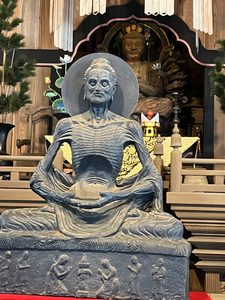
Further inside sits the serene statue of the Thousand-Armed Kannon. But right in front of this gentle figure rests a statue unlike anything I had ever seen before: the Ascetic Shakyamuni (Shaka Kugyo-zo).
This statue is a faithful replica of the famous original housed in the Lahore Museum in Pakistan, gifted to Kenchoji. It depicts Prince Siddhartha during his six years of extreme fasting and austerity prior to achieving enlightenment. Every detail of physical emaciations—the exposed ribs, visible veins, and deeply sunken eye sockets—is carved with startling realism.
Yet, despite its gaunt appearance, there is no sense of horror. Instead, the total reduction of the physical body highlights an expression of profound, unshakable peace. Standing between the compassionate presence of the Thousand-Armed Kannon and the intense devotion of the Ascetic Buddha, I found myself utterly spellbound. It was a powerful encounter that went far beyond mere aesthetic appreciation, touching something deep within the human spirit.
Highlight Guide: Architecture and Key Spots Across the Grounds
Founded in 1253 (the 5th year of the Kencho era) by Hojo Tokiyori, the fifth regent of the Kamakura Shogunate, Kenchoji was established under the Chinese Zen master Rankei Doryu as Japan’s first dedicated Zen training monastery.
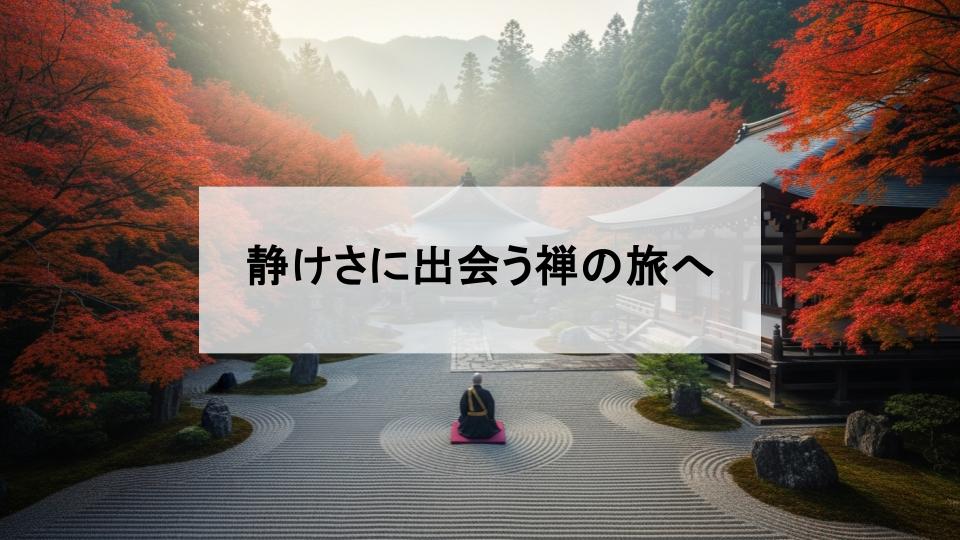
The temple layout follows a classic Chinese Zen style (Garan), where the main structures—the Somon, Sanmon, Butsuden, Hatto, and Hojo—are aligned in a straight line from south to north. Here are the essential highlights you should not miss when visiting:
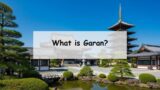
Sanmon Gate (Important Cultural Property)
Rebuilt in 1775, this two-story wooden gate stands nearly 30 meters tall. “Sanmon” is short for Sangedatsumon (Gate of Three Liberations: Emptiness, Formlessness, and Desirelessness), symbolizing that anyone who passes beneath it is freed from worldly attachments.
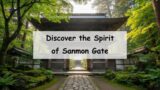
Ancient Chinese Junipers (Kanagawa Natural Monument)
Just beyond the Sanmon Gate stand several massive, gnarled Chinese Juniper (Byakushin) trees. Legend holds that these trees were grown from seeds brought directly from China and planted by Rankei Doryu himself over 750 years ago. Their twisting, powerful trunks stand as living witnesses to the long history of Kamakura.
Butsuden / Buddha Hall (Important Cultural Property)
Housing the temple’s principal image of Jizo Bosatsu, this hall was relocated from Zojoji in Edo (modern-day Tokyo) in the 17th century. It retains exquisite Momoyama-style architectural features, including intricate wood carvings and decorative details.
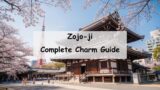
Hojo (Main Hall) and the Zen Garden (National Place of Scenic Beauty)
Located behind the Hatto, the Hojo originally served as the head priest’s residence. Behind it lies a tranquil Zen garden designed by Rankei Doryu, centered around Shinji-ike (a pond shaped like the Kanji character for “heart”). Sitting on the wooden veranda and gazing over the pond surrounded by lush forest offers a moment of deep, meditative calm.
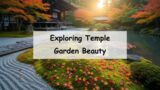
Karamon Gate (Important Cultural Property)
Standing at the entrance to the Hojo, this exquisite gate features elaborate wood carvings, gold leaf, and rich black lacquer work, reflecting the brilliant craftsmanship of the early Edo period.
Hansobo Shrine: Guardians of the Mountain
At the rearmost boundary of the temple grounds, a trail of stone stairs leads up the hillside to Hansobo, a shrine dedicated to the guardian deity of Kenchoji. Tengu statues (crow-headed goblin spirits) line the staircase, creating a mysterious, atmospheric climb. From the viewing platform at the top, you can enjoy a sweeping view of the entire temple valley, and on clear days, Sagami Bay and Mount Fuji in the distance.
Essential Visitor Information
Here are the practical details for planning your trip to Kenchoji.
Basic Information
- Temple Name: Kencho-ji (Gofukusan Kencho Kokoku Zenji)
- Sect: Rinzai Zen (Head Temple of the Kenchoji Branch)
- Founder / Patron: Rankei Doryu (Daikaku Zenji) / Hojo Tokiyori
- Opening Hours: 8:30 AM – 4:30 PM daily
- Admission Fee: Adults (High School and above): ¥500 / Children (Junior High & Elementary): ¥200
How to Get There
- By Train & Walking (Recommended Route):
- From Kita-Kamakura Station (JR Yokosuka Line): Approx. 15-minute walk.
- From Kamakura Station (JR / Enoden Line): Approx. 20–25 minute walk. Walking from Kamakura Station past Tsurugaoka Hachimangu and over the gentle slope of Kobukurozaka Pass allows you to experience the natural mountain landscape that protected medieval Kamakura.
- By Bus:
- Take the Enoden Bus from Kamakura Station East Exit and get off at the “Kenchoji” bus stop.
Final Thoughts: A Place to Reset and Reconnect
Kenchoji is far more than a historical site; it is a space where the noise of daily life fades away, leaving you feeling centered and refreshed.
While parts of the grounds were under renovation, the encounter with the raw intensity of the Ascetic Shakyamuni, the watchful presence of the Dragon Ceiling, and the grand timber architecture made this visit unforgettable. Whether you take the train to Kita-Kamakura or walk the pass from Kamakura Station, taking time to walk through Kenchoji is one of the most rewarding experiences Kamakura has to offer.
👉 Check out on Instagram


Comment