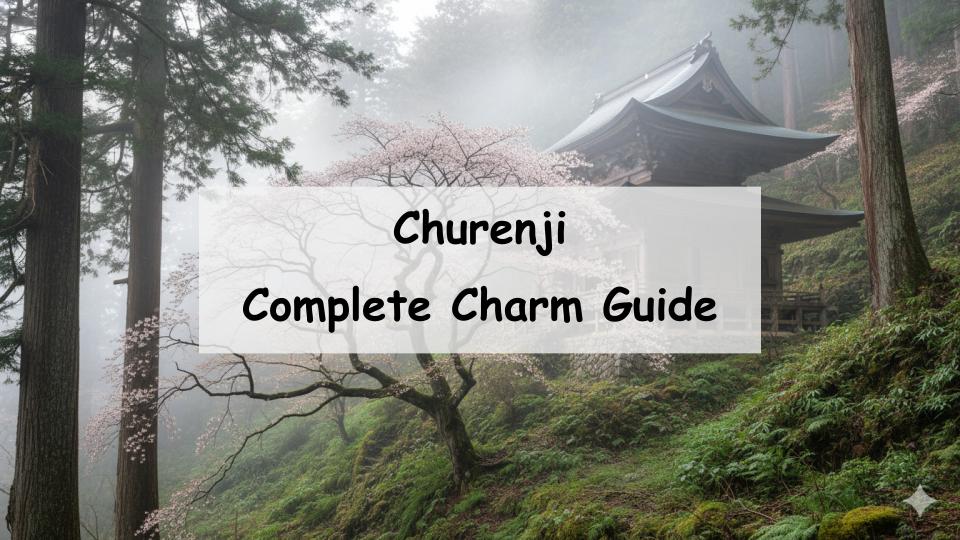
“What kind of temple is Churenji?” “Is it true that a sokushinbutsu (self-mummified monk) is enshrined here?” Are you looking to learn more about Churenji Temple located in Tsuruoka City, Yamagata Prefecture?
Churenji Temple is a historic temple said to have been founded by Kobo Daishi (Kukai), widely known for enshrining the sokushinbutsu “Tetsumonkai Shonin.” Nestled on the slopes of Mount Yudono, it offers a serene space where visitors can experience seasonal natural beauty and precious cultural properties.
This article provides detailed information about Churenji Temple’s history and characteristics, highlights including the sokushinbutsu, points for visiting, and access methods from Tsuruoka city center and Yamagata City. If you’re planning a visit to Churenji Temple, please read through to the end.
- What is Churenji Temple? Introduction to Its History and Overview
- Features and Attractions of Churenji Temple
- Thorough Explanation of Churenji Temple’s Highlights
- Visiting Information for Churenji Temple
- Access to Churenji Temple
- Tourist Spots Around Churenji Temple
- Frequently Asked Questions About Churenji Temple
- Summary: Precious Experience Touching Sokushinbutsu and History at Churenji Temple
- A Message from the Guide
What is Churenji Temple? Introduction to Its History and Overview
History and Origins of Churenji Temple
Churenji Temple is a Shingon Buddhist temple of the Chizan sect located in Oami, Tsuruoka City, Yamagata Prefecture. According to temple tradition, it was founded by Kobo Daishi (Kukai) during the Konin era (810-824), giving it over 1,200 years of history.

Built in a quiet location on the slopes of Mount Yudono, Churenji Temple has welcomed many ascetic practitioners and worshippers as one of the bases of Dewa Sanzan faith since ancient times. The temple name “Churen” is said to derive either from the shimenawa (sacred rope) offered to deities and Buddha, or from the local place name.
During the Edo period, the temple prospered under the patronage of the Shonai Domain, and many buildings and temple treasures were established. Today, numerous architectural structures and cultural properties from that era are preserved.
Churenji Temple’s Sect and Principal Image
Churenji Temple belongs to the Chizan sect of Shingon Buddhism, with the formal name “Yudonosan Churenji.” The principal image is Dainichi Nyorai (Vairocana Buddha), and it continues to serve as a training center transmitting the teachings of esoteric Shingon Buddhism.
Shingon Buddhism is the sect founded by Kobo Daishi Kukai, with the philosophy of sokushin jobutsu (attaining Buddhahood in this very body) at its core. At Churenji Temple, this teaching has been passed down through generations, and the existence of Tetsumonkai Shonin, who became a sokushinbutsu after rigorous training, demonstrates the depth of this faith.
The temple grounds feature traditional temple layout including the main hall, monks’ quarters, and bell tower, maintaining the dignity of a Shingon esoteric Buddhist temple.

Why Churenji Temple is Called the “Temple of Sokushinbutsu”
Churenji Temple is widely known as the “Temple of Sokushinbutsu” because it enshrines the sokushinbutsu “Tetsumonkai Shonin.” Sokushinbutsu refers to monks who underwent severe ascetic practices while alive and became mummified after entering meditation.
While multiple sokushinbutsu exist in the Shonai region of Yamagata Prefecture, Tetsumonkai Shonin of Churenji Temple is particularly famous. The monk lived during the mid-Edo period and underwent training to sacrifice his own life to save people from suffering, becoming a sokushinbutsu.
The presence of this sokushinbutsu is Churenji Temple’s greatest characteristic and the reason many worshippers visit from across the country. Sokushinbutsu faith is a unique culture of the Shonai region, and Churenji Temple plays an important role as one of the centers of this faith.

Features and Attractions of Churenji Temple
Sokushinbutsu “Tetsumonkai Shonin” is Enshrined
The greatest attraction of Churenji Temple is the ability to directly view the sokushinbutsu “Tetsumonkai Shonin.” Tetsumonkai Shonin entered meditation at age 62 in 1768 and became a sokushinbutsu. Currently enshrined in a shrine within the main hall, he leaves a deep impression on visitors.
The monk’s peaceful expression reveals his compassionate character during life. The opportunity to view a sokushinbutsu up close is precious, and many people visit Churenji Temple to offer prayers.
The existence of the sokushinbutsu is not merely a historical heritage but is cherished as a living object of faith. Among worshippers, there are many who visit repeatedly with wishes in their hearts.
Rich Natural Environment on the Slopes of Mount Yudono
Churenji Temple is located on the slopes of Mount Yudono at approximately 300 meters elevation. The temple grounds surrounded by deep forest are enveloped in silence, offering a space that makes you forget daily hustle and bustle.
The clean air characteristic of mountainous areas and bird songs are pleasant, and the atmosphere of a training ground integrated with nature remains strong. Simply walking along the approach lined with ancient trees provides a refreshing feeling that cleanses the mind.
This natural environment is deeply connected to sokushinbutsu faith, allowing visitors to sense the footsteps of monks who underwent rigorous training in harsh nature. The serene time unavailable in cities is one of Churenji Temple’s great attractions.
Houses Important Cultural Properties and Precious Temple Treasures
Besides the sokushinbutsu, Churenji Temple houses numerous precious cultural properties and temple treasures. The main hall stores Buddhist statues, Buddhist paintings, and ancient documents from the Edo period, known as a historically valuable collection.
Particularly noteworthy are temple treasures related to Kobo Daishi and items donated by the Shonai Domain lords. These serve as evidence that Churenji Temple has played an important role in the region.
In some cases, visitors can hear explanations of temple treasures from the head priest, gaining learning beyond mere sightseeing. For those interested in history and Buddhist culture, Churenji Temple is a highly worthwhile place to visit.
Beautiful Scenery Throughout the Four Seasons
Churenji Temple’s grounds show different expressions throughout the four seasons. In spring, cherry blossoms bloom profusely, especially the ancient tree called “Shimekake-zakura” displaying beautiful flowers. In early summer, fresh greenery envelops the grounds, creating a vibrant landscape full of life.
In autumn, autumn leaves color the entire mountain, with trees dyed red and yellow creating a painting-like landscape harmonizing with the main hall. In winter, deep snow accumulates, and Churenji Temple standing in a world of silver wrapped in silence creates a fantastical beauty.
By visiting in different seasons, you can discover various charms of Churenji Temple. The autumn foliage season is particularly popular, attracting many tourists.
Thorough Explanation of Churenji Temple’s Highlights
Sokushinbutsu “Tetsumonkai Shonin”
Who Was Tetsumonkai Shonin
Tetsumonkai Shonin was a Shingon Buddhist monk who lived during the mid-Edo period. His secular name was Sato Meicho, and he was born in present-day Yamagata Prefecture in 1706. Known as a person who devoted himself to Buddhism from a young age and accumulated high virtue through rigorous training.
The monk particularly devoted himself to saving people, continuing to pray for the populace suffering from famine and epidemics. The Shonai region at that time was frequently struck by disasters, and the monk is said to have had a strong will to save people even at the cost of his own life.
In 1768, at age 62, he entered the training to become a sokushinbutsu, entering meditation while wishing for people’s happiness. The monk’s compassionate heart continues to be passed down to many people today.
Training to Become Sokushinbutsu
The training to become sokushinbutsu was unimaginably severe. First, they continued a life of eating only tree nuts and grass roots for several years, called mokujiki training. This reduced body fat to the extreme.
In the next stage, they drank tea containing lacquer to reduce body moisture and enhance preservation effects. Finally, after fasting and reaching an extreme state both physically and mentally, they entered a stone chamber and continued meditation before entering final meditation.
This training was not merely physical asceticism but required maintaining deep prayer and a compassionate heart. Tetsumonkai Shonin also went through this harsh training and became a sokushinbutsu while wishing for people’s salvation.
Points to Note and Etiquette When Viewing
When viewing the sokushinbutsu, it’s important to approach with a solemn attitude. The sokushinbutsu is not merely an exhibit but a Buddha still enshrined as an object of faith. Join your hands in prayer and view quietly.
Please follow the temple’s policy regarding photography. In many cases, photography of the sokushinbutsu is prohibited. Flash photography and loud conversations should be strictly avoided.
Also, the viewing fee is used for preserving the sokushinbutsu and maintaining the temple. Please pay with gratitude. When worshipping, we recommend taking time to quietly join your hands, thinking of Tetsumonkai Shonin’s compassionate heart.
Main Hall and Temple Buildings
Churenji Temple’s main hall is a dignified building that conveys Edo period architectural style. The irimoya-style roof and subdued exterior colors harmonize with the surrounding nature. Inside the main hall, the principal image Dainichi Nyorai is enshrined in a solemn atmosphere.
Besides the main hall, buildings such as the monks’ quarters and bell tower are arranged on the grounds. These buildings have the dignity of age and convey the weight of history. The bell tower in particular is an important building that has served to announce time to worshippers.
Walking through the grounds, you can see stone monuments and stone Buddhas that evoke history throughout. Each has its own story, narrating Churenji Temple’s long history. The landscape where architecture and nature are integrated leaves a deep impression on visitors.
Shimekake-zakura Cherry Tree
The “Shimekake-zakura” on the grounds is one of Churenji Temple’s representative famous trees. This cherry tree is said to be over 200 years old and blooms magnificently in spring. The name is said to come from the tree’s branch structure appearing like shimenawa (sacred rope) hanging.
It blooms from late April to early May each year, and its beauty captivates many cherry blossom viewers. The sight of this ancient tree still powerfully blooming conveys the mystery of life.
During cherry blossom season, the entire grounds are enveloped in a gorgeous atmosphere, bustling with people enjoying the blossoms along with worshipping the sokushinbutsu. The Shimekake-zakura is beloved by local people as a spring tradition of Churenji Temple.
Temple Treasures and Cultural Properties
Churenji Temple houses numerous temple treasures. Buddhist statues include Fudo Myoo and Kannon Bosatsu created during the Edo period, where you can see exquisite carving techniques. These Buddhist statues are highly valued both as objects of faith and as art pieces.
Ancient documents are also abundantly preserved, serving as valuable materials for understanding Churenji Temple’s history and relationship with the region. Documents showing the relationship with the Shonai Domain and records of training monks also remain.
Items related to Kobo Daishi are also carefully preserved. These temple treasures are not usually open to the public but can sometimes be viewed on special occasions. We recommend inquiring in advance.
Natural Scenery Around Churenji Temple
The area around Churenji Temple is blessed with rich nature. The forest spreading across the slopes of Mount Yudono is centered on broad-leaved trees such as beech and mizunara oak, where you can enjoy the sight and sounds of wild birds. Especially during the quiet early morning hours, you can strongly feel nature’s breath.
Extending slightly from the grounds, you can also enjoy mountain scenery such as mountain streams and waterfalls. Seasonal plants add color, and especially during autumn foliage season, the entire mountain is dyed red and yellow with breathtaking beauty.
In winter, covered in deep snow, access becomes difficult, but Churenji Temple in the snow creates a fantastical atmosphere like another world. For nature lovers, the Churenji Temple area is an attractive region.
Visiting Information for Churenji Temple
Viewing Hours and Admission Fees
Churenji Temple’s viewing hours are typically from 8:30 AM to 5:00 PM. However, as they may change depending on season and weather, we recommend confirming before visiting. Especially in winter, viewing hours may be shortened due to snow accumulation.
Admission fees are generally around 500 yen for adults. This includes viewing the sokushinbutsu and temple grounds. For group visits or special viewings, contacting in advance will ensure courteous service.
Admission fees are important funds used for temple maintenance and sokushinbutsu preservation. Please pay with sincerity as cooperation in preserving this historic temple for future generations.
Estimated Time Required
The time required for visiting Churenji Temple is approximately 1 to 1.5 hours for thorough viewing. This includes viewing the sokushinbutsu, worshipping at the main hall, and exploring the grounds.
If you view the sokushinbutsu and hear explanations from the head priest or guide, it may take additional time. For those interested in history and culture, we recommend allowing ample time.
If including photography and enjoying seasonal flowers, or nature walks in the surrounding area, allowing about 2 hours is advisable. Especially during cherry blossom and autumn foliage seasons, factor in time to enjoy the scenery for peace of mind.
Dress Code and Etiquette When Visiting
When visiting Churenji Temple, avoid revealing or flashy clothing and aim for modest dress. Temples are sacred places, and appropriate clothing is required to show respect.
Because it’s located in a mountainous area, clothing appropriate for the season is important. Even in summer, shaded areas are cool, and winter is particularly cold, so prepare adequate cold-weather gear. Also, as there are slopes and stairs on the grounds, we recommend choosing comfortable walking shoes.
Inside the main hall, remove hats and worship quietly. Set mobile phones to silent mode and refrain from calls. Be considerate not to disturb other worshippers in your actions.
About Photography
Photography of the grounds’ scenery and architecture is generally permitted at Churenji Temple. You can capture memories of the beautiful nature and historic buildings. However, photography of the sokushinbutsu is often prohibited, so be sure to confirm before photographing.
Permission is also required in advance for photographing inside the main hall or temple treasures. Unauthorized photography should be strictly avoided. Also, flash photography may damage Buddhist statues and cultural properties, so refrain from using it.
Be considerate not to include other worshippers in photos and avoid disrupting the quiet atmosphere. Remember that photography is merely commemorative and that worship is the main purpose.
Access to Churenji Temple
Access by Train and Bus
Access from JR Tsuruoka Station
From JR Tsuruoka Station, using Shonai Kotsu bus is typical. Board a “Yudonosan-bound” bus from the bus terminal in front of the station and get off at “Churenji” bus stop. Travel time is approximately 40 to 50 minutes.
As bus frequency is limited, it’s important to check the timetable in advance. Especially in winter, there may be service suspensions, so be sure to confirm before visiting. Checking return bus times in advance is also reassuring.
If using a taxi, it takes about 30 minutes from Tsuruoka Station to Churenji Temple, with fares around 6,000 to 8,000 yen as a guideline. For group visits, taxi use is worth considering.
Access from JR Uetsu Main Line Atsumi Onsen Station
You can also access by bus from Atsumi Onsen Station. Board a “Yudonosan-bound” bus from in front of the station and get off at Churenji bus stop. Travel time is approximately 25 to 30 minutes.
Since Atsumi Onsen Station is closer than Tsuruoka Station, you can save time. However, as bus frequency may be less than from Tsuruoka Station, advance confirmation is essential.
A tourism plan of staying at Atsumi Onsen and visiting Churenji Temple the next day is also popular. By enjoying it as a set with the hot springs, it becomes a more fulfilling trip.
Access by Car
Access from Yamagata City Direction
When visiting by car from Yamagata City, the route via National Route 112 is typical. It takes approximately 1.5 to 2 hours from Yamagata City center. As the route crosses Mount Gassan, you can enjoy the scenery while driving.
However, in winter, the area around Mount Gassan may be closed. From late November to late April, you need to select an alternative route or confirm in advance whether passage is possible.
National Route 112, also called Gassan Road, is a mountain road with many curves. Drive carefully and be mindful of weather changes.
Access from Tsuruoka City Center
From Tsuruoka city center, head south on National Route 112 for approximately 30 to 40 minutes to reach Churenji Temple. Following road signs makes the route relatively easy to understand.
You’ll pass through the Oami area along the way, but after entering the mountain road, there are sections where the road becomes narrow. Drive carefully while watching for oncoming vehicles. Especially during tourist season, traffic increases, so maintain cautious driving with patience.
When using car navigation, searching for “Churenji Temple” will provide accurate guidance. However, it may not appear with old map data, so searching by address is also effective.
Parking Information
Churenji Temple has a free parking lot for worshippers. Capacity is approximately 20 to 30 cars, with no problem parking regular vehicles. From the parking lot to the main hall is a few minutes’ walk.
During busy periods such as cherry blossom and autumn foliage seasons, the parking lot may become full. In such cases, temporary parking may be set up at slightly distant locations, so follow staff instructions.
Some parking areas are unpaved, so be careful with footing during rain or snowmelt periods. Also, in winter, parking space may be limited due to snow accumulation.
Points to Note When Accessing
The most important point when accessing Churenji Temple is winter snow accumulation. From late November to around March, road surfaces freeze and deep snow accumulates. Studless tires or chain installation is essential, and visiting without winter equipment is dangerous.
Because it’s a mountainous area, weather changes easily also requires attention. Even on sunny days, rain may suddenly fall, so bringing rain gear is reassuring. Also, even in summer, mornings and evenings can be chilly, so preparing a jacket is advisable.
Mobile phone reception may be poor in some areas. Check maps in advance and prepare to avoid getting lost. Also, as gas stations and convenience stores are scarce in the vicinity, prepare necessary items in advance.
Tourist Spots Around Churenji Temple
Yudonosan Shrine
Yudonosan Shrine is a shrine located on Mount Yudono, one of the Dewa Sanzan, revered since ancient times as a sacred place of Shugendo (mountain asceticism). It’s about 30 minutes by car from Churenji Temple, and many tourists visit both locations together.
The greatest feature of Yudonosan Shrine is that there is no main hall and the deity itself is nature. Known as a mysterious place where there is a prohibition of “do not speak, do not ask,” forbidding disclosure of details.
Worship involves the unique practice of approaching the deity barefoot. As a place where you can feel sacred atmosphere and natural power, many worshippers visit. However, the mountain closes in winter, so the visitable period is limited.
Dainichibo Temple (Temple with Sokushinbutsu)
Dainichibo Temple, like Churenji Temple, is a temple enshrining a sokushinbutsu. Located at the foot of Mount Yudono, it’s about 20 minutes by car from Churenji Temple. Here, a sokushinbutsu called “Shinnyokai Shonin” is enshrined.
Dainichibo Temple is also an ancient temple with over 1,200 years of history, said to have been founded by Kobo Daishi. The grounds contain buildings designated as National Important Cultural Properties, making it a temple of high historical value.
By visiting both Churenji Temple and Dainichibo Temple, you can gain deeper understanding of sokushinbutsu faith in the Shonai region. A sokushinbutsu pilgrimage visiting both temples is a precious experience unique to this region.
Atsumi Onsen
Atsumi Onsen is a hot spring resort near the Sea of Japan with over 1,000 years of history since its opening. It’s approximately 30 minutes by car from Churenji Temple and also accessible by bus, making it conveniently located.
Many ryokan (traditional inns) and hotels line the hot spring town, where you can enjoy quality hot springs. The spring quality is sodium-calcium chloride spring, said to be effective for neuralgia, muscle pain, and fatigue recovery.
Tourism plans combining a visit to Churenji Temple with accommodation at Atsumi Onsen are popular. Relaxing thoroughly in the hot springs and visiting Churenji Temple the next day creates a refreshing trip for both mind and body. The hot spring town also has foot baths and public bathhouses, enjoyable even as a day trip.
Mount Haguro and Dewa Sanzan
Mount Haguro is one of the Dewa Sanzan, along with Mount Gassan and Mount Yudono, prospering since ancient times as a center of mountain worship. It’s about 1 hour by car from Churenji Temple, ideal for circular sightseeing.
The highlights of Mount Haguro are the five-story pagoda designated as a National Treasure and the approach lined with centuries-old cedar trees. Especially the stone steps of the approach number 2,446, and climbing them all provides a sense of achievement and spiritual benefit.
At the summit is Dewa Sanzan Shrine, enshrining the deities of the three mountains. You can also enjoy natural beauty throughout the four seasons, with autumn foliage particularly spectacular. After experiencing sokushinbutsu faith at Churenji Temple, experiencing the mountain worship of Dewa Sanzan allows understanding of this region’s deep spiritual culture.
Frequently Asked Questions About Churenji Temple
Is Reservation Required for Visiting Churenji Temple?
For individual visits, reservation is basically unnecessary. You can freely worship if you visit during viewing hours. However, for group visits or if you desire special explanations, contacting in advance makes things smoother.
If you want to hear detailed explanations from the head priest or view temple treasures not usually open to the public, advance inquiry is recommended. Especially during busy periods, accommodation may be difficult, so contact with ample time.
Days with Buddhist services or events may have viewing restrictions. Important event schedules can be confirmed on the temple’s website or by phone, so checking before visiting is reassuring.
Is Churenji Temple Open for Viewing in Winter?
Churenji Temple is basically open for viewing in winter. However, depending on snow conditions, viewing hours may be shortened or temporary closures may occur. Especially from December to March, viewing may not be possible depending on weather.
When visiting in winter, we definitely recommend confirming by phone in advance. Also, road conditions tend to worsen, so sufficient caution is needed for access. Studless tire installation is essential, and keep in mind that some days may not be plowed.
Churenji Temple wrapped in snow shows fantastically beautiful scenery, but prioritize safety and make reasonable plans.
Can I Receive a Goshuin (Temple Stamp) at Churenji Temple?
You can receive a goshuin at Churenji Temple. If you apply at the main hall reception, they will write it carefully. Generally, bringing a goshuin book is typical, but if you don’t have one, they may sometimes grant a pre-written goshuin.
The offering for a goshuin is generally around 300 to 500 yen. A goshuin is proof of worship, not a stamp rally. Please receive it with gratitude after completing your worship.
The goshuin bears Churenji Temple’s stamp and calligraphy, which can be carefully preserved as a visit memento. A goshuin from this special place as a temple of sokushinbutsu becomes precious.
Are There Restaurants Around Churenji Temple?
As the area around Churenji Temple is mountainous, there are almost no restaurants. If you want to eat before or after worship, you need to move to Tsuruoka city center or Atsumi Onsen.
In the Oami area along the way to Churenji Temple, there are scattered cafeterias and soba shops using local ingredients. There are also shops where you can taste locally produced wild vegetables and soba, so stopping by is recommended.
If staying for long periods or if meal times are limited, preparing light meals and drinks in advance is reassuring. Especially in summer, hydration is important, so definitely bring beverages.
Summary: Precious Experience Touching Sokushinbutsu and History at Churenji Temple
Churenji Temple is a precious temple enshrining the sokushinbutsu “Tetsumonkai Shonin” and an ancient Shingon Buddhist temple with over 1,200 years of history. In the quiet environment on the slopes of Mount Yudono, it serves as a special place where you can experience sokushinbutsu faith and Dewa Sanzan faith.
There are many highlights including viewing the sokushinbutsu, the Shimekake-zakura cherry tree, temple treasures, and seasonal natural scenery. Through worship, you can sense the faith of monks who underwent rigorous training and the unique culture of the Shonai region.
Access is possible by public transportation, but cars are more convenient. In winter, be careful of snow accumulation and be sure to confirm conditions before visiting. The surrounding area has many attractive tourist spots such as Yudonosan Shrine, Dainichibo Temple, and Atsumi Onsen, and touring them in combination creates a more fulfilling trip.
Visiting Churenji Temple is not mere tourism but a precious experience deeply touching Japanese spiritual culture and history. Time to calm your mind in the quiet grounds and join hands before the sokushinbutsu will surely become an unforgettable memory. When visiting Yamagata, please consider adding Churenji Temple to your visit destinations.
A Message from the Guide
I believe that experiencing the essence of sokushinbutsu faith is one of the most solemn and profound experiences in the history of Japanese Buddhism.

Comment