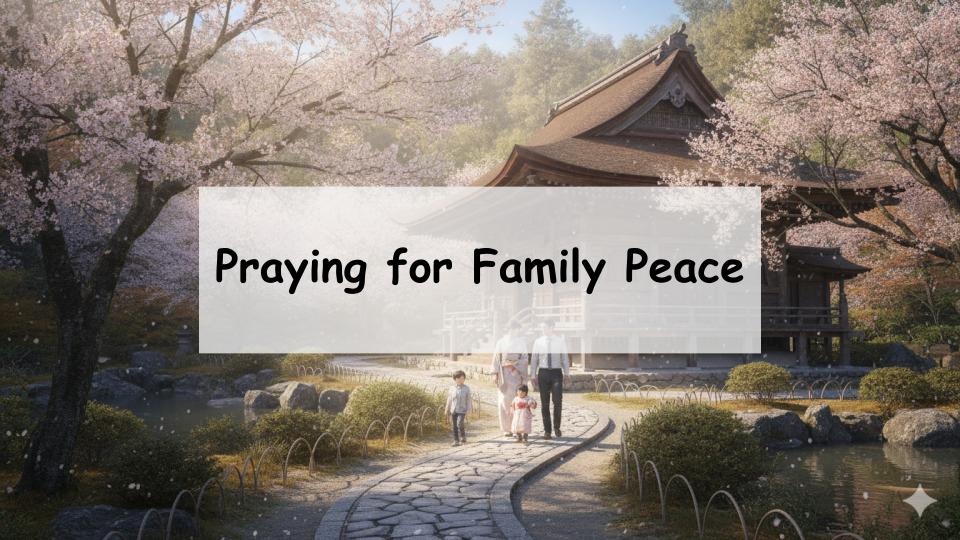
“I want my family to remain healthy and live peaceful lives.” When you have such thoughts, you might wonder which temple to visit or what proper manners you should observe so as not to be impolite. To pray for the happiness of your precious family, it is essential to choose a temple known for its blessings of household safety and perfect health, and to worship with correct etiquette. In this article, we will explain five recommended temples in Japan for these prayers, as well as the basic etiquette you should know beforehand. By reading this article, you will be able to visit temples with confidence and offer your prayers with a sincere heart.
- What are “Kanai Anzen” (Household Safety) and “Mubyo Sokusai” (Perfect Health)? Meaning and Background of the Prayers
- 5 Recommended Temples to Pray for Household Safety and Perfect Health
- Basic Worship Etiquette When Praying for Household Safety and Perfect Health at Temples
- Procedures and Etiquette for Receiving Formal Prayers at Temples
- How to Display and Return Received Talismans (Ofuda)
- Conclusion: Praying for Family Peace and Health with Proper Manners
- A Message from the Guide
What are “Kanai Anzen” (Household Safety) and “Mubyo Sokusai” (Perfect Health)? Meaning and Background of the Prayers
These phrases are commonly seen in traditional Japanese events and worship settings. Understanding the specific meanings and the background of these wishes helps you pray with deeper sincerity.
The Wishes Embodied in “Kanai Anzen”
Kanai Anzen represents the wish that all family members live in peace and happiness without experiencing illnesses, injuries, accidents, or other misfortunes. The term “Kanai” refers not only to family members living under the same roof but also broadly to the peace and stability of the entire household. It embodies the universal desire to avoid unexpected troubles in daily life and to maintain a secure environment where every family member can live with peace of mind.
The Wishes Embodied in “Mubyo Sokusai”
Mubyo Sokusai is a prayer for living healthily and energetically without falling ill or encountering disasters. “Mubyo” signifies maintaining physical health, while “Sokusai” means calming or preventing disasters through the power of the Buddha. Since ancient times when medical technology was not developed, physical and mental health has been considered the foundation of all happiness, which is why this wish is still highly valued by many people today.
5 Recommended Temples to Pray for Household Safety and Perfect Health
Across Japan, there are many prestigious temples visited by numerous worshippers seeking peace and health for their families. Here are five recommended temples particularly famous for their blessings of household safety and perfect health.
1. Naritasan Shinshoji Temple (Chiba Prefecture)
Naritasan Shinshoji Temple, located in Narita City, Chiba Prefecture, is the grand head temple of the Chisan sect of Shingon Buddhism. It has attracted many believers since ancient times, and its vast grounds are lined with historical buildings where visitors can enjoy the seasonal nature.
Household Safety and Protection from Evil Under the Aegis of Fudo Myoo
The main deity, Fudo Myoo, is believed to possess powerful energy to ward off all disasters. In the daily “O-goma” fire ritual, prayers are delivered to Fudo Myoo by burning sacred wood before the deity. Holding personal belongings over the sacred fire allows worshippers to receive blessings for physical health and household safety, attracting a continuous stream of visitors wishing for their family’s well-being.
2. Kawasaki Daishi Heigenji Temple (Kanagawa Prefecture)
Situated in Kawasaki City, Kanagawa Prefecture, Kawasaki Daishi Heigenji Temple is another grand head temple of the Chisan sect of Shingon Buddhism, widely known as “Kawasaki Daishi.” It is one of the largest temples in Japan in terms of New Year’s worshippers.
A Renowned Sacred Site Known for Warding Off Evil
Kobo Daishi, the main deity, is deeply revered as the Buddha who dispels all disasters and misfortunes. The temple is believed to clear away the obstacles that hinder household safety and health, making it an ideal place for families to seek joint prayers, especially during bad luck years. Through the solemn Goma rituals held in the Main Hall, visitors can obtain the energy to ensure that all family members live healthy lives.
3. Sensoji Temple (Tokyo)
Located in Taito Ward, Tokyo, Sensoji Temple is a famous temple symbolized by its iconic Kaminarimon Gate. It is the oldest temple in Tokyo and was highly revered as a place of prayer by the Shogunate during the Edo period.
Tokyo’s Oldest Temple Watched Over by Kannon Bodhisattva
The main deity, Sho-Kannon Bodhisattva, is a merciful deity who removes people’s suffering and grants their wishes. As a place of worship close to the common people, Sensoji Temple attracts countless visitors seeking household safety and physical health. Bathing oneself in the smoke from the large incense burner in front of the main hall is believed to ward off illness and improve health, drawing many people who seek this sacred smoke.
4. Yakushiji Temple (Nara Prefecture)
Located in Nishinokyo, Nara City, Yakushiji Temple is a historical head temple of the Hosso sect of Buddhism, established by Emperor Temmu to pray for the recovery of his consort from illness. The temple features beautiful pagodas and maintains a deep historical atmosphere.
Faith in Yakushi Nyorai Praying for Healing and Perfect Health
The main deity, Yakushi Nyorai, is enshrined in the Yakushi Triad and is revered as the Medicine Buddha who heals diseases and brings health. It serves as a special place of prayer for families wishing for their physical well-being, not only for preventing illnesses but also for recovering from current ailments.
5. Kiyomizudera Temple (Kyoto)
Located in Higashiyama Ward, Kyoto City, Kiyomizudera Temple is a world-famous head temple of the Kita-Hosso sect of Buddhism, renowned for its “Kiyomizu Stage.” Situated on Mount Otowa, it offers scenic beauty and attracts numerous worshippers.
Praying for the Fulfillment of Wishes with Pure Water and Kannon Faith
The main deity, Eleven-Headed Thousand-Armed Kannon Bodhisattva, is a compassionate savior who listens to the wishes of all people. Additionally, the water flowing from the Otowa Waterfall has been regarded as sacred water that brings longevity and health. Drinking this pure water is believed to purify the mind and body, providing the energy to maintain household safety and daily health.

Basic Worship Etiquette When Praying for Household Safety and Perfect Health at Temples
When visiting a temple, it is important to show respect to the Buddha and observe correct etiquette. Since some rules differ from those at Shinto shrines, let us review the basic steps beforehand.
Bowing at the Temple Gate and Walking the Path
The temple gate, called the Sanmon, serves as the boundary separating the secular world from the sacred area where the Buddha is enshrined. Before passing through the gate, you should face the main hall and bow lightly. Stepping on the threshold of the gate is considered impolite, so you should step over it. As you proceed along the approach, walk quietly with a humble mind.
The Correct Procedure to Purify Your Mind and Body at the Chozuya
As you proceed, you will find the purification fountain called Chozuya. Here, you purify your mind and body. First, hold the ladle with your right hand, scoop water, and wash your left hand. Next, switch the ladle to your left hand and wash your right hand. Switch the ladle back to your right hand, pour water into your left palm, and rinse your mouth with it. Wash your left hand once more, and finally, stand the ladle upright so that the remaining water runs down the handle to clean it before placing it back. Conducting these actions with a single scoop of water is considered proper etiquette.
Etiquette for Praying and Giving Offertory at the Main Hall
When you arrive in front of the Main Hall, bow lightly before moving close to the offertory box. Gently place your monetary offering into the box rather than throwing it in. If there is a bell, ring it, and then bring your hands together in front of your chest to form the Gassho pose. Unlike at Shinto shrines, you do not clap your hands at a temple. Keep your hands pressed together silently, bow your head, and pray for your family’s safety and health. Once your prayer is complete, make a final deep bow before stepping back.
Procedures and Etiquette for Receiving Formal Prayers at Temples
In addition to the standard worship, receiving a formal prayer ritual inside the temple allows you to pray for household safety and health in a more formal manner.
How to Apply for Formal Prayers and the General Budget for Prayer Fees
To request a formal prayer, first proceed to the temple’s prayer application counter. Fill out the application form with your prayer request, such as household safety or health, along with your name and address, and submit it to the staff. The prayer fee, known as Shino-kin, varies depending on the temple but generally ranges from five thousand to ten thousand yen. It is polite to prepare this money beforehand in a plain white envelope or a formal money envelope.
Appropriate Attire When Receiving Formal Prayers
Since formal prayers are solemn ceremonies held inside the main hall close to the deity, you must pay attention to your attire. Men should wear a suit or a jacket, while women should wear modest, neat clothing such as a conservative dress or business casual attire. Avoid sandals, short pants, and overly casual or flashy clothing out of respect for the Buddha.
How to Display and Return Received Talismans (Ofuda)
After receiving an Ofuda talisman through your formal prayer or at the amulet office, it is important to display it properly in your home and treat it with gratitude.
Where to Display the Talisman at Home and the Proper Direction
When displaying the talisman at home, choose a bright and clean area where your family gathers, such as the living room. Position it at a level higher than eye level, ensuring that the front of the talisman faces either east or south. If you attach it to a wall, avoid piercing the talisman directly with pushpins. Instead, use a small shelf or double-sided tape so that the sacred talisman is not damaged.
Rules for Returning the Talisman After One Year
The spiritual efficacy of a talisman is generally considered to last for one year. Once a year has passed, return the talisman to the dedicated returning spot at the temple where you received it, expressing your gratitude for a safe year. If you cannot visit the same temple, you can bring it to another temple of the same sect or request an “Otakiage” service at a local temple. Some temples also accept returns by mail, so you can check their procedures in advance to return it with proper respect.
Conclusion: Praying for Family Peace and Health with Proper Manners
Praying for household safety and perfect health is a meaningful tradition that has been passed down for generations to ensure the happiness and vitality of family members. By visiting sacred temples, observing proper etiquette, and offering sincere prayers, you can deepen your appreciation for daily life. Use this guide to temples, manners, and talisman care to take steps toward protecting the peace and health of your family.
A Message from the Guide
Let’s stay healthy and continue to enjoy visiting temples for many years to come.


Comment