Are you planning a trip to Hakodate, Hokkaido, and wondering what kind of place Koryuji Temple is? Do you want to know specific highlights and how to get there before visiting?
Koryuji Temple is a historic temple boasting the oldest history in Hokkaido. It is a spot full of fascinating highlights, including a main gate decorated with exquisite carvings and various historical buildings that captivate visitors.
In this article, we thoroughly explain the unique charms and features of Koryuji Temple, the must-see highlights you cannot miss, and detailed access methods so you can get there without getting lost. By reading this article, you will learn all the information you need to fully enjoy Koryuji Temple. Please use this guide to plan your Hakodate trip!
- What Kind of Place is Koryuji Temple, Hokkaido’s Oldest Temple?
- Breathtaking Architectural Beauty! Must-See Highlights of Koryuji Temple
- Goshuin and Visiting Hours: Basic Information Before You Go
- How to Get to Koryuji Temple: Access Methods and Parking Information
- Recommended Tourist Spots Around Hakodate to Visit Along with Koryuji Temple
- Conclusion: Visit Hakodate’s Koryuji Temple, Packed with History and Charm!
- A Message from the Guide
What Kind of Place is Koryuji Temple, Hokkaido’s Oldest Temple?
History and Origins of Koryuji Temple
Koryuji Temple is a Soto Zen Buddhist temple and the oldest temple in Hokkaido. Its history dates back to 1633 when it was established in Kameda Village as a prayer place for the Matsumae Domain. Since then, it has relocated several times due to historical events such as frequent fires and the opening of the Hakodate Port. The current main hall was rebuilt in Funami-cho, Hakodate, during the Meiji era. Having overcome many hardships over the years, Koryuji Temple is still loved by many as a prestigious temple that has walked alongside the history of Hakodate.
Connection to the Battle of Hakodate
When talking about Koryuji Temple, its deep connection to the Battle of Hakodate during the turbulent end of the Edo period is essential. In this war where the former shogunate forces and the new government forces violently clashed, Koryuji Temple was used as a field hospital for the former shogunate army. However, due to an attack by the new government forces, many wounded soldiers lost their lives, and the temple buildings were damaged. A memorial monument is erected within the precincts to convey this sad history and offer prayers for peace. Visiting Koryuji Temple allows you to feel firsthand that Hakodate was a major turning point in Japanese history.
Breathtaking Architectural Beauty! Must-See Highlights of Koryuji Temple
The Sanmon Gate Featuring Intricate Carvings
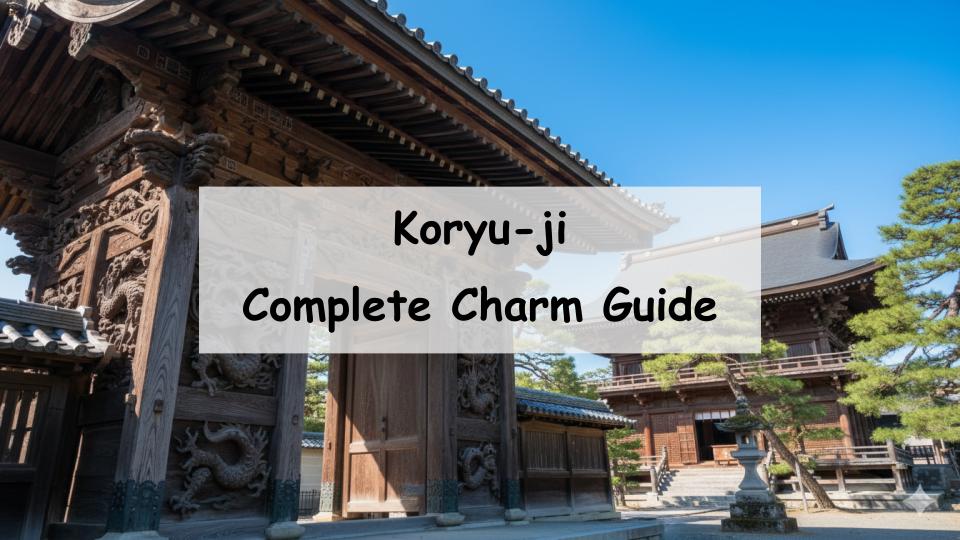
The Sanmon Gate, towering at the entrance of Koryuji Temple, is the biggest highlight that first catches the eye of visitors. Completed in 1911, this gate is entirely made of zelkova wood and features extremely intricate and three-dimensional carvings throughout. Auspicious beasts such as dragons, lions, and baku are vividly carved into the wood, and it is highly praised as the largest temple gate in the northern Tohoku and Hokkaido regions. Its overwhelming presence and high artistic quality will keep you captivated no matter how long you look at it.
The Main Hall with a Solemn Atmosphere
The Main Hall, which appears after passing through the Sanmon Gate, is another important highlight of Koryuji Temple. Built in 1899, the main hall boasts a solid and profound structure, creating a solemn atmosphere in harmony with the surrounding silence. Inside, the principal image of Shakyamuni Buddha is enshrined, providing a space where you can spend time purifying your mind by quietly putting your hands together in prayer. It is a place where you can fully appreciate the beauty of traditional Japanese temple architecture.
The “Shoshin Sanmoku no Hi” Monument Telling a Historic Tale
Within the precincts stands the “Shoshin Sanmoku no Hi,” a memorial monument erected to console the spirits of the former shogunate soldiers who lost their lives in the Battle of Hakodate. Built to mourn the Aizu domain warriors and others who met a tragic end at Koryuji Temple, which served as a field hospital, this monument is a crucial historical site that passes down the gruesome memories and condolences of that time to future generations. It is a place where not only history fans but all visitors should press their hands together and reflect on the preciousness of peace.
Valuable Nationally Registered Tangible Cultural Properties
Many of the buildings within the grounds of Koryuji Temple are recognized for their historical and cultural value and are registered as national tangible cultural properties. Valuable wooden structures built from the Meiji to Taisho eras, including the aforementioned Sanmon Gate and Main Hall, as well as the Founder’s Hall, Belfry, and Konpira Hall, are preserved in excellent condition. By taking your time to explore these building groups that convey the high level of traditional Japanese architectural techniques to the present day, you can deeply feel the weight of Koryuji Temple’s history.
Goshuin and Visiting Hours: Basic Information Before You Go
Visiting Hours and Admission Fees
You can generally visit the grounds of Koryuji Temple freely during the daytime. Visiting during daylight hours allows you to clearly see the delicate carvings of the buildings and the beautiful scenery of the precincts. Additionally, there is no fee for entering the grounds or viewing the temple, making free admission a delightful point for travelers. Please enjoy viewing the historical buildings and praying to your heart’s content in a quiet and calm environment.
Types of Goshuin and Where to Get Them
Goshuin, popular as a proof of visitation, can be obtained at the temple office located near the Main Hall within the precincts. The Goshuin of Koryuji Temple features a beautiful contrast between powerfully brushed characters and the vermilion seal, making it highly attractive for those collecting Goshuin stamps. When requesting a Goshuin, it is proper etiquette to complete your prayers at the Main Hall first before heading to the temple office. Service hours are during the daytime, so we recommend visiting with plenty of time to spare.
How to Get to Koryuji Temple: Access Methods and Parking Information
Access by Tram
When heading to Koryuji Temple using public transportation, the Hakodate City Tram is very convenient. The nearest tram stop is Hakodate-Dokku-Mae. After getting off at the stop, you will arrive at Koryuji Temple in about fifteen minutes by walking up a sloping road while enjoying views of the sea and the cityscape. Strolling while taking in the exotic scenery unique to Hakodate will surely become a wonderful memory of your trip.
Access by Route Bus
It is also possible to access Koryuji Temple using a route bus. Board a bus departing from the bus terminal in front of Hakodate Station and get off at the Koryuji-mae bus stop. Since the temple is located just a short walk from the bus stop, using the bus is highly recommended for those who want to minimize walking distance or are anxious about climbing steep hills. Checking the operation frequency and timetable in advance will ensure a smooth journey.
Access by Car
If you are heading to Koryuji Temple by rental car or private vehicle, it is about a ten-minute drive from Hakodate Station. Because it is located in a quiet area slightly away from the city center, you can enjoy a comfortable drive along the way. By entering the address or name of Koryuji Temple into your car navigation system or map application, you can arrive smoothly without getting lost.
Parking Availability and Information
For those visiting by car, you might be concerned about parking, but Koryuji Temple is equipped with a free dedicated parking lot for worshippers. Since the parking space is located adjacent to the precincts, you can park your car and head straight to pray. However, please note that it is expected to be crowded during tourist seasons or when events are being held, so please drive safely while paying attention to the surrounding traffic conditions.
Recommended Tourist Spots Around Hakodate to Visit Along with Koryuji Temple
Foreigners’ Cemetery
Just a short walk from Koryuji Temple is the Foreigners’ Cemetery, an essential place for understanding the history of Hakodate. This is a tranquil area where sailors who died during the arrival of Commodore Perry’s Black Ships and foreigners who contributed to the development of Hakodate rest in peace. Located in a scenic spot overlooking the sea, you can experience a unique, exotic atmosphere that is quite different from the traditional Japanese charm of Koryuji Temple.
Motomachi Area (Churches and Western-style Buildings)
The Motomachi area, a classic Hakodate sightseeing destination, is also easily accessible from Koryuji Temple. The scenery lined with beautiful churches such as the Hakodate Orthodox Church and the Motomachi Catholic Church, as well as glamorous Western-style buildings like the Old Public Hall of Hakodate Ward, is truly a masterpiece. Strolling along the cobblestone slopes dotted with buildings blending Japanese and Western styles allows you to deeply appreciate the charm of Hakodate.
Mt. Hakodate Ropeway and Observatory
Mt. Hakodate, where you can enjoy a panoramic view of the Hakodate cityscape, is another spot you should visit together. After enjoying a walk around Koryuji Temple, take the ropeway and head to the observatory at the summit. The beautiful night view, featured in the Michelin Guide, is breathtakingly magnificent. Visiting during the time from dusk to night allows you to enjoy a magical landscape woven by the lights of the sky and the city.
Conclusion: Visit Hakodate’s Koryuji Temple, Packed with History and Charm!
Koryuji Temple, with the oldest history in Hokkaido, is a wonderful temple with endless highlights, including numerous nationally registered tangible cultural properties such as the exquisitely carved Sanmon Gate and historical sites conveying memories of the Battle of Hakodate. Access is excellent using the Hakodate City Tram or bus, and the surrounding area is rich in tourist spots like the Foreigners’ Cemetery and the Motomachi area. When visiting Hakodate, be sure to step into Koryuji Temple, enveloped in deep history and tranquil air, and spend a peaceful and calming moment.
A Message from the Guide
The beautifully carved Sanmon gate is very impressive.

Comment