Are you planning to visit Nittaiji Temple in Nagoya City, Aichi Prefecture, but wondering what makes it unique, what there is to see, or how to get there?
Nittaiji Temple is a historically significant site as Japan’s only “interdenominational” (supra-sectarian) temple that belongs to no single Buddhist sect, serving as the resting place for the genuine sacred ashes of the Buddha (Shakyamuni).
This article provides a comprehensive guide covering Nittaiji’s rich history, distinct features, must-see highlights, and transport options. Be sure to check this guide before your visit or day trip!
- What is Nittaiji Temple (Kakuozan)? Its History and Unique Characteristics
- Must-See Highlights at Nittaiji Temple Before Your Visit
- Enjoying Your Trip: The Kakuozan Fair and Neighborhood Strolls
- Access Routes and Visitor Information for Nittaiji Temple
- Summary: Explore Nittaiji Temple and Enjoy Exploring Kakuozan!
- A Message from the Guide
What is Nittaiji Temple (Kakuozan)? Its History and Unique Characteristics
Located in Chikusa Ward, Nagoya City, Aichi Prefecture, Nittaiji Temple possesses extraordinary history and charm rare across Japan. It stands as a historic site visited not only by local residents but also by worshippers and tourists nationwide.
Japan’s Only “Interdenominational” Temple Belonging to No Single Sect
The defining characteristic of Nittaiji Temple is its status as a supra-sectarian temple outside any established Japanese Buddhist denomination. While other famous temples like Zenkoji Temple in Nagano are also known for being non-denominational, there is a distinct difference in their operational structures. Zenkoji was founded before formal sects were established, and today it is jointly managed by two specific sects (Tendai and Jodo). In contrast, Nittaiji was founded in the Meiji era to enshrine the Buddha’s relics for all Buddhists, leading to a system where 19 major Japanese Buddhist sects take turns managing it. This cooperative management by all major sects makes Nittaiji’s administrative model completely unique in Japan.

A Special History: Enshrining the Sacred Relics of Buddha
The establishment of Nittaiji Temple is closely tied to the discovery of the authentic relics (ashes) of Gautama Buddha, the founder of Buddhism. When the relics unearthed in India in the late 19th century were presented to the King of Thailand (then the Kingdom of Siam), the King decided to share a portion with the Buddhist people of Japan. Nittaiji was constructed in 1904 specifically to enshrine these gifted relics.
Nittaiji as the Origin of the Location Name “Kakuozan”
When Nittaiji was built, its honorary mountain name (Sango) was designated as “Kakuozan.” “Kakuo” is an honorific title for the Buddha, meaning “Mountain of the Awakened King.” This mountain name eventually became the geographic name for the surrounding area, which is today cherished as the stylish and historic neighborhood of Kakuozan.
Must-See Highlights at Nittaiji Temple Before Your Visit
Within the temple grounds, visitors can discover unique architectural features and historic structures influenced by exotic Thai aesthetics alongside traditional Japanese craftsmanship.
The Main Hall and Statue of King Rama V Offering a Thai Atmosphere
The Main Hall (Hondo), which greets visitors upon entering, houses the principal image of Shakyamuni Buddha gifted from Thailand. Nearby stands a bronze statue of King Rama V of Thailand, who graciously donated the Buddha’s sacred relics to Japan. This blend of traditional Japanese temple architecture and Thai cultural elements creates an atmosphere found nowhere else.
The Sacred Hoanto (Relic Stupa) Guarding Buddha’s Ashes
Located in a tranquil area slightly removed from the Main Hall, the Hoanto is a solemn stone stupa housing the actual ashes of the Buddha. Designed with elements of the Gandhara architectural style, this beautiful stone structure exudes a deeply serene and reverent atmosphere. It is revered as the most sacred location within Nittaiji Temple.
The Five-Story Pagoda: A Designated Cultural Property of Nagoya
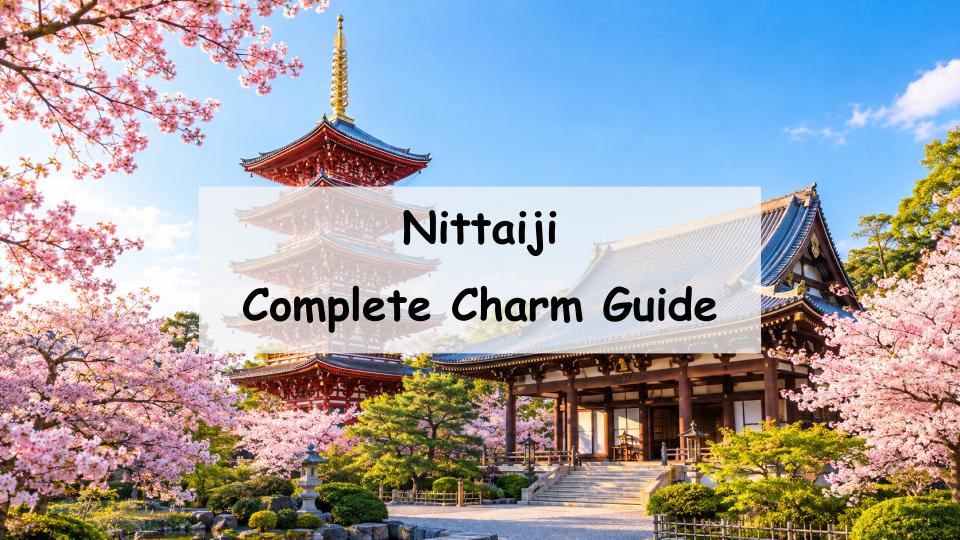
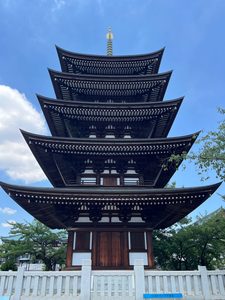
Standing prominently as a landmark of Nittaiji, the Five-Story Pagoda reaches a height of approximately 30 meters. Although constructed in the modern Heisei period, it beautifully replicates traditional architectural principles and has been designated as a Cultural Property by Nagoya City. Set against a clear blue sky, it forms a popular photo spot for visitors.
Enjoying Your Trip: The Kakuozan Fair and Neighborhood Strolls
When visiting Nittaiji Temple, taking time to enjoy the monthly temple fair and exploring the charming surrounding streets is highly recommended.
How to Enjoy the “Kakuozan Fair” Held on the 21st of Every Month
On the 21st of each month, Nittaiji Temple hosts its traditional fair (Ennichi). On this day, numerous open-air stalls and street vendors line the approach to the temple and spread throughout the grounds, filling the area with vibrant energy. Sellers offer fresh vegetables, flowers, clothing, vintage antiques, and delicious street food, making it a fun hunt for local treasures.
Street Food and Cafe Hopping Along Kakuozan Shopping Street
The approach connecting Kakuozan Station to Nittaiji Temple forms the thriving Kakuozan Shopping Street. Alongside traditional Japanese confectionery shops and deli counters, the street features stylish cafes, Asian craft boutiques, and western dessert shops. It is a delightful neighborhood for tasting local sweets or relaxing at a cozy cafe during your visit.
Access Routes and Visitor Information for Nittaiji Temple
Here is essential transportation and general visitor information to help plan your trip smoothly.
Access by Train (Subway) and Walking Directions from the Station
When traveling by train, take the Nagoya Municipal Subway Higashiyama Line to Kakuozan Station. From Exit 1, head straight north along the Sando (approach road) through Kakuozan Shopping Street for about a 5-minute walk to arrive at Nittaiji’s main gate. The lively shops along the path make for an enjoyable stroll.
Access by Car and Parking Details
For visitors driving to the temple, access via the Fukiage-higashi or Yotsuya exits on the Nagoya Expressway is convenient. While parking spaces are available on the temple grounds for worshippers, parking becomes severely limited and traffic restrictions may apply on the 21st during monthly fairs or special events. Using public transportation is recommended whenever possible.
Opening Hours and Admission Fees
The temple grounds are open for visitors to walk around freely, and there is no general admission fee. Opening hours for the gates and the Main Hall run from early morning to late afternoon (generally around 5:00 AM to 4:30 PM), so planning your visit during daytime hours ensures the best experience.
Summary: Explore Nittaiji Temple and Enjoy Exploring Kakuozan!
Nittaiji Temple stands as a unique cultural site in Japan—an interdenominational temple guarding the sacred relics of the Buddha. From its Thai-influenced Main Hall and sacred Hoanto to its impressive Five-Story Pagoda, the temple offers memorable highlights alongside the lively monthly fair on the 21st and cafe-hopping along Kakuozan Shopping Street. When visiting Nagoya, be sure to drop by Nittaiji Temple to experience its fascinating history and vibrant atmosphere.
A Message from the Guide

The name Nittaiji comes from the friendly relations between Japan (Ni) and Thailand (Tai).
👉 Check out on Instagram

Comment