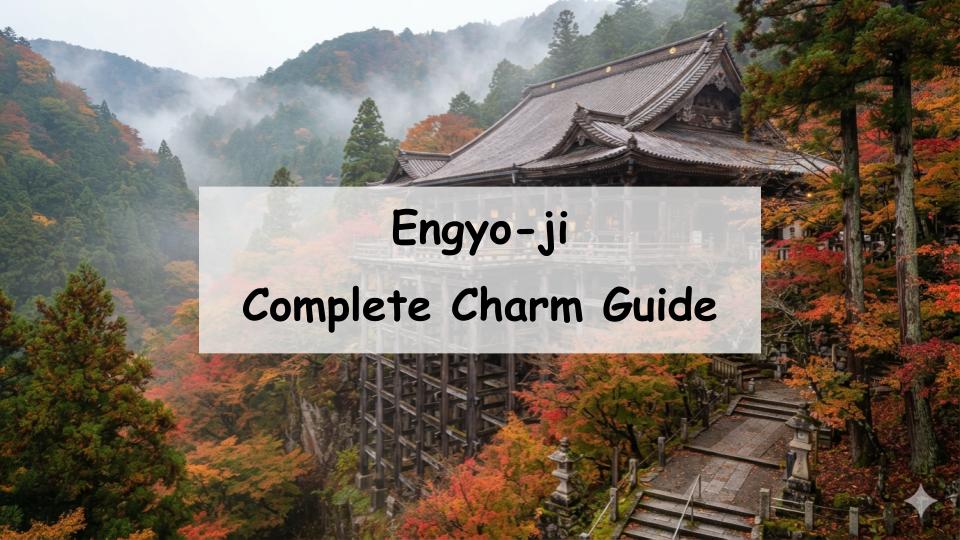
Mount Shosha Engyo-ji Temple is located in Himeji City, Hyogo Prefecture. Often referred to as the “Mount Hiei of the West,” you may be wondering about the history and highlights of this historic temple, or how to reach its mountaintop location.
Surrounded by rich nature, Engyo-ji features numerous important cultural properties scattered across its vast grounds, and it is also famous as a filming location for movies and TV dramas. Although situated on a mountain, it is relatively easy to access using the ropeway.
This article provides a detailed guide to the history and characteristics of Engyo-ji, the main highlights to see, and how to get there from the foot of the mountain. If you are planning a visit, please use this guide to help plan your trip.
Mt. Shosha Engyo-ji: History and Characteristics
Located in Himeji City, Hyogo Prefecture, Mount Shosha Engyo-ji is a historic temple that has attracted visitors for centuries. Here, we introduce its origins and the reasons behind its modern popularity.
“Mount Hiei of the West” – A Prestigious Temple of the Tendai Sect
Engyo-ji was founded in the year 969 by the priest Shoku Shonin as a temple of the Tendai Sect. Along with Mount Hiei in Kyoto, Miidera in Shiga, and Mount Koya, it was once counted among the three major training centers for monks. Due to its solemn atmosphere and high status, it became widely known as the “Mount Hiei of the West.” The quiet grounds, harmoniously blended with the natural mountain environment, allow visitors to feel the depth of its history.
A Renowned Filming Location for Movies and TV dramas
Because its historical landscapes have been preserved as they were in the past, Engyo-ji has been chosen as a filming location for various domestic and international film productions. It is particularly well-known as a filming location for the Hollywood movie The Last Samurai, which brought its traditional Japanese beauty to a global audience. It has also appeared in numerous Japanese historical dramas, such as the NHK Taiga drama Gunshi Kanbei, making it a must-visit destination for fans of these works.
Must-See Highlights of Engyo-ji Temple
The vast temple grounds near the summit of Mount Shosha contain several precious historical buildings. Here are the representative spots you should not miss during your visit.
“Maniden” – A Solemn Stage-Style Hall Built on a Cliff
As you walk along the path from the ropeway mountain station, the first major hall you encounter is Maniden. It is characterized by the “Kakezukuri” architectural style, where long pillars support the building on a steep cliff, reminiscent of the main hall of Kiyomizu-dera in Kyoto. Inside, the principal image of Nyoirin Kannon, which legend says was carved by Shoku Shonin from a living tree, is enshrined in a quiet space of prayer.
“Mitsunodo” (The Three Halls) Exuding a Solemn Atmosphere
Proceeding further into the grounds from Maniden, you will reach an area where three massive wooden halls, the Daigodo, Jikido, and Jogyodo, are arranged in a U-shape. Collectively called “Mitsunodo,” these structures are designated as National Important Cultural Properties. This area preserves the medieval temple landscape, and the quiet surroundings of the forest create a deeply sacred atmosphere.
“Daigodo” – The Main Hall of Engyo-ji Temple
Located on the right side of the three halls, Daigodo serves as the main hall of Engyo-ji. It enshrines the Shaka Triad as its principal image and was once the central place for lectures, learning, and monastic training. The current building was reconstructed in the Muromachi period and still conveys a simple yet powerful beauty today.
“Jikido” – Once a Lodging and Dining Hall for Monks
The long, two-story building standing directly in front of you is Jikido. Originally, it was a place where monks lived, ate, and slept together. Today, the first floor exhibits valuable Buddhist statues and cultural properties, while the second floor is used for sutra-copying experiences, allowing visitors to feel the atmosphere of the ancient space.
“Jogyodo” – A Hall with an Attached Stage
Jogyodo, located on the left, is a hall dedicated to the practice of Jogyo Sanmai, a form of active meditation. A major feature of this building is the stage that extends toward Daigodo. In the past, sacred music and dances were performed on this stage to entertain the deities and buddhas between the monks’ rigorous training sessions.
“Kaizando” in Okunoin – Enshrining Priest Shoku
Located at the very back of the grounds, past the three halls, is Kaizando, where the remains of the founder, Shoku Shonin, are housed. a life-sized wooden statue of the priest is enshrined here, and a sacred flame has been kept burning day and night. The small sculptures of wrestlers supporting the roof corners are also a highlight, showcasing the skilled craftsmanship of the period.
Recommended Routes and Getting Around the Temple Grounds
Because the temple grounds are expansive and the sights are spread out, understanding the routes beforehand will help ensure a smooth visit.
Transportation Options from the Ropeway Sanjo Station to Maniden
After arriving at the mountain station via the Mt. Shosha Ropeway, there are two primary ways to reach the central Maniden area.
Walking Route to View the Thirty-Three Kannon Statues
For those who wish to walk and enjoy the natural environment, the main trail is recommended. It takes about 20 minutes to reach Maniden along a gentle dirt path. Along the way, thirty-three bronze statues of Kannon, representing the famous West Japan pilgrimage, are lined up. You can enjoy a peaceful walk through the forest while feeling the historical atmosphere.
Paid Shuttle Bus for a Comfortable Ride
For those who find walking on slopes difficult or wish to save time, a paid shuttle bus runs from the ropeway mountain station to the immediate vicinity of Maniden. Round-trip tickets can be purchased at the station, making it highly convenient for families with young children or elderly members.
Estimated Time Needed to Explore the Main Sights
Starting from the ropeway mountain station, visiting Maniden, the three halls, and the Okunoin area on foot generally takes about two to two and a half hours. While using the shuttle bus can reduce this time slightly, it is recommended to budget at least three hours to leisurely appreciate the architecture and choose amulets or temple stamps.
Access: How to Get to Engyo-ji Temple
Here are the specific transportation options to reach Engyo-ji from the central Himeji area.
Access by Train and Local Bus
When using public transport, the starting point is Himeji Station, which can be reached via JR or Sanyo Railway. From the north exit bus terminal of Himeji Station, take the Shinko Bus bound for “Shosha Station (Ropeway)”. The bus ride takes about 30 minutes, and the ropeway lower station is located immediately next to the last bus stop.
Access by Car and Parking Information
If you are traveling by car or rental car, the temple is approximately 25 minutes from the Nakaji Ramp on the Himeji Bypass via local roads. When setting your car navigation, it is easiest to search for “Mt. Shosha Ropeway.” A spacious, free parking lot for standard passenger cars is available near the lower ropeway station.
Mt. Shosha Ropeway Schedule and Fares
The Mt. Shosha Ropeway connects the lower station to the mountain station near the summit. The ropeway operates at approximately 15-minute intervals, taking just about four minutes to reach the top while offering beautiful aerial views of the surrounding landscape. While one-way tickets are available, purchasing a round-trip ticket is more economical. Please check the schedule beforehand, as the time of the last return flight may vary depending on the season.
Tips to Enjoy Your Visit to Engyo-ji Temple
To make your time at Engyo-ji comfortable and fulfilling, keep these practical tips and recommended visiting times in mind.
Suitable Clothing and Footwear for Mountain Trails
The temple grounds are surrounded by natural forest, and the pathways consist of unpaved gravel, slopes, and stone stairs. Therefore, wearing comfortable sneakers or walking shoes is essential. Additionally, the temperature at the top of the mountain can be lower than at the base, so carrying a light jacket or dressing in layers is recommended to stay comfortable.
Types of Goshuin (Temple Stamps) and Where to Get Them
Engyo-ji offers several different types of Goshuin temple stamps. Dedicated offices are located mainly inside Maniden and Jikido, where stamps representing different deities and halls are available. It is customary to pay your respects at the hall before presenting your stamp book. Obtaining these stamps in a dedicated book makes for a wonderful remembrance of your journey.
Best Seasons to Enjoy the Changing Natural Scenery
Mount Shosha allows visitors to experience the vivid changes of the seasons. While the cherry blossoms in spring and the fresh green leaves in early summer are beautiful, the autumn foliage season is particularly spectacular. During this time, the trees turn shades of red and yellow, creating a beautiful contrast with the historic wooden structures. Special light-up events and cultural property openings are often held in autumn, making it the most popular time of year for visitors.
Conclusion
Mount Shosha Engyo-ji Temple in Himeji City is a special place where deep nature and historic cultural properties exist in harmony. It offers a unique opportunity to experience both the quiet atmosphere of an ancient training ground and scenic beauty featured in international films.
With the ropeway and shuttle bus services readily available, the mountain is easy to navigate as long as you are prepared. Wear comfortable shoes and experience the solemn charm of Engyo-ji Temple for yourself.
A Message from the Guide
The fact that you cannot drive directly to the temple enhances its secluded, hidden-gem atmosphere, which is truly wonderful.


Comment